Request a Quote: Call 781-890-3111

China Top Industrial Rugged PC Manufacturers?

China’s industrial rugged PC sector is expanding alongside factory automation, edge computing, and connected production lines. These systems now operate beside robotic arms, in dusty workshops, and inside vibrating control cabinets.

MarketsandMarkets estimates that the global industrial PC market could grow from approximately USD 5.3 billion in 2023 to USD 7.1 billion by 2028. Grand View Research also identifies steady growth through 2030, driven by manufacturing, energy, logistics, and transportation. The figures differ slightly. That difference deserves caution.

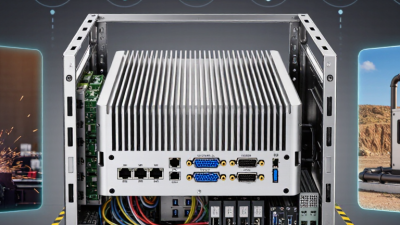
A rugged computer is not simply a standard PC with a metal case. It may require fanless cooling, wide-voltage input, extended-temperature operation, shock resistance, and long-term component availability. In a factory, one failed connector can stop an entire inspection station. One unplanned restart can damage production data.

David Krebs, Executive Vice President at VDC Research, has emphasized, “Rugged devices are designed to withstand the rigors of the work environment.” This point remains practical. Durability must support uptime, maintainability, and measurable operating value.

This guide examines China’s leading industrial rugged PC manufacturers through product design, processor options, IP ratings, certifications, customization, delivery capability, and after-sales support. It considers established suppliers and specialized manufacturers, rather than relying only on online popularity.

No ranking is permanent. Supplier strengths can change with chip availability, firmware quality, engineering response, and regional service coverage. Buyers should verify specifications through samples, test reports, warranty terms, and factory audits before placing volume orders.
China Top Industrial Rugged PC Manufacturers?

What Defines an Industrial Rugged PC?

China Top Industrial Rugged PC Manufacturers?

What Defines an Industrial Rugged PC?

An industrial rugged PC is built for unstable, demanding environments, not ordinary office desks. Its enclosure often uses aluminum alloy or reinforced steel. These materials help resist vibration, impact, dust, and repeated handling.

Protection starts with the enclosure. An IP rating shows resistance to dust and water under defined test conditions. It does not mean the computer can survive every factory floor. A sealed, fanless design can reduce dust intake and maintenance. However, passive cooling may limit performance in high-temperature spaces.

Reliable models support wide voltage input and stable operation during power fluctuations. They may also tolerate extended temperature ranges, vibration, and shock. Industrial displays should remain readable under strong lighting. Gloved operators need accessible buttons, clear ports, and practical mounting options.

Engineering evidence matters more than impressive product language. Check temperature reports, vibration test records, ingress protection documents, and component service life. A dependable manufacturer should explain its testing methods and provide consistent technical support. Long-term availability is important because replacing a computer can interrupt production.

Some specifications look excellent on paper. Real installations can still expose weaknesses. Cable strain, condensation, poor ventilation, or unexpected electromagnetic noise may cause failures. Site testing is wise. The best rugged PC is not always the most powerful one; it is the model that matches the actual workload, environment, and maintenance plan.

China’s Industrial Rugged PC Manufacturing Landscape

China’s industrial rugged PC manufacturing landscape is broad, practical, and highly export-focused. Production clusters support custom computers for factories, ports, transport systems, energy sites, and outdoor monitoring. Many manufacturers provide OEM and ODM services, allowing buyers to adjust processors, storage, displays, ports, and mounting systems.

Factory capability varies. A serious supplier should show thermal testing, vibration testing, shock testing, and extended burn-in records. On a production floor, engineers may check sealed enclosures, cable glands, fan performance, and touchscreen response under dust or temperature stress. These details matter more than a polished catalog.

Look for documented quality systems and clear compliance files. Relevant evidence may include ISO 9001 certification and test reports for applicable CE, FCC, or other market requirements. Ask about component traceability, BIOS control, spare-part availability, and repair procedures. Some suppliers communicate well during sampling but provide weaker documentation later. That gap deserves attention.

Not every factory has the same engineering depth. Some rely heavily on standard platforms, while others design carrier boards and thermal structures internally. Prototype schedules can slip when customized connectors or industrial displays are involved. I have found that direct technical discussions reveal more than sales claims. Request drawings, test conditions, operating temperature data, and failure-response timelines before approving volume production. Small omissions can become expensive in remote installations.

China Top Industrial Rugged PC Manufacturers? - China’s Industrial Rugged PC Manufacturing Landscape

Evaluation Dimension Typical China Manufacturing Landscape Common Technical Range or Practice Purchasing Consideration
Product Categories Broad production coverage from embedded box PCs and panel PCs to rack-mount, vehicle-mounted, and fanless systems. Box PCs, panel PCs, all-in-one HMIs, edge computers, rack systems, and mobile industrial terminals. Select a product family according to installation space, display requirements, mobility, and expansion needs.
Chassis Construction Most industrial systems use rigid metal enclosures designed for vibration resistance, electromagnetic shielding, and heat dissipation. Powder-coated steel or anodized aluminum; aluminum is commonly preferred for lighter fanless designs. Check enclosure thickness, corrosion resistance, grounding design, and access to serviceable components.
Ingress Protection Protection levels vary by enclosure and application; sealed panel and vehicle systems generally target higher protection than open-frame units. Common published levels include IP40, IP54, IP65, and IP67, subject to product configuration and test conditions. Verify whether the rating applies to the complete installed system, front panel, connectors, or enclosure only.
Operating Temperature Extended-temperature configurations are widely available for factory automation, outdoor cabinets, transportation, and energy applications. Typical specifications range from approximately -20°C to 60°C; selected designs support wider ranges such as -40°C to 70°C. Confirm the test method, CPU load, storage type, airflow conditions, and whether the range applies to startup or operation.
Cooling Architecture Fanless systems are common for dusty or vibration-sensitive environments, while active cooling is used for higher-performance processors. Fanless heat-sink designs, controlled-airflow fan systems, and hybrid thermal solutions. Compare thermal performance, acoustic output, dust exposure, maintenance requirements, and processor power limits.
Processor Platforms Manufacturers commonly support x86 and ARM-based platforms for automation, gateway, machine-vision, and edge-computing projects. Low-power processors for control and gateway tasks; higher-performance multi-core processors for vision, analytics, and virtualization. Evaluate long-term availability, thermal design power, operating-system support, and required software acceleration.
Memory and Storage Industrial configurations commonly provide replaceable or soldered memory and solid-state storage for improved shock resistance. Approximately 4 GB to 64 GB RAM and SATA or NVMe solid-state storage, depending on platform and application. Ask about industrial-temperature storage, write endurance, power-loss protection, and availability of replacement modules.
Industrial I/O A major competitive strength is flexible I/O customization for automation, energy, transportation, and digital signage projects. USB, serial ports, Ethernet, digital I/O, CAN bus, isolated interfaces, GPIO, HDMI, DisplayPort, and optional fieldbus modules. Confirm isolation, connector type, serial standards, port locking, surge protection, and simultaneous-port operation.
Power Input Industrial computers are offered with both standard DC inputs and wider-range power designs for vehicles and industrial cabinets. Common inputs include 9–36 VDC, 12–24 VDC, 18–36 VDC, and 100–240 VAC through an external or internal power supply. Check voltage tolerance, reverse-polarity protection, overvoltage protection, ignition control, and connector retention.
Display and Touchscreen Options Panel PC production supports multiple screen sizes, brightness levels, touch technologies, and mounting formats. Common sizes range from approximately 7 to 21.5 inches, with resistive or projected-capacitive touch options. Specify sunlight readability, glove operation, optical bonding, viewing angle, surface treatment, and front-panel sealing.
Mounting Methods Manufacturing programs usually support cabinet, wall, DIN-rail, VESA, panel, desktop, and vehicle mounting. Mounting compatibility depends on chassis dimensions, bracket design, cable clearance, and vibration requirements. Request mechanical drawings and verify mounting-hole patterns before finalizing the enclosure or control cabinet.
Customization Capability OEM and ODM services are widely used for customized I/O, BIOS settings, labels, chassis, displays, operating systems, and cable assemblies. Customization may range from configuration changes to new sheet-metal tooling and application-specific motherboard design. Clarify engineering fees, tooling ownership, minimum order quantity, sample approval, and engineering-change procedures.
Quality Management Established manufacturers typically use incoming inspection, production testing, burn-in, functional testing, and final inspection procedures. Quality systems commonly align with ISO 9001 principles; test coverage varies by factory and project. Request quality certificates, inspection records, failure-analysis procedures, traceability controls, and warranty terms.
Compliance and Testing Export-oriented production commonly addresses electromagnetic compatibility, electrical safety, environmental, and regional market requirements. Typical requirements may include CE, FCC, RoHS, REACH, UKCA, and application-specific railway, marine, or vehicle standards. Confirm the exact model, configuration, test laboratory, certificate scope, and destination-market requirements.
Production and Supply Chain The manufacturing ecosystem benefits from dense electronics, mechanical-processing, display, cable, and contract-assembly supply chains. Common production activities include PCB assembly, CNC or sheet-metal processing, coating, system integration, and final testing. Assess component traceability, second-source planning, production capacity, and continuity plans for long-life projects.
Typical Development Timeline Standard configurations are generally faster to sample than products requiring new tooling, custom electronics, or extensive environmental validation. Standard samples may take several weeks; customized projects can require multiple months depending on design complexity and certification scope. Build time for engineering validation, tooling, certification, pilot production, and component procurement into the project schedule.
Primary Application Sectors China-made rugged PCs are widely configured for factory automation, machine vision, transportation, energy, logistics, retail, security, and outdoor infrastructure. Application requirements commonly include continuous operation, vibration resistance, wide-temperature support, remote management, and long-term availability. Choose a supplier with documented experience in the target environment rather than relying only on processor or enclosure specifications.

Leading Chinese Rugged PC Manufacturers and Their Strengths

China has become a major source of industrial rugged PCs for factories, transport systems, energy sites, and outdoor monitoring. Local manufacturers often combine enclosure design, embedded computing, display integration, and assembly under one production team. This shortens development time and supports practical customization.

Their strongest advantage is engineering flexibility. Buyers can request fanless cooling, sunlight-readable screens, serial ports, digital inputs, or wider power protection. Many suppliers also offer aluminum housings, sealed connectors, and vibration-resistant storage. A field-tested unit should keep operating near machinery, dust, heat, and unstable electrical conditions. Small details matter.

Testing must go beyond a polished sample. Ask for temperature cycling records, ingress protection evidence, vibration results, and component traceability. Check whether the stated operating range reflects real use, not only laboratory conditions. Confirm firmware updates, repair procedures, and spare-part availability before signing a long-term order. Factory audits and pilot batches can reveal weak cable routing or unreliable touch panels. Some suppliers communicate well during sales but respond slowly after delivery. That risk deserves attention. A careful evaluation should include several weeks of actual operation, because laboratory confidence can still fail on a noisy production floor.

How to Evaluate a Chinese Rugged PC Supplier

Evaluating a Chinese rugged PC supplier requires more than comparing quotations. Start with the factory’s engineering history, production capacity, and quality-control process. Ask for test records covering vibration, shock, dust, moisture, and temperature changes. A serious supplier should explain testing conditions, not merely display attractive figures. Check whether the reports match the exact model you plan to purchase.

Request a working sample before signing a large order. Test it beside your actual equipment, especially under sunlight, electrical noise, and continuous operation. Inspect the enclosure, ports, mounting points, display brightness, and cable connections. Ask how components are sourced and how discontinued parts are handled. Small details matter. I once saw a promising unit fail because its connector loosened after repeated movement.

Communication also reveals supplier reliability. Measure response times, technical accuracy, and willingness to document changes. Clarify warranty coverage, repair procedures, spare-part availability, and expected production schedules. Visit the facility if possible, or arrange a live video inspection of assembly and testing areas. Independent customer references can expose delays that brochures hide. No supplier is flawless. The important question is whether problems are acknowledged, traced, and corrected with evidence. A lower price may look efficient, but unstable quality can cost more in field replacements.

Applications, Certifications, and Lifecycle Support

China Top Industrial Rugged PC Manufacturers?

Industrial rugged PCs from China support factory automation, machine vision, transportation, energy monitoring, and outdoor kiosks. The right model must match its environment. Check operating temperature, vibration resistance, dust protection, mounting space, and power stability. An aluminum chassis may improve heat control, while sealed connectors help in dusty workshops. Fanless designs reduce moving parts, but they can limit peak performance. That trade-off is often overlooked.

Certifications should be verified, not assumed. Request current documents for CE, FCC, RoHS, and applicable environmental tests. For harsh installations, review IP ratings and test references based on IEC 60068 methods. Medical, railway, and vehicle projects may require additional sector-specific compliance. A reliable manufacturer should provide traceable test reports, quality procedures, and clear revision records. Experience matters here because paperwork alone cannot prove long-term field performance.

Tips: Ask about BIOS control, spare parts, repair targets, firmware updates, and component availability. Confirm whether the supplier can support the same configuration for five years. No rugged PC is maintenance-free. Even a strong specification can miss cable wear, condensation, or unstable power. Plan preventive checks and keep critical spares available. A lifecycle agreement should define response times, replacement rules, and end-of-life notices in plain language.

China Top Industrial Rugged PC Manufacturers: Applications, Certifications, and Lifecycle Support

Representative standards commonly specified for rugged industrial computer deployments

The chart counts representative standards and certification frameworks frequently considered in each application area. It does not represent market share, manufacturer rankings, or certification claims by any individual company. Typical lifecycle support should also be evaluated through product availability, spare parts, BIOS and driver maintenance, repairability, and long-term operating-system compatibility.