Request a Quote: Call 781-890-3111

What Are Industrial Computing Products Used For?

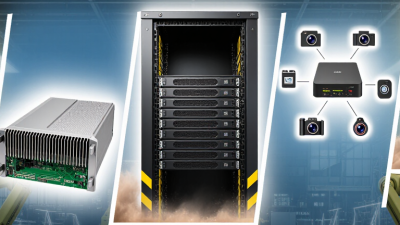
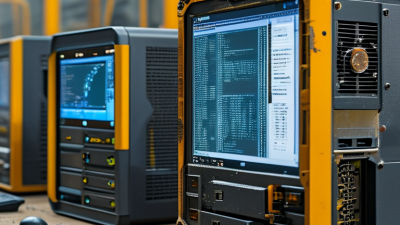
Industrial computing products are the hardware foundation of modern industrial operations. They include industrial PCs, embedded controllers, edge gateways, rugged tablets, and machine-vision systems. Unlike ordinary office computers, these devices must process data beside production lines, often amid vibration, dust, heat, and electrical noise. Their purpose is practical: keep machines running, decisions timely, and workers informed.

The Gartner report “The Edge Will Redefine Infrastructure” predicted that 75% of enterprise-generated data would be created and processed outside traditional data centers by 2025. This shift explains why industrial computing products matter. A factory gateway can analyze motor vibration locally, instead of sending every signal to a distant cloud. A vision computer can reject a scratched component within seconds. An industrial PC can connect sensors, databases, and control systems without interrupting production. Rockwell Automation’s 2024 State of Smart Manufacturing Report also found that 95% of manufacturers were investing in, or planning to invest in, AI and machine learning within five years. The demand is clear.

However, technology alone does not guarantee better manufacturing. A faster processor cannot fix poor sensor placement, weak maintenance routines, or unclear data ownership. That part is often overlooked. Reliable industrial computing products require careful installation, cybersecurity controls, lifecycle planning, and operator training. Reports from Gartner and Rockwell show strong momentum, but real-world results still depend on context. A small packaging plant and an automotive facility may need very different computing architectures. This article examines what industrial computing products are used for, how they support measurable industrial outcomes, and where their limitations deserve closer attention.
What Are Industrial Computing Products Used For?

Industrial Computing Products: PLCs, IPCs, HMIs, and Edge Gateways

What Are Industrial Computing Products Used For?

Industrial Computing Products: PLCs, IPCs, HMIs, and Edge Gateways

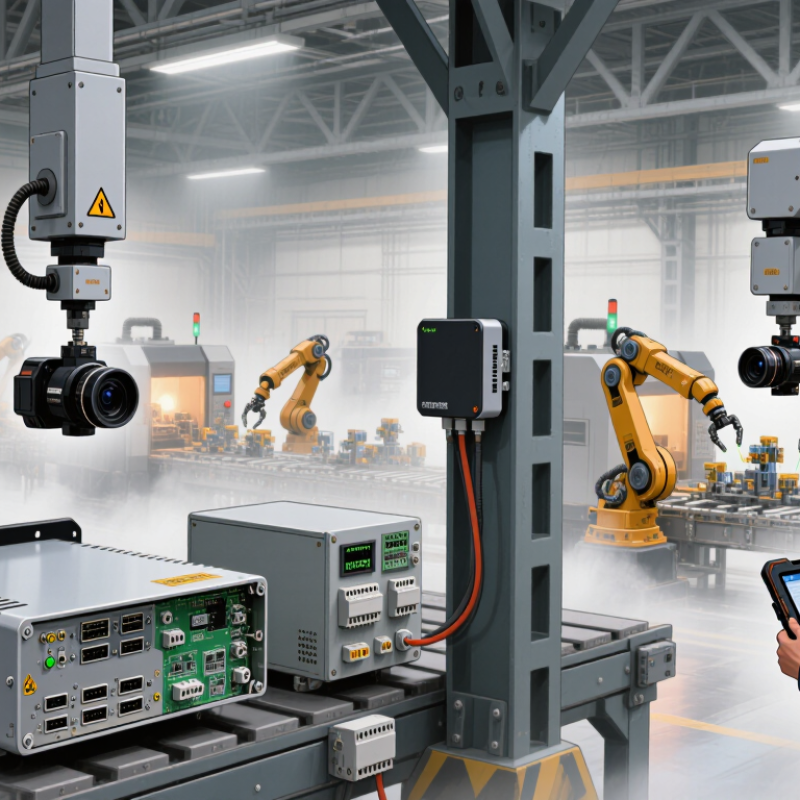
Industrial computing products connect machines, workers, and production data. Programmable logic controllers, or PLCs, execute reliable control logic near motors, valves, and safety sensors. Industrial PCs, or IPCs, handle vision inspection, motion coordination, and manufacturing software in dusty environments. Human-machine interfaces, or HMIs, turn complex signals into clear screens, alarms, and operating instructions. Operators need useful information, not data overload.

Industrial edge gateways fill another gap. They collect data from older controllers, translate industrial protocols, and send selected information to local servers or cloud platforms. This reduces unnecessary network traffic and supports faster decisions. IDC’s Worldwide Edge Spending Guide projected global edge spending to reach about 232 billion dollars in 2024. That investment reflects a practical shift toward processing data closer to machines.

The numbers are tangible. The International Federation of Robotics reported 541,302 industrial robots installed worldwide in 2023. Each installation may depend on coordinated PLC control, IPC analysis, HMI supervision, and gateway connectivity. Still, more computing does not automatically create better production. Poor sensor calibration can produce confident but inaccurate dashboards. A gateway may also expose data gaps that teams previously ignored. That is uncomfortable, but useful. Engineers should test response times, backup behavior, cybersecurity controls, and operator understanding before expanding a system. IDC and IFR reports support the direction, yet each factory remains different. Real conditions matter.

What Are Industrial Computing Products Used For?

Typical response-time ranges in industrial applications. Lower values indicate faster interaction with field equipment.

PLCs are commonly used for deterministic machine control, while IPCs support higher-level processing and industrial software. HMIs provide operator interaction, and edge gateways collect, translate, and forward data between plant equipment and enterprise or cloud systems. The ranges shown are representative deployment ranges rather than product specifications.

Real-Time Control: PLC Scan Cycles Below 10 ms Under IEC 61131-3

Industrial computing products are used where machines must sense, decide, and act without hesitation. In production lines, a programmable logic controller executes IEC 61131-3 logic through repeated scan cycles. A cycle reads inputs, processes instructions, and updates outputs. Keeping this cycle below 10 milliseconds can support fast conveyors, coordinated motion, and safer machine responses.

Timing is physical. A 10-millisecond target is not automatically guaranteed by the standard. IEC 61131-3 defines programming concepts and languages, but it does not prescribe one universal scan time. Engineers must measure actual execution time, communication delays, task priorities, and input filtering. In a packaging cell, a sensor may detect a product in 2 milliseconds, while network and actuator delays add several more. The controller may be fast, yet the complete response remains slow.

86% Deloitte’s 2023 Global Smart Manufacturing Survey reported that 86% of manufacturing executives viewed smart manufacturing as a major competitiveness driver. This pressure makes deterministic control increasingly valuable. It also exposes a common mistake: selecting hardware by processor speed alone. A practical test should record worst-case scan time under maximum logic load, alarm activity, and network traffic. Siemens is not involved here; the principle is vendor-neutral. My experience suggests that engineers often promise “under 10 milliseconds” before testing thermal conditions and abnormal loads. That needs reconsideration. ISA guidance on industrial automation also emphasizes verification, diagnostics, and lifecycle reliability, not headline speed. A stable 8-millisecond cycle is useful only when it remains stable during faults, maintenance, and production changes.

Industrial Data Exchange: OPC UA and MQTT Connect IIoT Sensors

Industrial computing products support machines, sensors, operators, and production software in demanding environments. They collect signals, process data near equipment, and maintain operations when cloud connections fail. A small edge computer might read motor vibration, temperature, and power readings beside a production line. It can detect abnormal patterns before a bearing becomes dangerously hot. This reduces delays and gives maintenance teams clearer evidence.

Industrial data exchange depends on reliable communication. OPC UA provides structured, secure data models between controllers, gateways, and supervisory systems. MQTT uses a lightweight publish-and-subscribe method for sending selected readings across distributed networks. Together, they connect IIoT sensors with analytics platforms, maintenance dashboards, and enterprise applications.

A gateway may receive machine data through OPC UA, filter duplicate values, and publish useful events through MQTT. The result is cleaner traffic and faster decisions. Yet integration is rarely perfect. Different devices may use inconsistent units, timestamps, or naming rules. Engineers must test these details under real operating conditions.

Tips: Define each data point before deployment. Include its unit, sampling rate, timestamp, and quality status. Use certificates and controlled permissions for secure access. Add local buffering for unstable networks. Test recovery after power loss, because normal operation can hide serious weaknesses. Keep payloads small, but do not remove information needed for diagnosis. Document every mapping, even temporary ones. Small oversights become expensive later.

Machine Vision at the Edge: AI Inference Completed in Milliseconds

What Are Industrial Computing Products Used For?

Machine Vision at the Edge: AI Inference Completed in Milliseconds

Industrial computing products support inspection, control, monitoring, and data processing near production equipment. In machine vision, an edge computer receives images from cameras, runs an AI model, and sends a decision to a controller within milliseconds. This setup can detect missing parts, surface scratches, incorrect labels, or unsafe positions before products leave the line. It also reduces dependence on continuous cloud connections. According to IDC’s Worldwide Edge Spending Guide, global edge computing spending was projected to exceed 230 billion dollars in 2024. That growth reflects a practical need for faster local decisions.

In a working line, timing matters. A camera may capture 30 frames per second, while the processor checks each image beside the conveyor. The system must handle heat, vibration, dust, and changing light. A robust design also records uncertain images for later review. This is where experience matters. A model can perform well in testing yet fail when reflections appear on polished metal. That weakness is easy to miss.

Tips: Measure full response time, not inference time alone. Include image capture, preprocessing, decision logic, and controller communication. Keep a small audit set of difficult images. Review it weekly. Industry studies from MarketsandMarkets continue to identify machine vision as a major industrial automation segment, but market estimates differ across reports. Treat forecasts as guidance, not proof. Human review still matters when confidence scores are borderline.

Critical Operations: 99.9% Uptime and IEC 62443 Cybersecurity

Industrial computing products support control rooms, factory lines, energy sites, and transport systems. Their purpose is practical: process sensor data, control machines, and keep operators informed. In critical operations, a 99.9% uptime target allows about 8.76 hours of downtime annually. That may sound acceptable, but one failed controller can stop a production line within seconds.

The Uptime Institute’s 2024 Global Data Center Survey reported that 53% of respondents experienced an outage during the previous three years. Industrial systems face similar risks from power loss, overheating, poor maintenance, and network faults.

IEC 62443 adds a structured cybersecurity approach, including asset identification, network segmentation, access control, and secure development. The 2024 Cost of a Data Breach Report placed the average breach cost at 4.88 million US dollars.

Industrial downtime can add production losses, safety concerns, and recovery delays. Numbers are useful, but they never describe every plant accurately. A small facility may have fewer devices, yet less redundancy.

Tips: Choose computing hardware with industrial temperature tolerance, redundant power, remote diagnostics, and long lifecycle support. Separate control networks from office networks. Review user privileges regularly. Test backup systems under realistic conditions, not only on paper. Keep a physical recovery plan too. Digital protection is necessary, but not perfect. Engineers should question assumptions after every alarm, patch, and unexpected restart.