Why Choose a Polyethylene Pipe Cutter?
When cutting polyethylene pipe, the tool you choose affects more than speed. A clean cut supports reliable fittings, smoother installation, and fewer corrections. That is where a Polyethylene Pipe Cutter earns practical attention. Unlike improvised blades, a purpose-built cutter holds the pipe securely. Its sharp cutting edge can produce a more even end with less crushing. This matters on a busy site. Small defects become expensive delays.
Experienced installers usually consider pipe diameter, wall thickness, access, and cutting frequency. A compact ratcheting model may suit maintenance work. A larger rotary or scissor-style tool may handle repeated cuts more comfortably. The correct choice depends on the job, not marketing language. Check manufacturer specifications before use. A common site mistake is rushing the final cut. The edge may look acceptable, yet the pipe can become slightly angled or compressed. Later, alignment becomes difficult. That weakness is easy to miss. Still, no cutter removes the need for inspection. Deburr when required, remove chips, and confirm the pipe end remains clean and round.
Reliable selection also includes blade quality, handle control, replacement parts, and safe operating instructions. A reputable manufacturer should provide clear capacity ratings and maintenance guidance. Never force a cutter beyond its stated range. That can damage the tool and produce an unreliable cut. This guide examines why professionals choose a Polyethylene Pipe Cutter while acknowledging its limits. The best tool is not always the most expensive. It is the one that matches the pipe, workspace, and installer’s judgment. Careful practice matters more than confidence alone.
What Is a Polyethylene Pipe Cutter?
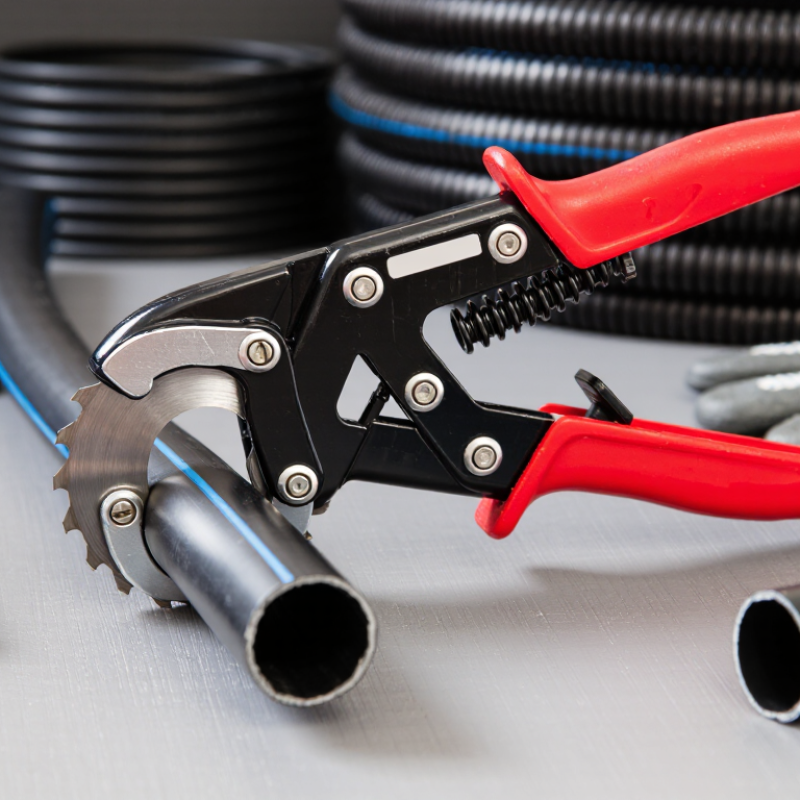
A polyethylene pipe cutter is a tool made to cut polyethylene pipe or tubing cleanly and with control. Unlike a general-purpose knife, it uses a shaped blade or cutting wheel suited to plastic pipe. Many hand models work like heavy-duty shears; ratcheting designs advance the blade in small steps. That helps reduce hand strain. The exact design and pipe-size range vary, so check the tool’s specifications before cutting.
A square cut matters when pipe ends must fit into a compatible joining system. An angled or crushed edge can make assembly harder and may affect the seal. Before cutting, support the pipe on a stable surface and mark the cut around its circumference. Keep fingers clear of the blade, and inspect the end for burrs or deformation afterward. Small details count.
Not every cutter suits every job. Compact shear-style tools are generally intended for smaller diameters, while larger pipe may need a different cutting method specified for the pipe and connection. A clean-looking cut is not proof of a sound joint. That part is easy to overlook. Check the pipe maker’s installation guidance, and replace a dull or damaged blade rather than forcing it through the material.
How Polyethylene Pipe Cutters Work
Why Choose a Polyethylene Pipe Cutter?
How Polyethylene Pipe Cutters Work
A polyethylene pipe cutter uses a sharpened blade and a supporting jaw to cut through the pipe wall. In many hand-operated models, squeezing the handles drives the blade forward in a controlled arc. Ratcheting designs advance the blade a little at a time, which can reduce hand strain on thicker pipe. The cut is mechanical, not melted, so the pipe end stays cooler.
A square cut matters. A tilted or crushed end can make fitting assembly harder and may interfere with a reliable joint. Mark the cut line around the pipe, support the pipe near the cutting point, and keep the blade aligned with the mark. Use a cutter rated for the pipe’s outside diameter and wall thickness; forcing an undersized tool can deform the pipe or damage the blade. Not magic.
After cutting, inspect the end for cracks, flattening, or a rough lip. Remove loose shavings, and follow the fitting or joining procedure specified for the pipe system. I would not assume every cutter leaves a perfect finish, even when the cut looks clean. Cold, stiff pipe or a dull blade can change the result. A quick visual check is worth the few seconds.
Key Benefits of Using a Polyethylene Pipe Cutter
Why Choose a Polyethylene Pipe Cutter?
Key Benefits of Using a Polyethylene Pipe Cutter
A polyethylene pipe cutter creates a clean, square end with less crushing. That matters during electrofusion, mechanical joining, and fitting installation. ASTM F2620 emphasizes properly prepared pipe ends for reliable heat-fusion work. In field use, a sharp blade also reduces shaving, dust, and loose plastic near the joint. The result feels simple: fewer adjustments and a more consistent fit.
The cutter can improve speed and reduce physical strain. A controlled ratcheting action usually needs less force than a handsaw. It also keeps the cut line visible, even inside a narrow trench. The U.S. Environmental Protection Agency’s 7th Drinking Water Infrastructure Needs Survey estimates $625 billion in drinking-water investment over 20 years. As replacement work expands, small preparation gains can matter across thousands of cuts. Still, a cutter is not magic. A dull blade can deform the pipe and create extra rework.
Tips: Support the pipe close to the cutting point. Mark the line completely before cutting. Keep the blade clean and replace it when the edge drags. Check the cut end for ovality, burrs, or contamination. The Plastics Pipe Institute’s Handbook of Polyethylene Pipe also stresses careful handling and surface preparation. I would not skip a visual inspection, even when the cut looks smooth. That habit is easy to overlook.
How to Choose the Right Pipe Cutter
How to Choose the Right Pipe Cutter
Choosing a polyethylene pipe cutter starts with the pipe, not the tool. Check the outside diameter and wall thickness against the cutter’s rated capacity. A blade that is too small can crush the pipe or leave a slanted edge. For small-diameter service lines, a ratcheting cutter is compact and easy to control. Larger, thicker pipe may need a long-handled cutter or a fine-tooth saw with a guide. Measure twice. A square cut matters.
Think about where the work happens. In a narrow trench, a bulky handle can make a clean cut difficult; on a bench, a stable cutter may save effort across repeated cuts. Inspect the blade for chips and replace it when it drags or leaves a rough lip. The Plastics Pipe Institute’s Handbook of Polyethylene Pipe stresses sound preparation and properly made joints; a clean, square end helps support that work. It’s easy to overlook. A test cut on scrap pipe can reveal whether the tool is suited to the material and the operator’s grip.
The scale of water-system work gives tool choice practical weight. The U.S. Environmental Protection Agency’s 2023 Drinking Water Infrastructure Needs Survey and Assessment estimated $625 billion in drinking-water infrastructure needs over 20 years. That figure is not a cutter-performance measure, but it underscores why dependable installation practices matter. Compare the cutter’s capacity, replacement-blade availability, and ease of cleaning before buying. And be honest: the most expensive tool is not always the one that fits your job.
Safe and Effective Cutting Practices
Why Choose a Polyethylene Pipe Cutter?
Safe and Effective Cutting Practices
A purpose-built polyethylene pipe cutter can produce a cleaner, more square cut than a saw used without guidance. That matters when preparing pipe ends for joining: angled or crushed edges can complicate alignment and inspection. Secure the pipe on a stable support, check the cutter’s capacity, and follow its operating instructions. Keep fingers clear of the blade path. Slow down near the end of the cut; sudden pressure can shift the pipe. Small details matter.
Safety deserves the same care as cut quality. The U.S. Bureau of Labor Statistics reported 2.8 million nonfatal workplace injury and illness cases in private industry for 2022. This figure covers many types of work, not pipe cutting specifically, but it shows why routine precautions should not be treated as optional. Wear suitable eye protection and gloves, inspect the blade for damage, and replace or sharpen it when cuts become ragged. A dull tool may invite extra force. That is easy to overlook.
Tips: Mark the cut line around the pipe, then check it from several angles. Support long sections close to the cutting point. Keep the work area dry and clear, and never hold a small offcut directly beside the blade. If the pipe slips, stop and reset it—do not try to correct the cut mid-stroke. Even careful workers can rush when a job feels simple.
Source: U.S. Bureau of Labor Statistics, 2022 Survey of Occupational Injuries and Illnesses.
Why Choose a Polyethylene Pipe Cutter? — Safe and Effective Cutting Practices
A cutter should be suitable for the pipe’s outside diameter and wall thickness. This chart shows calculated wall thickness for 63 mm pipe using wall thickness = outside diameter ÷ SDR. Before cutting, secure the pipe, make a square cut, and check the cut end; confirm exact dimensions and tool limits with the pipe specifications.


