What is a Towable Boom Lift and How Does It Work?
Towable Boom Lifts are essential in various industries. They provide efficient access to heights for maintenance, construction, and tree trimming. The global market for aerial work platforms, including Towable Boom Lifts, is projected to reach $12.8 billion by 2026, according to industry reports. This growth reflects the increasing demand for safe and effective lifting equipment.
Towable Boom Lifts offer mobility and versatility. Their lightweight design allows easy transportation, making them suitable for tight spaces. They can reach heights of up to 50 feet, depending on the model. However, users often overlook the importance of proper training. According to safety audits, improper use accounts for 30% of lift-related accidents.
Many operators may underestimate the risks involved. Mastering the controls and understanding the lift's limitations are crucial for safety. Regular inspections also ensure optimal performance but can be neglected over time. Investing in reliable equipment and training can mitigate potential hazards significantly.
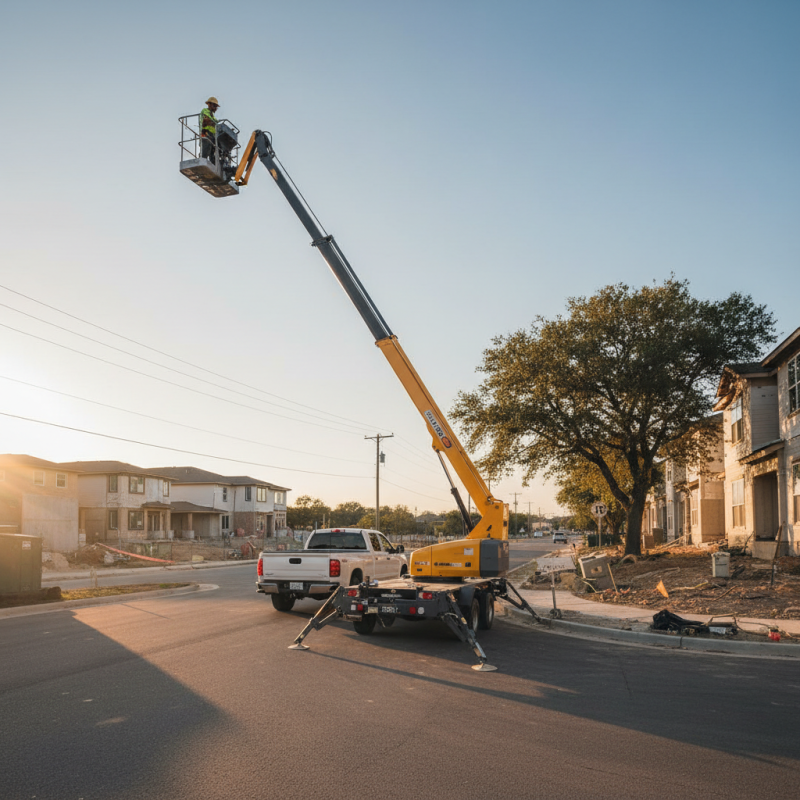
What is a Towable Boom Lift?
A towable boom lift is a type of aerial lift. It's designed for lifting people or equipment to reach high spaces. These machines are mounted on a trailer that connects to a vehicle. This allows for easy transport to various job sites. They are often used for maintenance, construction, or tree trimming.
Towable boom lifts work through a series of hydraulic systems. The operator can extend the boom, which raises the platform. Controls are usually simple and intuitive. Safety features like outriggers stabilize the lift when in use. However, improper setup can lead to accidents. It’s crucial to ensure the ground is firm and level.
Despite their versatility, using a towable boom lift isn’t always straightforward. Many factors can influence performance, such as wind and weight limits. A lack of proper training can lead to misuse. It’s important for operators to fully understand the machine’s capabilities and limitations. This awareness can prevent dangerous situations and ensure efficiency during tasks.
Key Components of a Towable Boom Lift
Towable boom lifts are increasingly popular for various jobs. They are portable, efficient, and versatile. Understanding their key components is essential for safe operation.
The main parts include the boom, platform, and trailer. The boom extends vertically and horizontally, allowing access to hard-to-reach areas. A report from the Professional Lift Association noted that boom lengths can range from 30 to 50 feet. This variation gives operators flexibility based on project needs. The platform is where workers stand. It typically holds 500 pounds but can vary by model. Operators must ensure that they do not exceed weight limits.
The trailer is crucial for mobility. It allows the boom lift to be towed behind a vehicle. However, towing capacity must match the lift's weight. Reports indicate that improper towing can lead to accidents. Familiarity with these components can enhance safety and efficiency. Despite advancements, operators must stay vigilant. Regular maintenance checks are necessary to avoid breakdowns. Observing these elements can lead to smoother operations in the field.
What is a Towable Boom Lift and How Does It Work? - Key Components of a Towable Boom Lift
| Component | Description | Function | Notes |
| Boom Arm | The extendable arm that provides vertical and horizontal reach. | Allows the lift to access hard-to-reach areas. | Typically made of durable materials like steel or aluminum. |
| Platform | The area where operators stand while working at height. | Provides a stable work surface for tools and equipment. | Often has guardrails for safety. |
| Towing System | Mechanism that allows the boom lift to be towed by a vehicle. | Facilitates easy transport to and from job sites. | Can vary in design depending on the model. |
| Controls | Interface used to operate the lift. | Enables precise movement of the boom and platform. | Can be manual or electronic; some have emergency stop features. |
| Stabilizers | Supports that stabilize the lift during operation. | Prevents tipping and improves safety. | Usually deploy automatically or manually before use. |
How Towable Boom Lifts Operate
Towable boom lifts are versatile machines commonly used in construction and maintenance. They provide elevated access to hard-to-reach areas. These lifts are attached to a trailer or vehicle for easy transportation. This mobility allows users to move them to different job sites quickly.
Operating a towable boom lift is relatively straightforward. The operator hitches the lift to a towing vehicle. After positioning it, the operator secures the lift, ensuring it is stable. A control panel operates the boom. This panel usually includes joystick controls for precise movement. Operators can raise, lower, and extend the boom to reach desired heights. Safety should always be a priority; users must check the lift for any mechanical issues before use.
Despite their practicality, operators may face challenges. Terrain and weather conditions can affect stability and performance. Additionally, understanding the load capacity is crucial. Exceeding limits can lead to accidents. Training and proper inspection are vital for safe operation. Every user should reflect on their experience to enhance safety and efficiency.
Safety Features and Best Practices
Towable boom lifts are versatile machines used for elevating workers to high places. Safety is paramount when operating these lifts. Essential safety features include emergency shut-off switches and stabilizer arms. These features can prevent accidents, but proper usage is key. Operators must understand the lift's limitations and recommended loads.
Tips: Always check the lift before use. Look for loose cables or worn-out parts. A clear area around the lift is crucial. Mark hazards on the ground.
Training is vital for safe operation. Operators should receive thorough training and demonstrate their skills. Using personal protective equipment, such as harnesses, adds another layer of safety. Ensure harnesses are properly secured before ascending.
Tips: Stay aware of surroundings. Wind and weather can affect stability. Never exceed weight limits. These precautions can make a difference. Reflect on practices to improve safety for everyone involved.
Applications and Benefits of Using Towable Boom Lifts
Towable boom lifts are versatile tools commonly used in construction and maintenance. They provide elevated access to work sites without the need for permanent installations. These lifts can be easily towed by vehicles, which makes them highly convenient for various tasks. They can be deployed quickly, allowing workers to reach heights efficiently.
One major application of towable boom lifts is in tree trimming. Arborists often use them to access high branches safely. The flexibility of these lifts allows workers to maneuver in tight spaces, making them ideal for urban environments. Cleaning and maintenance tasks on tall buildings also benefit from the use of towable boom lifts. They offer a stable platform at height, improving safety for workers.
Users need to be cautious, as working at heights can still pose risks. Operators must assess the stability of the ground before deployment. It's essential to ensure that the lift is correctly positioned. Mistrust in the equipment can lead to accidents. Regular maintenance checks are vital, but sometimes overlooked. Hence, proper training on usage is crucial to maximize safety and efficiency.


