

Enclosure Boxes protect electrical and control equipment from dust, moisture, impact, and accidental contact. In 2026, buyers will still face a practical question: which enclosure type fits the actual site? A cabinet beside a production line has different demands from a small junction box mounted outdoors. Size matters, but so do material, access, heat, and the surrounding environment.
Grand View Research’s Electrical Enclosure Market Size, Share & Trends Analysis Report estimated the global market at about USD 7.14 billion in 2023, with projected annual growth of 6.4% from 2024 to 2030. This forecast signals sustained demand, not a universal preference for one design. Wall-mounted and floor-standing cabinets serve different equipment footprints. Junction and terminal boxes protect compact connections. Modular enclosures allow layouts to change, while outdoor models need suitable weather protection and thermal management. Stainless steel, painted steel, and polycarbonate each bring trade-offs in weight, corrosion resistance, and cost.
Forecasts are not a buying guide. A market report cannot tell you whether a cabinet will fit beside a specific machine or remain accessible after installation. That detail matters. Comparing enclosure types means checking the installation setting, required protection rating, cable entry, and maintenance routine. Even a well-specified box can create problems if heat buildup or service access is overlooked. This guide examines the leading types of Enclosure Boxes and the practical details that help distinguish a suitable choice from a merely convenient one.
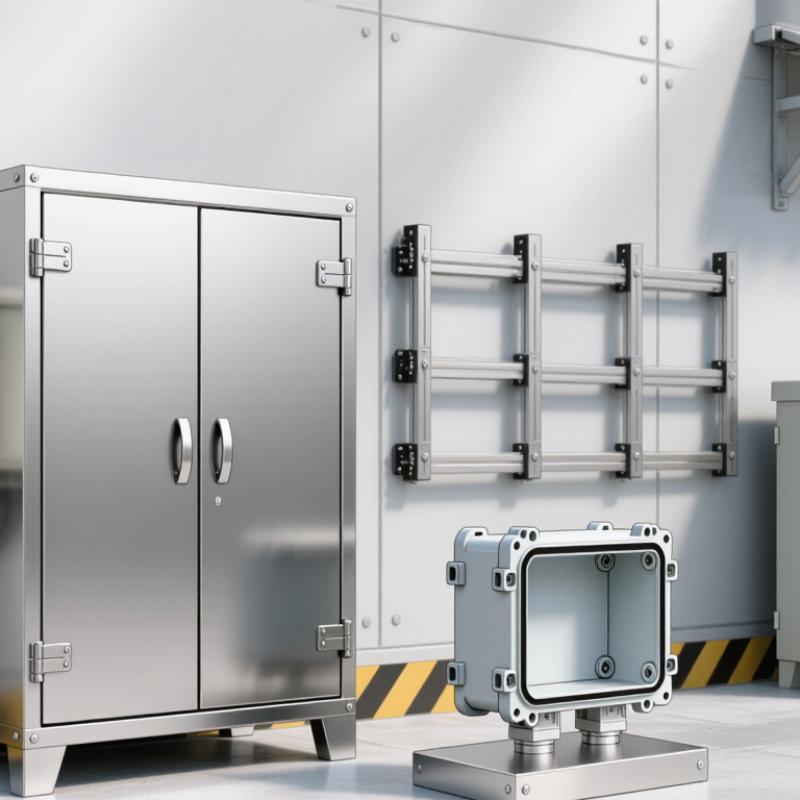
Choosing an enclosure box starts with the conditions it must face. IEC 60529 IP codes describe protection against solid objects and water. The first digit concerns solids, such as dust; the second concerns water exposure. An IP rating does not, by itself, describe every factor a site may present.
NEMA 250 types cover enclosure suitability in specified indoor and outdoor conditions. Depending on the type, considerations can include rain, hose-directed water, corrosion, or external ice formation.
These classifications are not direct equivalents to IP codes. A simple conversion chart can be misleading. Check the relevant standard and product documentation before specifying an enclosure.
Look at the whole installation.
A box mounted near a washdown area may need a different rating from one inside a dry control room. Cable entries, door seals, mounting position, and maintenance can affect protection in practice. Even a well-rated enclosure may admit water if a gasket is damaged or a fitting is poorly installed. That detail is easy to overlook. Reassess the rating if the environment changes, and confirm that the selected enclosure meets the actual exposure—not just the label on a drawing.
For indoor electrical equipment, a NEMA Type 12 enclosure helps guard against circulating dust, falling dirt, and dripping noncorrosive liquids. Picture a workshop where fine particles settle on a control panel or condensation drips from overhead pipes. A properly selected Type 12 box can reduce the chance that these conditions reach sensitive components. It is intended for indoor use, not exposure to outdoor weather or powerful hose spray. That distinction matters.
Tips: Check the enclosure’s seams, door gasket, and cable-entry fittings during installation. A poorly sealed opening can undermine the protection the box is meant to provide. Also consider heat from drives or other components; sealing out dust does not remove heat. Follow the equipment maker’s temperature limits.
Type 12 is useful, but it is not a cure-all. Dust levels, liquid exposure, and cleaning routines vary from site to site. I would not assume that a rating alone guarantees suitability, especially near frequent washdowns or corrosive chemicals. Review the actual conditions, then confirm the enclosure and accessories match them. Even a careful choice may need reassessment when the room or process changes.
Outdoor enclosures rated IP66 are designed for demanding conditions. The first “6” means dust cannot enter under specified test conditions. The second “6” indicates protection against powerful water jets from different directions. That matters near washdown areas, exposed service yards, and equipment mounted beside frequently cleaned machinery. Dust-tight. Jet-resistant. Not waterproof for every situation.
IP66 does not mean an enclosure can be submerged or ignored outdoors. Check the product’s material, temperature range, corrosion resistance, and UV suitability for the site. A sealed box can still develop problems if a cable gland is loose or a gasket is pinched during installation. I have seen small fitting details matter more than the rating printed on the housing. It is easy to overlook them.
Before choosing a size, allow room for wiring, terminals, and heat-producing components. Mount the enclosure so water does not collect around its door or cable entries. Inspect seals after maintenance, especially if the cover has been opened repeatedly. The rating describes tested protection, not a guarantee against every weather pattern or installation mistake. For harsh exposure, verify the complete assembly, including its accessories and mounting method.
NEMA Type 4X enclosures are designed for locations where moisture and corrosion can threaten electrical components. They help keep out windblown dust, rain, splashing water, and water directed by a hose. The 4X designation also indicates added corrosion protection. It does not mean the box can be submerged.
A rating is not a material. Enclosure bodies may use stainless steel, fiberglass, or other suitable materials, but performance depends on the complete assembly. Check the door gasket, hinges, latches, and fasteners; a vulnerable screw can become a weak point. Salt finds seams. In coastal or washdown areas, inspect the enclosure regularly for damaged seals, deposits, or signs of corrosion.
Match the enclosure to the actual exposure, not just the room name. A damp indoor space may need different protection from a seaside control panel facing salt spray and driving rain. Confirm that cable entries and accessories preserve the intended rating after installation. This detail is easy to overlook. Also consider cleaning chemicals, temperature changes, and maintenance access, since the NEMA Type 4X designation alone does not address every site condition.
NEMA Type 4X enclosures are designed for indoor or outdoor use where protection from corrosion is needed in addition to Type 4 environmental protection. Actual performance depends on the complete enclosure design and its applicable rating.
| Enclosure option | Typical material | Typical strengths | Selection considerations | Common application settings |
|---|---|---|---|---|
| NEMA Type 4X stainless-steel enclosure | Often 304 or 316 stainless steel | A properly rated enclosure provides Type 4 protection and corrosion protection. Stainless steel also offers a durable metal construction. | Grade, finish, welds, fasteners, and cleaning practices affect suitability. 316 is commonly considered for chloride exposure, but it is not immune to corrosion in every condition. | Food-processing areas, coastal installations, and washdown locations, subject to the specific environment and enclosure rating. |
| NEMA Type 4X fiberglass-reinforced enclosure | Molded fiberglass-reinforced polyester or a similar composite | Nonmetallic construction does not rust, and a Type 4X-rated model is designed for the stated enclosure protections. | Check UV resistance, impact performance, temperature limits, chemical compatibility, and mounting requirements for the specific product. | Outdoor control equipment, utility installations, and corrosive industrial environments where a nonmetallic enclosure is suitable. |
| NEMA Type 4X thermoplastic enclosure | Molded thermoplastics such as polycarbonate or other specified polymers | Nonmetallic, corrosion-resistant construction; some designs can be lightweight or allow viewing through a suitable cover. | Verify the exact resin’s chemical, UV, heat, and impact properties. A material alone does not establish a NEMA rating. | Instrumentation, sensors, and compact control equipment in applications matched to the selected polymer. |
| NEMA Type 4X coated-metal enclosure | Metal substrate with a specified protective coating system | Can combine a metal enclosure structure with a corrosion-protective finish when the complete enclosure is designed and rated accordingly. | Coating damage, cut edges, joints, and maintenance can affect corrosion resistance. Confirm the complete enclosure—not just the coating—has the required rating. | Industrial installations where a rated coated-metal design meets the site’s exposure and maintenance requirements. |
| NEMA Type 4 enclosure (comparison) | Various materials, depending on the enclosure design | Designed for Type 4 protection, including protection against windblown dust, rain, splashing water, and hose-directed water, and protection against external ice formation. | Unlike Type 4X, Type 4 does not add the Type 4X corrosion-resistance requirement. Check the applicable standard and product documentation. | Indoor or outdoor locations needing Type 4 protection where the additional Type 4X corrosion protection is not required. |
Note: NEMA enclosure types describe enclosure performance, not a guarantee that every material will suit every chemical or exposure. Type 4X does not mean the enclosure is suitable for submersion. Confirm the rating, installation instructions, and material compatibility for the actual application; NEMA type designations are not direct equivalents to IP ratings.
Hazardous-area enclosures are designed to limit the risk of ignition when electrical equipment operates near flammable gases, vapors, or combustible dust. UL 1203 addresses explosion-proof and dust-ignition-proof equipment intended for classified locations. It evaluates enclosure construction and performance under specified test conditions. The exact requirements depend on the equipment’s intended use and markings. That matters.
An enclosure’s rugged appearance alone proves little. Check its certification details, environmental rating, temperature limits, and suitability for the site’s hazard classification. A heavy cover, threaded entry, and carefully seated gasket are practical clues, but they cannot replace approved markings or installation instructions. Even a tested enclosure can be compromised by incorrect conduit fittings, damaged threads, or an unsuitable cable entry. Small details count.
Selection should begin with the actual gases or dusts present, expected temperatures, moisture, and cleaning methods. Match the enclosure and connected components to those conditions, then follow the manufacturer’s installation guidance and applicable local requirements. UL 1203 is an important reference, not a shortcut for site-specific engineering. In practice, classifications can be unclear, and field conditions change. Pause and verify them before specifying equipment.
UL 1203 covers explosion-proof and dust-ignition-proof electrical equipment for hazardous (classified) locations. The bars count NEC group-letter designations: Class I gases and vapors have Groups A–D, Class II combustible dusts have Groups E–G, and Class III ignitable fibers and flyings are not assigned group letters. The zero for Class III does not mean zero hazard categories.

