

Request a Quote: Call 781-890-3111

Top 10 Types of Steel Rod for Global Buyers

Steel Rod is a basic industrial product, yet its specifications can change project safety, cost, and delivery risk. Global buyers use it in construction, machinery, automotive parts, energy equipment, and general fabrication. The right choice depends on chemistry, diameter, surface condition, strength, formability, and corrosion exposure.

The World Steel Association reported approximately 1.89 billion tonnes of crude steel production in 2023. This scale shows steel’s continuing importance across international supply chains. Its World Steel in Figures 2024 publication also highlights major differences between producing regions. These differences affect lead times, certification practices, transport costs, and supplier selection. The OECD Steel Outlook 2024 further discusses capacity growth and persistent pressure across global steel markets. Buyers should therefore compare more than quoted prices.

This guide reviews ten widely traded types of Steel Rod, including carbon steel, alloy steel, stainless steel, galvanized steel, threaded rod, bright steel, and wire rod. Each type serves a different engineering purpose. Carbon steel often suits structural applications. Stainless grades perform better in corrosive environments. Threaded rod supports fastening systems, while bright rod offers improved dimensional accuracy.

Small details matter. A mill certificate should identify grade, heat number, dimensions, and test results. ASTM, EN, JIS, and ISO references may not be interchangeable. That point is often underestimated. Buyers should verify the exact standard, tolerance, coating weight, packaging, and inspection method before ordering. No ranking fits every market. Project conditions, local regulations, and available fabrication equipment can change the best choice. This guide provides a practical starting point, but independent technical review remains necessary for safety-critical applications.
Top 10 Types of Steel Rod for Global Buyers

What Steel Rods Are and How They Are Classified

Steel rods are long, solid steel products used in construction, manufacturing, machining, and reinforcement. Their classification starts with chemistry. Low-carbon rods offer good weldability and bending. Medium-carbon grades provide higher strength but need more controlled forming. High-carbon rods resist wear and fatigue, although they are less forgiving during fabrication.

Alloy rods contain elements such as chromium, nickel, manganese, or molybdenum. These additions can improve hardness, corrosion resistance, or heat performance. Stainless rods rely mainly on chromium content for corrosion protection. Tool-steel rods are selected for cutting, molding, and repeated impact. They are not interchangeable.

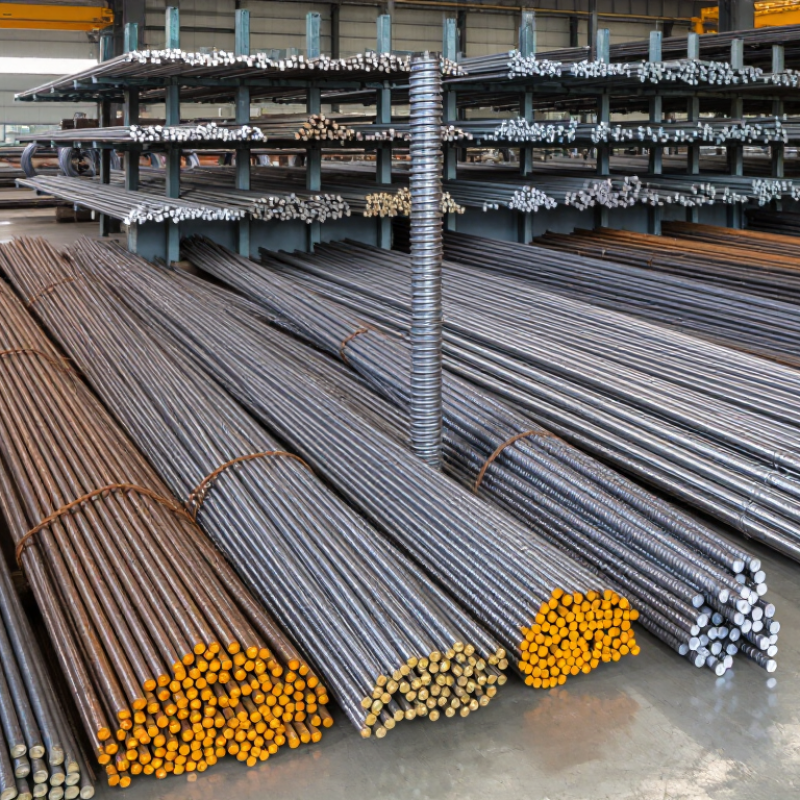
Shape and production method create another classification. Hot-rolled rods suit general structural work. Cold-drawn rods usually provide tighter dimensions and a smoother surface. Ribbed reinforcing rods improve concrete bonding, while smooth round rods serve shafts, pins, and fabricated parts. Wire rod is commonly supplied in coils, often for drawing or fastener production. The boundary between rod and bar is not always clean, so buyers should check the applicable standard, diameter range, tolerance, and delivery condition.

Scale matters. The U.S. Geological Survey reported global crude steel production near 1.89 billion metric tons in 2023. Yet this figure does not represent rod output alone. Buyers should request mill test certificates, chemical analysis, tensile data, and heat numbers. Grade names can look similar across standards. That is where mistakes happen. A practical review should compare chemistry, mechanical properties, surface condition, and intended use before ordering.

The Top 10 Steel Rod Types for Different Industrial Uses

Top 10 Types of Steel Rod for Global Buyers

The Top 10 Steel Rod Types for Different Industrial Uses

Steel rod selection depends on load, environment, forming method, and required finish. Low-carbon steel rod suits welding frames, brackets, and general fabrication. Medium-carbon rod supports shafts, axles, and machine pins. High-carbon rod offers greater hardness for wear-resistant parts. It can become brittle if heat treatment is poorly controlled.

Stainless steel rod performs well around moisture, food equipment, and chemical processing areas. Alloy steel rod combines strength and toughness for gears, pressure parts, and heavy machinery. Tool steel rod is used for dies, punches, and cutting tools. Spring steel rod stores elastic energy in suspension parts, clips, and industrial springs. Bearing steel rod supports rolling elements where fatigue resistance matters. Each application needs verified chemistry and mechanical data.

Threaded steel rod provides adjustable fastening for construction frames, pipe supports, and equipment installation. Deformed reinforcing steel rod improves concrete performance in columns, slabs, and foundations. Surface ribs must match the required design standard. Buyers should check diameter tolerance, straightness, tensile strength, heat-treatment records, and mill certificates. A bright, cold-drawn surface may reduce machining work, but it does not automatically guarantee better performance. Cost comparisons can miss transport damage, rejected batches, or unsuitable standards.

The difficult part is choosing the cheapest rod without creating a more expensive failure.

Key Properties and Applications of Each Steel Rod Type

Top 10 Types of Steel Rod for Global Buyers
Key Properties and Applications of Each Steel Rod Type

Steel rod selection depends on strength, corrosion resistance, machinability, and end-use conditions. World Steel Association reported 1.89 billion tonnes of crude steel production in 2023, showing the scale of this global market.

Carbon steel rods offer balanced strength and cost for shafts, pins, and general fabrication. Alloy steel rods add chromium, nickel, or molybdenum for higher toughness and fatigue resistance. Stainless steel rods resist moisture and chemicals, making them suitable for food equipment, medical tools, and coastal structures. Spring steel rods provide high elasticity for suspension parts and industrial springs.

Tool steel rods maintain hardness under heat and repeated cutting. Bearing steel rods deliver excellent wear resistance for rolling components. High-speed steel rods retain cutting performance at elevated temperatures. Welding rods use controlled chemistry to support stable arcs and reliable joints. Cold-heading steel rods provide strong plasticity for bolts, screws, and rivets. Reinforcing steel rods improve concrete performance by carrying tensile loads in buildings, bridges, and foundations.

ASTM and ISO specifications help buyers verify chemistry, tolerances, heat treatment, and mechanical performance. The OECD Steel Market Outlook highlights continuing volatility in steel demand and trade, so procurement data should remain current.

A practical warning: “stainless” does not mean corrosion-proof in every environment. Chlorides can still cause pitting. I would not select by grade name alone. Diameter, surface condition, test certificates, and real operating temperature deserve equal attention. Small details matter.

How Global Buyers Should Compare Steel Rod Specifications

Top 10 Types of Steel Rod for Global Buyers

When comparing steel rod specifications, begin with the application, not the product name. Carbon steel rods suit general fabrication, while alloy, stainless, spring, bearing, and tool steel rods serve more demanding conditions. Reinforcing rods require different checks from cold-heading or bright-drawn rods. Numbers matter.

Compare diameter, length, tolerance, straightness, and surface condition together. A 20 mm rod with a tight tolerance may reduce machining waste, but it can cost more. Check twice. Ask whether the stated diameter is nominal, measured, or finished after drawing. Small wording differences can create large shipment disputes.

Mechanical data needs equal attention. Review yield strength, tensile strength, elongation, hardness, and impact performance at the intended temperature. Chemical composition should match the required grade and processing route. For outdoor or wet service, verify corrosion resistance rather than trusting the word “stainless.” Request heat numbers, mill test certificates, inspection reports, and sample test results. Independent testing may be worthwhile for critical parts.

Global buyers should also confirm the applicable standard and edition. ASTM, EN, JIS, and other systems may use different test methods or acceptance limits. Do not compare values blindly. I have seen buyers select a cheaper rod because its tensile strength looked higher, while its elongation was unsuitable for forming. That decision seemed efficient, but it created cracking during production. Packaging, rust protection, bundle weight, and marking deserve specification lines too. A perfect grade can still arrive difficult to identify.

Top 10 Types of Steel Rod for Global Buyers

How Global Buyers Should Compare Steel Rod Specifications

How to compare: Tensile strength is only one purchasing criterion. Global buyers should also verify yield strength, chemical composition, diameter tolerance, surface condition, heat-treatment condition, applicable standard, corrosion resistance, weldability, and certification requirements. The figures shown are representative minimum or nominal tensile-strength values from commonly used grades and standards; actual values vary by grade, diameter, and delivery condition.

International Standards, Quality Checks, and Purchasing Factors

Top 10 Types of Steel Rod for Global Buyers

International Standards, Quality Checks, and Purchasing Factors

Steel rods serve different purposes, including construction, machining, springs, bearings, welding, and precision components. Common categories include carbon, alloy, stainless, tool, bright, threaded, free-cutting, bearing, spring, and reinforcing rods. Each type needs a suitable grade, diameter, surface condition, and heat treatment. A low-cost rod can become expensive after machining problems or early failure.

International buyers should compare standards carefully. ASTM, ISO, EN, JIS, and other systems may describe similar grades differently. Confirm the exact standard edition, chemical limits, tensile strength, yield strength, and elongation. Do not rely on grade names alone. Ask for a heat-specific material test certificate, not a general catalogue sheet. The certificate should match the bundle number and production heat.

Physical checks still matter. Inspect diameter at several points, measure straightness, and look for seams, scale, deep scratches, or rust pits. Third-party testing can verify chemistry, hardness, ultrasonic quality, and mechanical performance. It adds time, but rejected cargo costs more. Packaging also deserves attention. Bundles need clear labels, moisture protection, and stable loading for long sea routes.

Purchasing decisions involve tolerance, minimum order quantity, lead time, payment terms, and destination requirements. Confirm whether the rod will be cut, cold drawn, forged, or welded. A tolerance that seems acceptable may fail an automated line. I have seen paperwork pass while surface defects stopped production. That gap deserves honest review. Standards guide the purchase, but traceability and physical evidence build confidence.

Top 10 Types of Steel Rod for Global Buyers - International Standards, Quality Checks, and Purchasing Factors

Steel Rod Type Typical Grades or Material Families Common International Standards Typical Applications Key Quality Checks Important Purchasing Factors
Carbon Steel Round Bar Low-carbon Medium-carbon
Examples: C15, C45, 1018, 1045
EN 10083-2
ASTM A29/A29M
ISO 683-1
Shafts, pins, axles, fasteners, machinery components, and general fabrication.
  • Chemical composition and carbon equivalent
  • Tensile strength, yield strength, and elongation
  • Diameter, straightness, and surface defects
  • Ultrasonic testing when internal soundness is critical
Select grade according to strength, weldability, machining needs, heat treatment, diameter tolerance, surface condition, and required mill certification.
Deformed Reinforcing Bar Carbon rebar Weldable rebar
Common strength classes include 400 and 500 MPa ranges.
ASTM A615/A615M
ASTM A706/A706M
ISO 6935-2
EN 10080
Reinforced concrete slabs, columns, beams, foundations, bridges, and infrastructure.
  • Yield strength, tensile strength, and elongation
  • Bar mass, diameter, rib geometry, and spacing
  • Bend and rebend performance
  • Heat or cast traceability and weldability data
Confirm the governing construction code, nominal diameter, strength class, rib pattern, cut lengths, bundling, corrosion requirements, and project-specific welding limitations.
Steel Wire Rod Low-carbon High-carbon Alloy
Supplied in hot-rolled coils for downstream drawing or forming.
ASTM A510/A510M
EN 10016 series
ISO 16120 series
Wire drawing, nails, welding wire, mesh, springs, tire cord, fasteners, and cable products.
  • Chemistry, segregation, and surface decarburization
  • Coil weight, diameter, ovality, and dimensional consistency
  • Surface scale, seams, laps, and cracks
  • Mechanical properties and drawability
Specify end-use process, drawing reduction, coil dimensions, surface condition, allowable defects, packaging, and whether descaling or special cleanliness is required.
Bright Steel Bar Cold-drawn Peeled Ground
Often produced from carbon or low-alloy hot-rolled feedstock.
EN 10277
ASTM A108
ISO 286 dimensional tolerance system
Precision shafts, hydraulic parts, pins, automatic-lathe components, and close-tolerance machinery parts.
  • Diameter tolerance, roundness, and straightness
  • Surface roughness and decarburization depth
  • Tensile properties and hardness
  • Visual inspection for seams, pits, and scratches
Choose the finishing process based on tolerance and surface requirements; also confirm bar length, chamfering, straightness, machinability, and allowable residual stress.
Low-Alloy Steel Rod Chromium-molybdenum Nickel-chromium
Examples: 4140, 4340, 42CrMo4
ASTM A29/A29M
EN 10083-3
ISO 683-1
Gears, high-strength shafts, studs, bolts, pressure parts, and heavy-duty machine components.
  • Alloy chemistry and hardenability
  • Hardness profile and heat-treatment condition
  • Tensile, yield, and impact properties where specified
  • Ultrasonic inspection and grain-flow condition
Define the supplied condition, such as annealed, normalized, quenched and tempered, or cold finished; verify heat-treatment records, machinability, and service temperature.
Stainless Steel Rod Austenitic Ferritic Martensitic
Examples: 304, 316, 410 families
ASTM A276/A276M
ASTM A479/A479M
EN 10088-3
ISO 683-5
Food-processing equipment, chemical equipment, architectural components, shafts, valves, and marine-related parts.
  • Chromium, nickel, molybdenum, and carbon content
  • Corrosion resistance appropriate to the environment
  • Mechanical properties and hardness
  • Surface finish, passivation, and intergranular corrosion testing when applicable
Match the grade to chloride exposure, acids, temperature, and fabrication method; specify finish, tolerance, heat number, passivation status, and contamination controls.
Spring Steel Rod High-carbon Silicon-manganese Chromium-vanadium
Common families include 51CrV4 and 60Si2Mn-type grades.
EN 10089
EN 10132-4
ASTM A689/A689M for selected spring-steel applications
Coil springs, torsion springs, suspension components, clips, washers, and high-cycle elastic parts.
  • Elastic limit, tensile strength, and hardness
  • Fatigue performance and cleanliness
  • Decarburization and surface crack inspection
  • Dimensional stability after heat treatment
Specify spring design, stress range, fatigue life, heat-treatment route, surface condition, straightness, and any shot-peening or corrosion-protection requirements.
Tool Steel Rod Cold-work Hot-work High-speed
Common families include D, H, O, A, and M series.
ASTM A681
EN ISO 4957
ISO 4957
Dies, punches, cutting tools, molds, blades, gauges, and wear-resistant tooling.
  • Alloy chemistry and carbide distribution
  • Annealed hardness and machinability
  • Hardenability, dimensional stability, and toughness
  • Ultrasonic testing and surface crack inspection
Choose according to wear, impact, hot-temperature strength, corrosion resistance, and heat-treatment equipment; confirm annealed condition and recommended processing data.
Bearing Steel Rod High-carbon chromium Clean steel
Typical family: 100Cr6 / 52100-type bearing steel.
ISO 683-17
ASTM A295/A295M
ASTM A534/A534M for selected forms
Bearing rings, rollers, balls, precision shafts, and highly wear-resistant components.
  • Nonmetallic inclusion content and steel cleanliness
  • Carbide size, distribution, and banding
  • Surface and internal crack detection
  • Hardness, dimensional accuracy, and fatigue performance
Prioritize cleanliness level, inspection class, surface finish, traceability, heat-treatment compatibility, and fatigue-life requirements over lowest purchase price.
Free-Cutting Steel Rod Sulfur-alloyed Lead-free machinability grades
Examples: 11SMn30, 1215, 12L14-type families
EN 10277
ASTM A108
ASTM A29/A29M
High-volume CNC turning, screw-machine parts, fittings, bushings, connectors, and small precision components.
  • Chemistry, sulfur level, and inclusion morphology
  • Machinability and chip-breaking behavior
  • Diameter, straightness, and surface quality
  • Mechanical properties and plating compatibility
Balance machining speed against weldability, ductility, impact resistance, plating needs, corrosion protection, and restrictions on lead-containing grades.