

China has become a central manufacturing base for energy storage, driven by rapidly expanding solar and wind capacity. The International Energy Agency reported that global battery storage additions nearly doubled in 2023, reaching about 42 GW. China contributed significantly to this expansion. The country’s National Energy Administration also reported more than 31 GW of new energy storage capacity by the end of 2023.
This growth raises an important question: What Are the Top Solar PV Battery Suppliers in China? The answer depends on more than factory size. A reliable Solar Pv Battery supplier should demonstrate stable cell quality, proven safety controls, clear warranty terms, and responsive technical support. Lithium iron phosphate chemistry remains widely preferred for many solar applications because it offers strong thermal stability and long cycle performance. However, project conditions still matter.
Leading Chinese suppliers include companies with experience in residential, commercial, and utility-scale systems. Their differences appear in usable capacity, inverter compatibility, monitoring software, certifications, and after-sales service. Wood Mackenzie and BloombergNEF reports consistently highlight China’s strong position in global battery manufacturing and energy storage supply chains. Yet rankings can mislead. A famous brand may not suit every project.
The best choice depends on climate, load patterns, installation scale, and local compliance requirements. Buyers should examine test records, degradation assumptions, and independent certifications. Real performance matters more than impressive brochures. This guide compares major Chinese suppliers through those practical criteria, while recognizing that market data changes quickly and some public claims require careful verification.
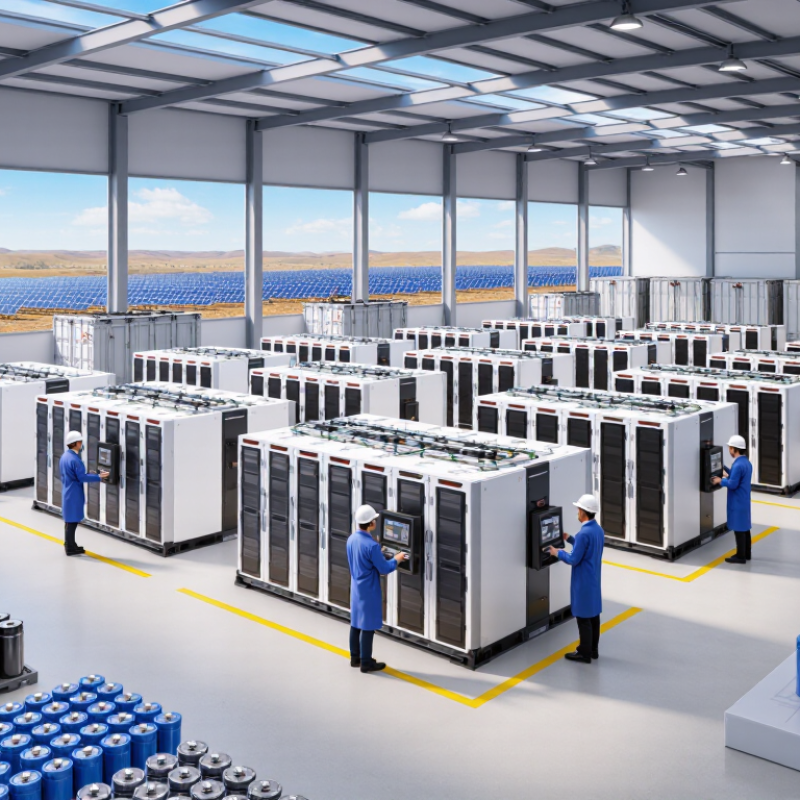
China’s solar PV battery supplier landscape is broad, but it is not uniform. Large cell manufacturers provide standardized lithium iron phosphate batteries. Other factories integrate cells, battery management systems, racks, and energy management software. Regional suppliers often focus on customized projects and export support.
The details matter. A 280 Ah cell may suit a commercial storage rack, while compact modules fit residential systems better. Buyers should check usable capacity, round-trip efficiency, operating temperature, and warranty conditions. Ask for cycle-test records, traceable cell information, and independent safety reports. IEC testing and UN 38.3 transport documentation are also important for international shipments.
During supplier evaluations, factory process control often reveals more than polished brochures. Inspect welding quality, insulation, fire detection, and end-of-line testing. Confirm whether the supplier manufactures cells or mainly assembles imported components. That difference affects consistency, service, and replacement planning. The market is not perfectly transparent. Some performance figures depend on ideal test conditions. A battery rated for many cycles may deliver fewer in hot, poorly ventilated sites. Suppliers should explain degradation assumptions, not hide them. Local technical support, spare-part availability, and communication speed can matter as much as the purchase price. A lower quotation is not always a lower-cost solution.
When evaluating solar PV battery suppliers in China, start with evidence, not polished brochures. Ask for factory audit records, production capacity, and recent project references. A reliable supplier should explain cell chemistry, usable capacity, cycle life, and thermal management clearly. Vague performance claims deserve careful questioning.
Request independent test reports for safety, capacity retention, and environmental performance. Check whether the battery includes overcharge protection, temperature monitoring, and a suitable battery management system. Review warranty terms line by line. Look for coverage periods, cycle limits, response times, and exclusions. A ten-year warranty means little if service depends on unclear conditions.
Supplier experience also matters. Examine similar installations in climate zones like northern winters or humid coastal areas. Ask how failures are diagnosed and how replacement parts are shipped. Traceable serial numbers and consistent quality records show stronger operational control. Factory visits can reveal storage conditions, testing equipment, and worker procedures. Photos are not enough.
Cost should be compared against usable energy, installation needs, and expected degradation. The cheapest quotation may create higher maintenance costs later. Still, supplier scale does not guarantee perfect execution. Communication can fail between sales teams and engineers. I would verify technical answers with an independent consultant before signing. Mistakes happen, but transparent correction is a valuable sign.
Chinese solar PV battery manufacturers now serve residential, commercial, and utility-scale projects worldwide. The strongest suppliers usually offer lithium iron phosphate systems, modular cabinets, and integrated battery management platforms. Their factories often control cell sourcing, pack assembly, software testing, and final inspection. This integration can reduce delivery delays and improve traceability.
A practical supplier review should examine more than advertised capacity. Check usable energy, round-trip efficiency, cycle performance, thermal protection, and operating temperature ranges. Request test records from independent laboratories when possible.
Production facilities should also show clear quality procedures, including incoming cell inspection, welding checks, insulation tests, and end-of-line charging trials. Small details matter. A loose connector can create expensive downtime.
Leading manufacturers also provide installation drawings, communication protocols, training, and responsive technical support. Confirm whether the system works with the intended inverter and local grid requirements.
Warranty language deserves careful reading, especially capacity retention, service response, and replacement procedures. A recurring weakness in supplier comparisons is overreliance on price and nominal capacity.
Real performance depends on installation quality, charging habits, climate, and maintenance. Even experienced buyers can overlook these factors. A factory visit or video audit may reveal cleaner assembly areas, better labeling, and stronger testing discipline than a polished brochure suggests.
China’s solar PV battery suppliers increasingly compete through chemistry, thermal control, and application design, not cell capacity alone. The International Energy Agency reports global battery demand exceeded 750 GWh in 2023, rising about 40% year on year. That growth rewards manufacturers offering traceable cells, conservative operating limits, and responsive after-sales engineering. Important, but not sufficient.
Lithium iron phosphate (LFP) dominates many stationary systems because it balances safety, cycle life, and cost. It suits rooftop storage, commercial peak shaving, and utility-scale solar shifting. Nickel-rich chemistries provide higher energy density, but require stricter thermal management and degradation modelling. Sodium-ion batteries are emerging for lower-cost, cold-climate, and supply-diversified projects, although energy density remains lower. The IEA’s Batteries and Secure Energy Transitions report recorded 42 GW of new battery storage capacity in 2023. That was roughly double 2022’s additions.
Product application determines more than chemistry. Residential systems need compact enclosures, quiet cooling, islanding control, and simple monitoring. Factories prioritize demand-charge reduction, power quality, and predictable warranty performance. Grid projects need containerized racks, liquid cooling, fire detection, cybersecurity, and grid-code compliance. Independent testing under IEC 62619 and IEC 63056 strengthens procurement confidence. However, published cycle-life figures can disappoint under real operating conditions. Heat, partial cycling, dust, and imperfect maintenance change outcomes. Real-world results vary. Chinese suppliers with transparent test protocols and field data deserve closer consideration than suppliers relying on headline capacity.
| Battery Technology | Typical Product Formats Offered in China | Nominal Cell Voltage | Typical Usable Depth of Discharge | Typical Cycle-Life Range | Key Safety Characteristics | Primary Solar PV Applications | Main Advantages | Key Limitations |
|---|---|---|---|---|---|---|---|---|
| Lithium Iron Phosphate (LFP) | Residential wall-mounted batteries, floor-standing batteries, modular battery cabinets, commercial storage systems and containerized energy-storage systems | Approximately 3.2 V per cell | Typically 80%–95%, depending on the battery-management-system settings and warranty conditions | Approximately 3,000–8,000 cycles under specified test conditions | High thermal stability, low risk of thermal runaway compared with many nickel-rich lithium-ion chemistries, and integrated battery-management protection | Residential self-consumption, backup power, commercial peak shaving, microgrids and utility-scale solar-plus-storage | Long service life, good safety profile, high round-trip efficiency and strong suitability for daily cycling | Lower energy density than nickel-rich lithium-ion batteries; performance can decline at low temperatures without thermal management |
| Nickel-Manganese-Cobalt Lithium-Ion (NMC) | Compact residential battery packs, hybrid inverter batteries, mobile or space-constrained storage systems and selected commercial products | Approximately 3.6–3.7 V per cell | Typically 80%–90% | Approximately 2,000–5,000 cycles under specified test conditions | Requires robust cell monitoring, thermal control and protection against overcharge, overheating and mechanical damage | Space-constrained residential systems, mobile energy applications and installations where high energy density is important | Higher energy density and lower weight than LFP for a similar stored-energy capacity | Generally higher thermal-management requirements and shorter cycle life than LFP in many stationary-storage operating profiles |
| Valve-Regulated Lead-Acid (VRLA) | Absorbent glass mat batteries, gel batteries, telecom-style backup units and low-cost off-grid storage banks | Approximately 2.0 V per cell | Typically 50%–80% to support service-life expectations | Approximately 500–2,000 cycles, depending on design, temperature and discharge depth | Non-spillable when correctly installed, but requires ventilation and protection from overcharging; hydrogen generation remains possible | Small off-grid solar systems, emergency backup, telecommunications and applications with infrequent cycling | Lower initial purchase cost, established recycling infrastructure and broad installer familiarity | Lower usable capacity, heavier and larger than lithium batteries, slower charging and shorter life under frequent deep cycling |
| Flooded Lead-Acid | Deep-cycle battery banks for off-grid photovoltaic systems and rural or agricultural installations | Approximately 2.0 V per cell | Typically 50%–70% | Approximately 500–1,500 cycles, depending on operating conditions and maintenance | Requires ventilation, upright installation, electrolyte maintenance and protection from overcharging | Off-grid homes, agricultural pumping, remote monitoring and low-cost backup systems | Low upfront cost and simple, well-understood technology | High maintenance, gas emission, electrolyte handling, large footprint and relatively low round-trip efficiency |
| Vanadium Redox Flow Battery | Modular electrolyte tanks, power-conversion skids and containerized long-duration energy-storage systems | Electrolyte voltage varies with operating state; system voltage is determined by stack design | Commonly 80%–100% without the same cycle-wear mechanism as conventional batteries | Often above 10,000 cycles, subject to stack, pump and operating conditions | Non-flammable aqueous electrolyte and low risk of combustion; pumps and auxiliary systems require monitoring | Utility-scale solar shifting, renewable-energy integration, microgrids and long-duration storage | Very long cycle life, flexible energy-duration sizing and strong suitability for frequent deep cycling | Lower energy density, larger installation footprint, higher system complexity and greater balance-of-plant requirements |
| Sodium-Ion Battery | Emerging residential batteries, low-temperature storage products and selected commercial or grid-storage systems | Approximately 2.3–3.0 V per cell, depending on the cathode and cell design | Typically 80%–95%, depending on system specifications | Approximately 2,000–6,000 cycles for currently commercialized designs, depending on operating conditions | Good tolerance to low temperatures in some designs and reduced dependence on lithium, nickel and cobalt; safety still depends on system engineering | Residential storage, low-temperature regions, backup power and cost-sensitive stationary applications | Potentially lower raw-material exposure, good low-temperature performance and suitability for stationary storage | Lower commercial maturity, lower energy density than many lithium-ion products and less standardized field-performance data |
| Second-Life Lithium-Ion Battery Systems | Repurposed electric-vehicle battery modules assembled into stationary storage racks or containerized systems | Depends on the original cell chemistry and module architecture | Usually limited by the remaining health of the modules and the system warranty requirements | Highly variable; commonly assessed through remaining-capacity, resistance and safety testing rather than a fixed cycle figure | Requires module-level screening, traceability, thermal monitoring, balancing and carefully designed enclosure protection | Demonstration projects, low-cost commercial storage, backup applications and controlled microgrids | Potentially lower acquisition cost and improved resource utilization | Variable condition, complex warranty management, inconsistent module specifications and higher integration effort |
Choosing a Chinese solar PV battery supplier requires more than comparing price lists. In procurement work, I examine factory records, testing procedures, and service history. Ask whether the supplier manufactures cells, assembles modules, or resells finished systems. This distinction affects traceability, customization, and accountability. Request recent reports for capacity, cycle life, thermal performance, and safety. Each report should identify the tested model and laboratory.
A suitable supplier should provide clear technical documents before any deposit. Check cell chemistry, usable capacity, inverter compatibility, operating temperature, ingress protection, and communication protocols. Confirm compliance with standards required in your destination market. Do not accept vague claims like “international certification.” Request certificate numbers, validity dates, and matching product models. A factory video helps, but an independent audit is stronger. Small details matter: labeled racks, clean cable routing, and serial-number tracking reveal process discipline.
Commercial reliability deserves equal attention. Review warranty exclusions, replacement procedures, spare-part availability, and response times. Ask for references from installations with similar climates and load patterns. Clarify delivery terms, payment stages, packaging, and inspection rights in writing. The lowest quotation may hide weaker cells or limited support. I have seen attractive proposals fail because technical assumptions were never recorded. My selection process is not perfect; supplier data can change, and one audit cannot prove everything. Keep comparing evidence, not promises.

