

Choosing a Carbon Steel Sheet Supplier affects more than the purchase price. It shapes product quality, delivery reliability, and long-term manufacturing risk. Global buyers must examine mills, service centers, and trading companies with equal care.
Edwin Basson, Director General of worldsteel, has emphasized, “Steel is essential to modern life and is the most recycled material in the world.” That perspective matters when comparing suppliers across different regions. A dependable Carbon Steel Sheet Supplier} should provide verifiable mill certificates, clear chemical compositions, and consistent thickness tolerances. Practical proof matters.
This guide introduces ten suppliers serving international buyers. It considers production capacity, export experience, quality systems, packaging, minimum order quantities, and delivery performance. It also reviews common grades, including A36, S235JR, SS400, and higher-strength options. Buyers should check whether each supplier can support cutting, leveling, slitting, or surface treatment.
Price alone misleads. A cheaper sheet may create waste through uneven edges, poor flatness, or inconsistent coating weight. Small details become expensive quickly. Port location, container loading, moisture protection, and document accuracy also deserve attention. However, no ranking remains perfect for every project. A construction buyer may value volume, while an equipment maker may prioritize tighter tolerances and traceability.
The suppliers discussed here are starting points, not automatic recommendations. Confirm current certifications, sample quality, production schedules, and payment terms before contracting. Strong sourcing combines technical judgment with careful verification. That process reduces surprises, though it cannot remove every commercial risk.
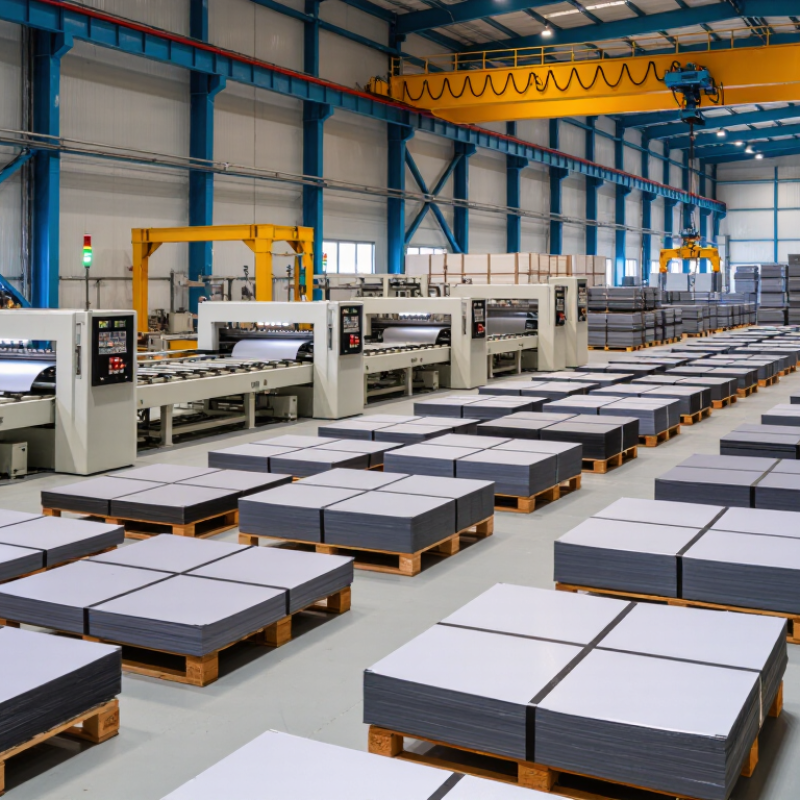
Evaluating carbon steel sheet suppliers requires more than comparing prices. A reliable supplier should provide clear grades, thickness tolerances, surface conditions, and production standards. Ask for recent mill test certificates, not generic templates. These documents should match the heat number, batch, chemical composition, and mechanical results of your order.
Traceability matters. A stamped bundle, readable label, and digital inspection record can prevent costly disputes at the destination port. Check whether the supplier performs dimensional checks, surface inspections, and loading controls. Request sample sheets when possible. A smooth sample is useful, but it does not prove consistent production. Audit records and independent inspections offer stronger evidence.
Logistics also reveal supplier quality. Confirm packaging methods, moisture protection, container loading, export documents, and realistic lead times. Ask how the supplier handles rejected sheets or delayed vessels. Responses should be specific, not promotional. A low quotation may exclude testing, edge trimming, inland transport, or protective wrapping. I have seen purchasing teams focus too heavily on the unit price. That approach often creates hidden costs. Even experienced buyers can miss a small tolerance clause. Review it again. Reliability is built through transparent records, technical communication, and corrective action when something goes wrong.
Regional supply patterns matter when global buyers compare the top ten carbon steel sheet suppliers. World Steel Association data shows that Asia produced roughly 1.3 billion tonnes of crude steel in 2024. China alone exceeded 1 billion tonnes, while India produced about 149 million tonnes. This scale supports broad sheet availability, but crude steel output does not guarantee consistent coating, thickness, or export readiness.
East Asian suppliers often provide extensive hot-rolled and cold-rolled ranges, supported by integrated mills and mature ports. South Asian suppliers are gaining attention because regional production and infrastructure demand continue rising. European suppliers typically compete through tighter specifications, traceability, and lower-emission production routes. North American sources remain relevant for buyers needing stable domestic logistics and documented quality systems.
Regional differences can be practical. A buyer in Southeast Asia may reduce freight time through nearby mills. A European project may value certified mechanical properties more than the lowest offer. OECD steel market reports warn that expanding global capacity could intensify price pressure, yet demand growth remains uneven. That creates negotiation room, but also quality risks.
Not every large producer is a reliable sheet supplier.
Buyers should verify mill certificates, dimensional tolerances, surface condition, packaging, and shipment history. Independent inspection helps, especially for first orders. The overlooked issue is after-sales response. A technically suitable sheet can still become expensive when claims, replacements, or port delays are handled slowly. Region-based rankings are useful, but they should be treated as a screening tool, not final evidence.
Top 10 Carbon Steel Sheet Suppliers for Global Buyers
Product Range, Grades, Sizes, and Manufacturing Capabilities
Reliable carbon steel sheet suppliers usually offer hot-rolled, cold-rolled, galvanized, and pickled-and-oiled products. Their catalogs may include low-carbon grades for fabrication, structural grades for construction, and higher-strength options for machinery parts. Buyers should match grade chemistry with welding, forming, and load requirements.
Common thicknesses range from 0.5 millimeters to over 100 millimeters, depending on the production line. Standard widths often reach 2,000 millimeters, while cut-to-length sheets support more specific designs. Some suppliers provide coils, plates, slit strips, and custom-cut blanks. Details matter. A listed size does not always confirm the usable tolerance.
Manufacturing capability reveals practical reliability. Look for controlled rolling, annealing, leveling, shot blasting, edge trimming, and automated inspection. Traceable heat numbers and mill test certificates help verify yield strength, tensile strength, elongation, and chemical composition. Experienced suppliers should explain surface quality, flatness, cutting tolerances, packaging, and moisture protection.
Ask for evidence.
Samples can expose waviness, burrs, or inconsistent coating before large orders begin. A supplier may advertise broad grades but outsource critical processing, which can affect delivery and consistency. Buyers should confirm production capacity, inspection methods, export packaging, and realistic lead times in writing. Some specifications remain unclear until engineering teams review drawings, standards, and intended service conditions. That gap deserves attention.
Product Range, Grades, Sizes, and Manufacturing Capability Reference
This industry-wide reference compares widely traded carbon steel sheet grades by minimum specified yield strength. The values are based on common ASTM and EN material standards and are not linked to any individual supplier or brand. Actual availability, thickness range, width, length, surface finish, cutting method, and certification options may vary by manufacturer and production line.
Reference grades: ASTM A36, ASTM A572 Grade 50, ASTM A516 Grade 70, EN 10025 S235JR, EN 10025 S275JR, EN 10025 S355JR, JIS G3101 SS400, JIS G3106 SM490, ASTM A588, and ASTM A283 Grade C.
Choosing among the top 10 carbon steel sheet suppliers requires more than comparing online prices.
Experienced buyers should review chemical analysis, tensile results, thickness tolerance, and surface condition. A dependable supplier provides traceable heat numbers and inspection records with every shipment. Small details matter.
Quality systems should include ISO 9001 certification and product documents such as EN 10204 3.1 inspection certificates. Depending on the destination, buyers may also request ASTM, EN, or JIS compliance. Certification alone is not enough. Ask whether an independent laboratory verifies the results. Factory audits can reveal weak calibration practices, inconsistent packaging, or poorly controlled storage.
Pricing should be compared by total delivered cost, not only by the quoted tonnage rate. Freight, cutting, export packing, duties, and payment terms can change the final figure. Delivery performance deserves equal attention. Review confirmed lead times, port experience, container loading photos, and the supplier’s response to delays. In my purchasing work, the cheapest offer has occasionally created expensive rework. That lesson is easy to overlook.
A practical shortlist should measure production capacity, mill origin, monthly availability, and communication speed. Suppliers handling urgent orders should explain their backup inventory clearly. Some delivery promises sound precise but exclude weekends, customs clearance, or inland transport. Buyers should request a written schedule with inspection and dispatch milestones. That makes performance measurable.
Choosing among the top 10 carbon steel sheet suppliers requires more than comparing prices. The World Steel Association reported global crude steel production of about 1.89 billion tonnes in 2023. That scale creates wide differences in quality, capacity, and delivery discipline. Request mill test certificates, heat numbers, coating details, and dimensional tolerances. Verify whether the supplier can trace each sheet from furnace to shipment. A polished website proves little.
Audit production evidence before signing. Check ISO 9001 procedures, third-party inspection access, and previous export records for your destination market. The OECD Steel Outlook 2024 warns that global excess capacity may increase competitive pressure. Low pricing can therefore reflect temporary overcapacity, not lasting efficiency. Compare total landed cost, including ocean freight, insurance, duties, cutting, packaging, and claims handling. Ask for realistic lead times during peak seasons. Delays damage projects.
Tips: Build a weighted scorecard. Give quality and traceability at least equal weight to price. Test sample sheets for thickness, flatness, tensile strength, and surface defects. Use independent inspection for the first shipment. The International Energy Agency estimates steelmaking creates roughly 7–9% of global energy-related emissions, so request emissions data and recycling practices. No scorecard is perfect. I would still keep a backup supplier, especially when delivery windows are tight. Reference documents should be dated, verifiable, and linked to the exact production batch.
| Rank | Supplier Origin / Market | Typical Product Portfolio | Common International Standards | Typical Thickness Range | Typical Width Capability | Surface and Edge Options | Export and Logistics Strength | Key Buyer Verification Points |
|---|---|---|---|---|---|---|---|---|
| 1 | East Asia | Hot-rolled sheets, cold-rolled sheets, galvanized sheets, pickled and oiled sheets | ASTM EN JIS ISO | Approx. 0.4–250 mm | Approx. 1,000–2,500 mm | Mill edge, slit edge, pickled and oiled, galvanized, cut-to-length | Extensive container, bulk, and break-bulk export experience; broad port coverage | Confirm mill test certificates, heat numbers, dimensional tolerances, and third-party inspection rights |
| 2 | South Asia | Hot-rolled carbon steel sheets, structural plates, boiler-quality plates, galvanized sheets | ASTM EN IS ISO | Approx. 1.2–200 mm | Approx. 1,000–2,500 mm | Hot-rolled, pickled and oiled, shot-blasted, primed, cut-to-size | Competitive export pricing and established supply routes to the Middle East, Africa, Europe, and Asia | Check chemical composition, impact-test requirements, plate flatness, and production lead time |
| 3 | Northeast Asia | High-quality cold-rolled sheets, automotive-grade sheets, hot-rolled sheets, and structural plates | JIS ASTM EN ISO | Approx. 0.4–200 mm | Approx. 900–2,200 mm | Bright cold-rolled finish, pickled and oiled, galvanized, precision cut-to-length | Strong consistency, advanced processing, and reliable documentation for demanding industrial buyers | Verify surface classification, dimensional control, forming grade, and traceability documentation |
| 4 | Western Europe | Structural steel sheets, abrasion-resistant plates, pressure-vessel plates, and cold-rolled products | EN 10025 EN 10028 ASTM ISO | Approx. 0.5–300 mm | Approx. 1,000–3,000 mm | Mill edge, trimmed edge, blasted and primed, normalized, cut-to-length | Strong compliance culture, efficient intra-European transport, and mature certification systems | Confirm CE-related documentation where applicable, EN grade equivalence, and REACH-related requirements |
| 5 | Southern Europe and Mediterranean | Hot-rolled sheets, structural plates, galvanized sheets, checker plates, and processed blanks | EN ASTM ISO DIN | Approx. 1.5–150 mm | Approx. 1,000–2,500 mm | Pickled and oiled, galvanized, painted, patterned, slit, and cut-to-length | Convenient shipping access to Europe, North Africa, the Middle East, and nearby regions | Evaluate coating mass, packaging for sea transport, customs documents, and delivery reliability |
| 6 | North America | Commercial-quality sheets, structural sheets, HSLA sheets, galvanized sheets, and heavy plates | ASTM ASME CSA ISO | Approx. 0.5–300 mm | Approx. 1,000–3,000 mm | Hot-rolled, cold-rolled, galvanized, galvannealed, painted, and precision leveled | Strong domestic distribution networks and established service-center processing capabilities | Confirm ASTM edition, domestic-content rules, tariff exposure, minimum order quantity, and freight terms |
| 7 | Central and Eastern Europe | Structural steel sheets, general engineering plates, hot-rolled coils, and galvanized products | EN 10025 EN 10149 ASTM ISO | Approx. 1.5–200 mm | Approx. 1,000–2,500 mm | Pickled and oiled, blasted and primed, normalized, trimmed, and cut-to-length | Good rail and road links into the European market and competitive regional delivery times | Check mill location, route risk, EN grade designation, test requirements, and packaging specifications |
| 8 | South America | Hot-rolled sheets, structural plates, galvanized sheets, automotive sheet, and general engineering grades | ABNT ASTM EN ISO | Approx. 0.6–200 mm | Approx. 1,000–2,500 mm | Hot-rolled, cold-rolled, galvanized, pickled and oiled, slit, and leveled | Regional strength in the Americas and established maritime routes to selected global destinations | Verify export allocation, port handling, moisture protection, payment terms, and shipment schedules |
| 9 | Southeast Asia | Hot-rolled sheets, cold-rolled sheets, galvanized sheets, coated sheets, and construction-grade plates | ASTM JIS EN ISO | Approx. 0.4–150 mm | Approx. 900–2,200 mm | Pickled and oiled, galvanized, pre-painted, slit coil, and cut-to-length | Convenient access to major Asian shipping lanes and flexible regional distribution options | Confirm source mill, product origin, coating specifications, certificate authenticity, and transshipment risks |
| 10 | Middle East and North Africa | Structural sheets, hot-rolled plates, galvanized sheets, rebar-related flat products, and fabrication plate | ASTM EN GOST ISO | Approx. 1.5–200 mm | Approx. 1,000–2,500 mm | Hot-rolled, pickled and oiled, galvanized, blasted and primed, and cut-to-length | Strategic location for shipments to the Gulf, Africa, South Asia, and Mediterranean markets | Assess stock availability, mill origin, certification scope, corrosion protection, and port-to-port lead time |

