

China has become a major source of compact motion-control solutions for robotics, automation, medical equipment, and smart devices. This guide examines ten leading Chinese manufacturers of Dc Planetary Gear Motor products, using practical and technical criteria rather than marketing claims alone.
The evaluation considers torque consistency, gear ratios, voltage options, efficiency, backlash, noise, thermal performance, and service life. We also review customization capability, production experience, quality systems, testing methods, and international support. Factory audits, product samples, datasheets, and application feedback can reveal details that brochures often miss. A motor that performs well on a test bench may still struggle under continuous load, poor cooling, or frequent reversing. Real applications matter.
Selection is not perfectly objective. Public data varies between manufacturers, and some test conditions remain difficult to verify independently. That limitation deserves attention. Rankings may change as suppliers improve equipment, expand capacity, or update their product lines. Therefore, this article presents a practical reference, not an absolute judgment. Readers should confirm current specifications, sample performance, lead times, warranty terms, and compliance documents before placing an order. Small details count. Shaft tolerances, connector quality, and gearbox grease can affect the final result. The manufacturers discussed here are selected for their technical capability, market presence, manufacturing depth, and evidence of dependable customer support.
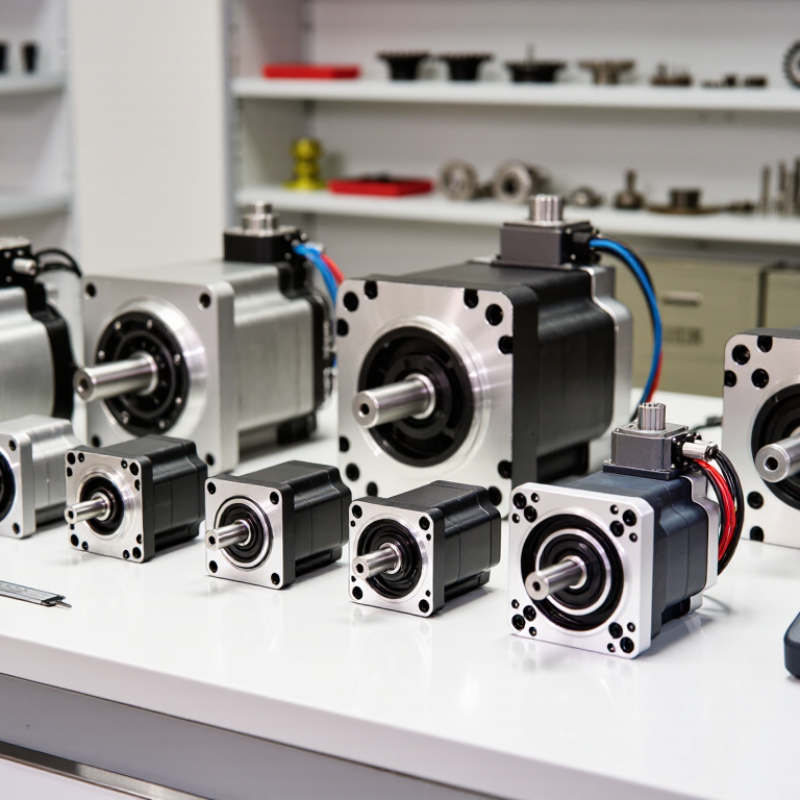
A DC planetary gear motor combines a motor, sun gear, planet gears, carrier, and ring gear in one compact assembly. Several planet gears share the load. This design supports higher torque than many simple spur gear systems of similar size. In practical testing, check shaft alignment, gear noise, grease condition, and housing temperature after continuous operation. Small details matter. A motor rated at 12 V may perform differently under a weak power supply. Key ratings include voltage, no-load speed, rated torque, stall torque, efficiency, duty cycle, and permissible radial load.
Gear ratios from 3:1 to 100:1 cover different motion requirements. A 3:1 ratio offers modest speed reduction with better output speed. A 30:1 ratio suits compact conveyors, positioning units, and light lifting mechanisms. A 100:1 ratio delivers stronger torque but usually increases backlash, size, and heat. For example, a motor running at 3,000 rpm may produce about 100 rpm through a 30:1 gearbox before load losses. Real output speed will be lower. Efficiency is not constant.
When evaluating manufacturers, request load-speed curves, endurance data, dimensional drawings, and sample inspection records. Check whether the quoted torque is continuous or only momentary. Ask for noise measurements and temperature-rise results at the intended duty cycle. Some specifications look precise but omit efficiency at working load. I have seen this create avoidable sizing errors. Engineers should also confirm connector quality, shaft concentricity, gear material, and production consistency before approving volume orders.
China Top 10 DC Planetary Gear Motor Manufacturers
China’s top 10 DC planetary gear motor manufacturers should be judged by torque, voltage, efficiency, and IP rating. Torque is not only a catalogue number. It must reflect continuous load, peak load, speed, and gearbox temperature. A 12V motor may suit compact automation, while 24V or 48V systems often reduce current demand and cable losses. Test data matters more than attractive claims.
The U.S. Department of Energy reports that motor-driven systems consume about 46% of global electricity. This makes efficiency a practical purchasing concern, not a marketing detail. IEC 60034-30-1 provides a recognized framework for motor efficiency classes, although small geared motors may require more specific test conditions. IP protection should follow IEC 60529. IP54 resists limited dust and water splashes, while IP65 offers stronger protection against dust and water jets. A perfect ranking is impossible. Some manufacturers publish efficiency at one operating point only, which can mislead selection.
Tips: Request torque-speed curves, stall-current values, voltage tolerance, noise data, and thermal test results. Confirm whether the IP rating applies to the complete motor and gearbox assembly. Check samples under real duty cycles. A motor that performs well for ten minutes may struggle after several hours. Also, compare efficiency at your actual load, because the best laboratory figure may not be the best production result.
China’s top 10 DC planetary gear motor manufacturers are often judged by their control of three core technologies: voltage range, gear construction, and feedback accuracy. Reliable suppliers typically offer 12–48 V DC motors for mobile equipment, conveyors, valves, and compact automation systems. A 24 V motor may suit battery-powered machinery, while 48 V versions can reduce current demand under heavier loads.
Metal planetary gears provide high torque in a small housing. Their sun, planet, and ring gears distribute force across several contact points. This design improves load handling and reduces wear when lubrication and alignment are correct. During supplier evaluation, inspect gear material, heat treatment, tooth finish, and shaft support. Small machining errors can create noise, vibration, or early backlash. It is easy to overlook this detail.
Encoder feedback adds measurable control. Incremental encoders can report speed and position to a controller, supporting accurate stopping and repeatable motion. Hall sensors are economical, but they may offer less resolution than optical or magnetic encoders. Ask for pulse specifications, wiring diagrams, signal compatibility, and test data at different loads. Bench testing matters.
A dependable manufacturer should explain torque curves, thermal limits, gearbox efficiency, and service life assumptions. Certification documents help, but they cannot replace application testing. I would also compare samples after repeated starts, direction changes, and low-voltage operation. Real equipment is rarely as clean as a laboratory setup. That weakness deserves attention.
China’s top ten DC planetary gear motor manufacturers cover a wide output range, from 0.01 W micro drives to 1000 W industrial units. Comparing them requires more than checking catalog numbers. A 0.01 W motor may suit a medical valve, while a 1000 W model needs strong heat control and stable torque. I would request test curves at the actual voltage, load, and duty cycle.
Noise figures need careful interpretation. Some suppliers report sound pressure at one meter, while others use different distances or test rooms. A quiet motor may measure below 45 dB, but its gearbox can become louder after repeated starts. Ask for measured data, not attractive claims. Small details matter.
Life ratings also vary. A motor advertised for 5,000 hours may use light loads and short operating cycles. Practical evaluation should include temperature rise, gear wear, shaft backlash, and performance after continuous running. Customization can include winding voltage, gear ratio, shaft shape, encoder fitting, connector type, and mounting holes. However, every change can increase lead time and testing costs. I have seen promising samples fail during thermal testing. That is why a reliable comparison should include sample validation, inspection records, and clear acceptance limits.
When comparing China’s top ten DC planetary gear motor manufacturers, start with evidence, not catalog claims. IEC 60034 documents should match the motor’s rated voltage, speed, temperature rise, and operating conditions. ISO 9001 certification indicates a quality management system, but it does not guarantee every gearbox will perform equally. Request recent test reports, production traceability, and clear inspection records.
Tips: Check whether the motor supports S1 continuous duty or another duty cycle. S2 allows short-time operation, while S3 includes repeated starts and rests. Ask for thermal data at actual load, not only no-load speed. Measure the housing after extended running. A warm casing is normal; excessive heat suggests overload, poor ventilation, or unsuitable gearing. Also verify stall-current limits and insulation requirements before approval.
Thermal limits deserve careful attention. Copper losses rise during frequent starts, and small planetary stages may retain heat inside compact housings. Compare winding temperature, ambient temperature, and insulation class under realistic conditions. A supplier should explain its test method clearly. I would not accept a certificate without checking its scope and validity. One weakness in my own screening is relying too heavily on written data. A short endurance test can reveal noise, backlash, lubricant leakage, or speed drift that a polished datasheet misses. Keep those findings in the selection record.

