China Top 10 Arc Furnace Shell Manufacturers?
China’s steelmaking sector includes a wide range of manufacturers producing Arc Furnace Shell equipment for demanding industrial environments. These shells form the furnace’s structural body, supporting refractory linings, water-cooled panels, electrodes, and charging systems. Their performance affects safety, maintenance schedules, energy use, and production continuity.
This guide examines China’s top 10 Arc Furnace Shell manufacturers through practical and technical criteria. The review considers fabrication capacity, steel quality, welding control, dimensional accuracy, cooling design, inspection procedures, and export experience. It also considers whether suppliers provide drawings, installation guidance, replacement parts, and responsive after-sales service. Those details matter.
A strong manufacturer should understand thermal expansion, mechanical stress, slag exposure, and repeated furnace cycling. Certificates alone are not enough. Factory audits, weld records, material traceability, and customer references provide more dependable evidence. Buyers should also compare shell weight, plate thickness, access-door design, lifting points, and compatibility with existing furnace equipment.
Some rankings may remain subjective. Public information is uneven. That is worth admitting. A supplier with impressive machinery may still offer inconsistent communication or limited customization. Conversely, a smaller factory may deliver careful engineering and stronger project support. This introduction sets a realistic framework for comparing leading Chinese manufacturers, helping steel producers identify reliable partners rather than choosing only by price or marketing claims. Each candidate deserves direct verification before a purchase decision.
What Is an Arc Furnace Shell and Why Does It Matter?
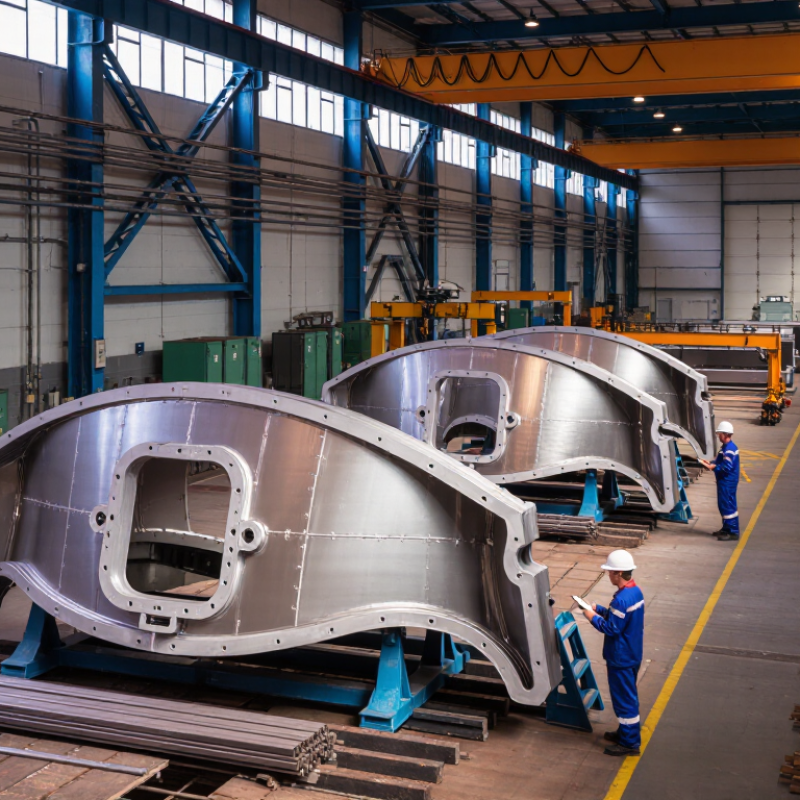
An arc furnace shell is the steel vessel surrounding the refractory-lined melting zone. It holds scrap, molten steel, slag, and intense electrical heat. The shell also supports the roof, electrode system, water-cooled panels, and tilting mechanism. A weak shell can distort, leak, or shorten refractory life. That is more than a maintenance issue.
The World Steel Association reported 1,888 million tonnes of global crude steel production in 2023. Electric arc furnaces produced roughly 28% of that total, showing the shell’s industrial importance.
The International Energy Agency also identifies electric steelmaking as a key pathway for reducing emissions, depending on electricity sources and process efficiency. For buyers comparing China’s top ten arc furnace shell manufacturers, inspect plate grade, weld quality, shell thickness, cooling design, and dimensional tolerances. Supplier claims need evidence. Factory drawings alone are not enough.
Tips
Request material certificates, weld inspection records, hydraulic test results, and measured ovality data. Ask how the shell handles thermal expansion after repeated heats. A thicker shell is not automatically better. It may increase weight, cost, and stress. In practice, maintenance records often reveal more than polished brochures. Design assumptions can fail under uneven charging, poor scrap distribution, or unstable furnace operation. Specification reviews should include operators, refractory engineers, and safety personnel.
How to Evaluate China’s Arc Furnace Shell Manufacturers
Evaluating China’s arc furnace shell manufacturers requires more than comparing quotations. Start with the shell’s working conditions: furnace capacity, steel grade, tapping temperature, cooling design, and electrode arrangement. A serious manufacturer should request detailed drawings and operating data before proposing a solution. This is a good sign.
Review the steel specification, plate thickness, welding procedure, and heat-treatment records. Ask for material certificates that match the actual batch, not generic samples. Inspect weld maps, ultrasonic testing reports, dimensional records, and nozzle alignment data. Critical areas include the roof ring, water-cooled panels, tapping zone, and refractory contact surfaces. Small alignment errors can create difficult installation problems later. I have seen projects focus heavily on price and overlook these interfaces.
Factory evaluation adds practical evidence. Check lifting capacity, welding equipment, machining accuracy, inspection staff, and traceability systems. Request photographs from comparable shells, but verify production dates and technical similarities. A site audit or independent inspection is more reliable than polished brochures. Ask how the supplier handles warping, delayed drawings, transport damage, and field modifications. Delivery promises deserve scrutiny. A low quote can be attractive. It can also hide thinner plates, excluded testing, or weak after-sales support. Compare the complete scope, including packing, spare parts, inspection, documentation, and installation guidance. No supplier is perfect; even a well-managed factory may underestimate interface risks when customer drawings change late. Performance evidence matters more than confident language.
China’s Top 10 Arc Furnace Shell Manufacturers
China’s top 10 arc furnace shell manufacturers should be judged by engineering depth, not factory size alone. Reliable suppliers usually provide shell design, steel fabrication, cooling systems, and installation support. Their workshops should handle thick steel plates, accurate welding, and strict dimensional checks.
A strong manufacturer can explain shell diameter, wall thickness, cooling-water paths, and refractory expansion clearly. It should also share inspection records, material certificates, welding procedures, and production photographs. Experience matters most when a shell operates under intense heat, vibration, and repeated charging impact. The best suppliers adapt designs for different furnace capacities and local working conditions. However, no ranking remains permanent. Delivery performance and after-sales service can change quickly.
Tips: Request a complete technical drawing before signing. Check weld quality through documented non-destructive testing. Ask for references from similar furnace projects. Confirm spare-part availability and emergency response times. A low quotation may hide thinner plates, weaker cooling protection, or limited commissioning support. Compare total operating risk, not only the purchase price. Site visits are useful, but they do not prove everything. I would still verify production data independently. Small details often reveal more than polished presentations.
Key Differences in Design, Materials, and Production Capacity
China Top 10 Arc Furnace Shell Manufacturers: Key Differences in Design, Materials, and Production Capacity
China’s leading arc furnace shell manufacturers differ mainly in engineering depth, steel grades, and fabrication scale. A shell for a 30-ton furnace needs different reinforcement from a 150-ton unit. Designers also adjust water-cooled panels, tapping openings, lifting points, and thermal expansion allowances. The World Steel Association reported 1.89 billion tonnes of crude steel production worldwide in 2023. Electric arc furnaces produced about 28.6% of that output. This demand encourages larger, faster, and more durable shell designs.
Material selection strongly affects service life. Common choices include welded boiler-quality plate, heat-resistant steel, and locally reinforced sections near slag doors. Some manufacturers use thicker plates, while others reduce weight through engineered ribs and cooling systems. Production capacity is not simply factory size. Buyers should compare annual fabrication tonnage, maximum shell diameter, machining accuracy, welding procedures, and inspection records. The China Iron and Steel Industry Association continues to emphasize energy efficiency and equipment reliability in industry development reports. Still, capacity figures can be difficult to verify. That deserves caution.
Tips: Request drawings, welding qualifications, dimensional reports, and repair histories. Check whether quoted capacity means one shell per month or a complete furnace package. Ask for test evidence, not attractive photographs. ISO 9001 certification helps, but it does not replace independent inspection. A practical site review should examine plate traceability, weld access, cooling-channel pressure testing, and deformation after commissioning. Small details often reveal the real manufacturing standard.
China Top 10 Arc Furnace Shell Manufacturers? - Key Differences in Design, Materials, and Production Capacity
| Category | Typical Furnace Range | Shell Design Profile | Main Shell Materials | Cooling Configuration | Typical Shell Diameter | Indicative Annual Capacity | Best-Fit Application |
| 01 | 10–30 t EAF | Compact cylindrical shell with bolted or welded base ring; designed for frequent grade changes | Carbon steel plate, commonly ASTM A36, Q235, or equivalent structural steel | Air-cooled upper shell with local water-cooled panels where required | 2.2–3.5 m | 300–1,000 t/year | Small foundries, alloy production, and specialty steel melting |
| 02 | 30–50 t EAF | Heavy-duty shell with reinforced charging-side structure and replaceable slag-line protection | Low-carbon structural steel with thicker bottom and tapping-side plates | Water-cooled panels around the slag line; air-cooled lower sections | 3.0–4.2 m | 800–1,800 t/year | General steelmaking and medium-sized melt shops |
| 03 | 50–80 t EAF | Segmented shell with high-strength stiffening ribs and engineered tilting-load distribution | Q355-class or equivalent HSLA steel in highly stressed areas; carbon steel elsewhere | Water-cooled copper or steel panels at high-heat zones | 3.8–4.8 m | 1,500–3,000 t/year | Long-product mills and integrated fabrication lines |
| 04 | 80–100 t EAF | Heavy plate shell with removable bottom section for faster refractory maintenance | Weldable carbon steel with localized HSLA reinforcement and wear-resistant protection | Water-cooled side panels, delta section, and slag-door protection | 4.5–5.4 m | 2,500–4,500 t/year | Medium-to-large construction and machinery steel plants |
| 05 | 100–120 t EAF | High-cycle shell with optimized load paths, reinforced trunnion areas, and replaceable panels | Thick carbon-steel shell with HSLA plates around trunnions and support brackets | Water-cooled panels with monitored inlet temperature and flow rate | 5.0–5.9 m | 3,500–6,000 t/year | High-throughput billet and rebar production |
| 06 | 120–150 t EAF | Large shell with modular water-cooled panels and reinforced eccentric-bottom or tapping structure | Structural carbon steel with HSLA reinforcements and high-temperature panel interfaces | Extensive water-cooled sidewall and roof-adjacent sections | 5.5–6.5 m | 5,000–8,000 t/year | Large flat-product and high-output long-product mills |
| 07 | 150–180 t EAF | Extra-heavy shell with fatigue-resistant trunnion supports and access for automated inspection | HSLA structural steel in load-bearing members; carbon steel in low-stress areas | High-area water-cooled panels with independent circuit zoning | 6.2–7.0 m | 7,000–10,000 t/year | Large-scale scrap melting and continuous casting operations |
| 08 | 180–220 t EAF | Ultra-heavy shell using finite-element load analysis and modular replacement architecture | High-strength weldable steel with stress-relieved fabricated assemblies | Water-cooled panels, slag-door cooling, and thermal monitoring points | 6.8–7.8 m | 8,000–12,000 t/year | High-capacity mills requiring long campaign life |
| 09 | 220–300 t EAF | Custom-engineered super-large shell with extensive structural analysis and transport segmentation | HSLA plate, heavy carbon-steel assemblies, and high-integrity welded joints | Multi-zone water cooling with redundant monitoring and maintenance isolation | 7.5–8.8 m | 10,000–16,000 t/year | Integrated steel complexes and very high output plants |
| 10 | 300 t and above | Project-specific shell engineered for exceptional thermal, mechanical, and transportation loads | Certified HSLA and heavy structural steel selected through design stress calculations | Fully zoned water cooling with condition monitoring and emergency protection systems | 8.5–10.0 m+ | 14,000–22,000 t/year | Strategic-scale steelmaking projects with customized engineering |
Data note: The figures are representative engineering ranges for Chinese arc-furnace shell fabrication capabilities and common EAF configurations. Actual dimensions, material grades, production capacity, cooling design, and annual output vary by project specification, furnace supplier, plant schedule, and quality-control requirements.
How to Select the Right Chinese Arc Furnace Shell Supplier
Selecting a Chinese arc furnace shell supplier requires more than comparing steel grades and quotations. The World Steel Association reported that electric arc furnaces produced about 28% of global crude steel in 2023. This share increases pressure on shell durability, cooling performance, and maintenance access. Ask for material certificates, weld procedure records, dimensional reports, and full traceability for plates, stiffeners, and lifting points.
Check whether the supplier has built shells for your furnace capacity and operating cycle. Request drawings showing shell thickness, water-cooled panel layout, refractory clearances, and electrode-opening tolerances. Hydrostatic testing should cover every cooling circuit before shipment. An independent inspection can verify weld quality, although inspection alone cannot correct weak engineering. Confirm applicable GB, ISO, or EN requirements in the purchase contract. Do not accept vague phrases such as “international standard.”
The International Energy Agency identifies electric steelmaking as important for reducing process emissions, but energy and uptime benefits depend on reliable equipment. Review at least three recent project references, spare-part lead times, packaging methods, and on-site installation support. A factory visit is useful. Look closely at welding bays, plate storage, machining accuracy, and actual finished shells. A polished catalog proves little. I would also calculate total ownership cost, not only the initial price. The cheapest offer may reflect thinner sections, limited testing, or unclear exclusions. That risk is easy to underestimate.
China Top 10 Arc Furnace Shell Manufacturers: How to Select the Right Supplier
Typical engineering reference ranges for electric arc furnace shells by nominal furnace capacity. Actual dimensions depend on furnace design, steel grade, cooling arrangement, refractory lining, and operating conditions.
When comparing Chinese suppliers, review whether the proposed shell dimensions match the furnace capacity, plate thickness, fabrication tolerances, welding procedures, inspection records, and documented quality-control requirements.


