

Choosing the right Pressure Relief Valve manufacturer requires more than comparing prices or browsing polished product pages. Global buyers need dependable engineering, verified production, and support that continues after delivery. A valve protecting a steam line, storage vessel, or chemical process must respond accurately when pressure rises. Small details matter, including set-pressure certificates, material traceability, surface finish, and clearly documented testing.
This guide reviews leading manufacturers through practical buying criteria rather than brand popularity alone. It considers design experience, manufacturing capacity, quality systems, testing facilities, certification practices, delivery performance, and technical communication. Product ranges may include spring-loaded, pilot-operated, sanitary, and customized valves for different industries. However, a broad catalog does not always indicate strong application expertise. That is worth remembering. No ranking is perfect.
Reliable manufacturers should explain pressure tolerances, temperature limits, connection standards, maintenance intervals, and replacement-part availability. They should also provide readable drawings and responsive engineering assistance when operating conditions change. For buyers managing international projects, packaging quality and export documentation can be as important as the valve itself. A damaged actuator or missing certificate can delay installation for weeks.
The companies discussed here are assessed from a buyer’s perspective, combining technical evidence with practical experience. Independent verification remains important. Buyers should confirm current certifications, local requirements, and application suitability before placing an order. The best choice is not always the largest manufacturer. It is the supplier that can consistently deliver safe, traceable, and serviceable equipment for the intended duty.
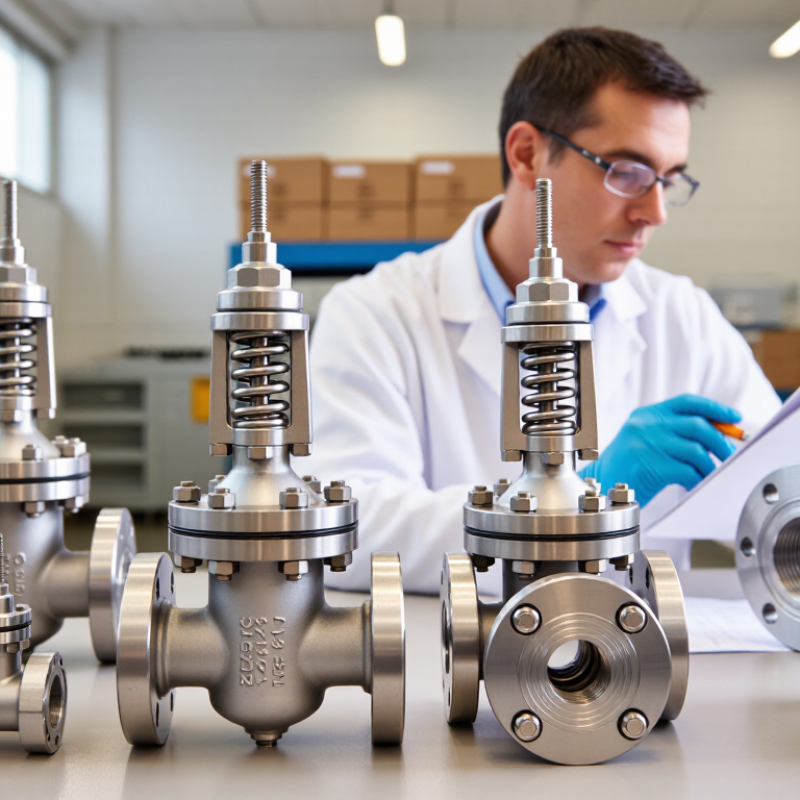
Pressure relief valves protect equipment when pressure rises beyond a controlled limit. They are common in refineries, chemical plants, power stations, food processing lines, and compressed-gas systems. Their purpose is simple: open reliably, release excess pressure, and close without damaging the process.
According to Grand View Research, the global pressure relief valve market was valued at several billion US dollars in the early 2020s, with steady growth expected through 2030. This demand reflects expanding energy infrastructure and stricter process-safety expectations. Buyers should examine set pressure, allowable overpressure, operating temperature, fluid characteristics, and discharge capacity. A valve handling steam may require different materials and trim than one exposed to corrosive chemicals. Small details matter.
Testing is equally important. API 520 and API 521 provide widely used guidance for sizing and installation, while ISO 4126 addresses safety devices against excessive pressure. Field engineers should review backpressure, piping losses, vibration, and maintenance access before selecting a supplier. A technically correct valve can still perform poorly if the discharge pipe is undersized. That mistake is less rare than many specifications suggest. The 2024 Global Energy Review from the International Energy Agency also highlights continuing investment in power and industrial systems, where dependable pressure protection remains essential. Certification documents, traceable test records, and practical service support deserve the same attention as purchase price. The cheapest option may become expensive during an emergency.
Top Pressure Relief Valve Manufacturers for Global Buyers?
Key Criteria for Comparing Pressure Relief Valve Manufacturers
A reliable comparison starts with operating details, not catalogue size. Check pressure range, temperature limits, media compatibility, and required flow capacity. Ask how each manufacturer confirms set pressure and blowdown during testing. Request test certificates, material records, and serial-number traceability. Numbers can mislead.
Examine engineering experience in industries with similar risks and process conditions. A capable technical team should review drawings, installation orientation, back pressure, and discharge piping. It should explain assumptions clearly. Ask for case evidence from comparable applications, not vague claims. Factory audits can reveal calibration practices, inspection points, and storage conditions. Ask for evidence.
Quality systems matter, but certificates alone do not prove consistent performance. Compare inspection plans, nonconformance handling, spare-part availability, and response times after delivery. Review warranty terms carefully, especially for international shipping and field support. A serious supplier can provide installation guidance and practical maintenance intervals. Low pricing may hide testing, documentation, or service gaps. That matters. I have found checklists useful, yet they cannot replace a technical conversation or a site visit. Some comparisons remain uncertain when suppliers provide incomplete data. Record those gaps instead of assuming compliance. Evaluate communication quality as part of reliability; delayed, unclear answers often create larger project problems later.
| Comparison Dimension | Recommended Buyer Benchmark | What to Verify | Why It Matters | Priority |
|---|---|---|---|---|
| Applicable Design Standards | The valve should be designed and tested according to the standards required for the installation, such as ISO 4126, ASME Section VIII, API 520, or API 526. | Review the datasheet, design calculations, test procedures, and certificates. Confirm that the stated edition of each standard is applicable to the project. | Standards define essential requirements for sizing, construction, performance, inspection, and documentation. | Critical |
| Pressure Range and Set Pressure | The available set-pressure range must cover the required operating pressure while maintaining adequate operating margin to prevent unnecessary lifting. | Compare the certified set pressure, allowable working pressure, operating pressure, accumulation limits, and applicable code tolerances. | Incorrect pressure selection can cause premature opening, unstable operation, or insufficient overpressure protection. | Critical |
| Capacity and Sizing Data | The supplier should provide certified relieving capacity for the actual fluid, temperature, pressure, and required flow scenario. | Request sizing calculations based on the governing case, including blocked outlet, fire exposure, thermal expansion, gas flow, liquid flow, or steam flow where applicable. | A valve that is mechanically suitable but undersized may not protect the equipment during the governing relief event. | Critical |
| Material Compatibility | Wetted materials, trim, seals, and spring materials should be compatible with the process fluid, concentration, temperature, and corrosion conditions. | Check the material certificate, corrosion-resistance data, seal specification, temperature limits, and compatibility with sour-service requirements where relevant. | Material incompatibility may lead to corrosion, leakage, embrittlement, contamination, or premature failure. | Critical |
| Temperature Capability | The operating and relieving temperatures must fall within the certified limits of the body, trim, spring, gasket, and seat materials. | Verify minimum and maximum operating temperatures, design temperature, heat-tracing requirements, and derating information. | Temperature affects material strength, spring performance, sealing behavior, and discharge capacity. | Critical |
| Connection and Installation Compatibility | Inlet and outlet connections must match the project piping specification, including nominal size, pressure class, flange standard, thread type, or weld-end requirements. | Compare dimensional drawings with the piping layout and verify face-to-face dimensions, orientation, reaction loads, and discharge-piping requirements. | Connection mismatches can cause installation delays, leakage, excessive loads, or unsafe discharge arrangements. | High |
| Backpressure Performance | The valve should be suitable for the expected built-up and superimposed backpressure, with balanced or pilot-operated construction considered when required. | Request backpressure limits, capacity correction factors, stability data, and guidance for connected headers or closed discharge systems. | Backpressure can change opening behavior, reduce capacity, and create chatter or unstable operation. | Critical |
| Leakage and Seat Tightness | The required seat-tightness level should be stated using the applicable test standard and acceptance class for the service. | Review shop test records, seat-leakage acceptance criteria, test medium, test pressure, and any soft-seat temperature limitations. | Low leakage helps protect product quality, reduce emissions, and maintain process efficiency. | High |
| Certification and Traceability | Each supplied valve should have traceable identification linked to material certificates, inspection records, calibration records, and final test results. | Confirm serial-number traceability, material test certificates, inspection plans, pressure-test reports, calibration certificates, and certificate-of-conformity documentation. | Traceability supports regulatory compliance, quality audits, maintenance planning, and failure investigations. | High |
| Regulatory Compliance | For regulated markets, the valve and quality system should meet applicable requirements such as the EU Pressure Equipment Directive 2014/68/EU or local pressure-equipment rules. | Check conformity assessment documents, notified-body involvement where required, marking requirements, declarations, and market-specific technical files. | Regulatory gaps may prevent customs clearance, commissioning, or legal operation in the destination market. | Critical |
| Sour-Service and Special-Service Suitability | For wet hydrogen sulfide environments, materials and manufacturing controls should meet the applicable requirements of NACE MR0175/ISO 15156. | Verify hardness controls, material restrictions, heat-treatment records, sour-service declarations, and process-fluid composition limits. | Sour service can create sulfide stress cracking and other failure mechanisms in unsuitable materials. | Critical |
| Testing and Quality Control | The quality plan should cover dimensional inspection, pressure testing, set-pressure testing, seat-leakage testing, and final visual inspection. | Request the inspection and test plan, hold-point schedule, calibration status, nonconformance process, and independent inspection options. | A documented quality process reduces manufacturing variation and improves confidence in delivered performance. | High |
| Maintenance and Spare Parts | The design should support practical inspection and repair, with replacement seats, gaskets, springs, and trim available for the expected service life. | Review maintenance manuals, recommended inspection intervals, overhaul procedures, spare-parts lists, and field-service capabilities. | Accessible maintenance reduces downtime and helps preserve certified relief performance. | High |
| Documentation Quality | The technical package should be complete, consistent, and delivered in the buyer’s required language and document format. | Assess datasheets, drawings, manuals, calculations, certificates, test reports, preservation instructions, and document revision control. | Complete documentation simplifies approval, installation, commissioning, operation, and future audits. | High |
| Delivery and Export Readiness | The supplier should provide a confirmed production schedule, export packing, shipping documents, and preservation suitable for the transport route. | Verify manufacturing lead time, inspection dates, packing method, country-of-origin documents, customs information, and Incoterms. | Reliable logistics reduce project delays and protect the valve during international transportation and storage. | High |
| Technical Support and Communication | The supplier should provide qualified engineering support for sizing, application review, installation, troubleshooting, and after-sales service. | Evaluate response procedures, engineering contact availability, calculation support, training resources, service coverage, and escalation routes. | Fast and accurate technical support helps prevent selection errors and shortens problem-resolution time. | Medium |
| Total Cost of Ownership | Compare purchase price together with testing, certification, freight, installation, maintenance, spare parts, energy loss, and expected replacement costs. | Use a lifecycle-cost worksheet and compare equivalent specifications rather than comparing purchase prices alone. | The lowest initial price may result in higher operating costs, more frequent maintenance, or greater downtime. | High |
International buyers need more than a familiar supplier name when selecting pressure relief valve manufacturers. They need verified engineering, consistent testing, and documentation that survives border inspections. MarketsandMarkets estimates the global pressure relief valve market will grow from about USD 5.2 billion in 2024 to USD 6.9 billion by 2029. This expansion reflects demand from energy, chemical processing, water treatment, and manufacturing projects.
Look for manufacturers with documented compliance under API 520, API 526, ASME Section VIII, or ISO 4126, depending on the installation. A reliable supplier should provide material certificates, set-pressure test records, leakage results, and traceable serial numbers. Ask how the factory controls machining tolerances and calibrates its test benches. Small errors can cause unstable operation. They can also create costly shutdowns.
International purchasing adds practical risks. Confirm valve materials against temperature, corrosion, and fluid conditions. Review export packing, spare-part availability, warranty terms, and technical support across time zones. A supplier may offer an attractive price but lack replacement springs six months later. That is not a saving. Grand View Research reports strong growth in industrial valve demand, yet market estimates differ because research firms define product categories differently. Buyers should question broad statistics and compare actual test evidence, production capacity, and project references. A perfect shortlist is unrealistic. Careful verification still works better than confident assumptions.
For global buyers, pressure relief valve quality begins with verifiable standards, not attractive brochures. ISO 4126 defines essential safety requirements for overpressure protection, while ASME BPVC Section VIII supports design acceptance for pressure vessels. API 526 addresses standardized pressure-relief valve dimensions, and API 527 covers seat tightness testing. These details matter when a valve must fit an existing relief system.
Certification evidence should be specific.
ISO’s 2023 Survey recorded more than one million ISO 9001 certificates worldwide, showing how common quality management systems have become. Yet certification alone proves little about every delivered valve. Buyers should request material certificates, heat numbers, calibrated test records, welding qualifications, and documented set-pressure results. The paperwork must match the serial number.
Independent inspection adds confidence. A 2024 industrial valves market report from a leading market research publisher projected steady global growth through the decade, increasing pressure on suppliers to scale without weakening controls. That risk is easy to miss. Factory acceptance testing should include cold differential test pressure, leakage checks, dimensional inspection, and, where relevant, fugitive-emission testing. NACE material guidance may also matter in sour or corrosive service. A supplier can hold several certificates and still provide weak traceability. Buyers should audit corrective-action records, calibration intervals, and nonconformance trends. Small gaps deserve attention.
Choosing the right pressure relief valve manufacturer requires more than comparing prices. Start with your project conditions: set pressure, operating temperature, fluid type, connection size, and required flow capacity. A reliable manufacturer should explain how its valve design matches these details.
Ask for material certificates, pressure test records, calibration procedures, and product traceability. Quality systems matter, but paperwork alone is not enough. Request clear drawings and practical maintenance instructions. If possible, review similar project references or arrange a factory audit. I have seen buyers focus on delivery time and overlook spare parts availability. That decision can create delays later. No selection method is flawless.
Tips: Compare technical support, not just valve prices. Confirm response times for engineering questions and replacement parts. Check whether the manufacturer can provide testing for your actual service conditions. Communication is also evidence of reliability. Slow, vague replies may signal future problems. However, do not reject a supplier after one imperfect answer; ask for clarification and assess how they respond. An experienced manufacturer should discuss failure risks, inspection points, and installation limits without making unrealistic promises. Choose the supplier that documents its claims, understands your operating environment, and remains accountable after delivery.

