

Choosing the right Fpga Chip manufacturer requires more than comparing product prices or announcing a familiar brand.
Global buyers must examine architecture, process technology, supply stability, technical support, and long-term availability. An FPGA may sit inside a five-year industrial controller, a medical imaging platform, or a high-speed communications system. Its reliability affects every connected board.
Ross Freeman, Xilinx co-founder and FPGA inventor, described the device as “the most flexible semiconductor device ever created.” That flexibility remains central to modern procurement. Buyers can reconfigure logic, accelerate artificial intelligence workloads, and adapt interfaces without redesigning an entire printed circuit board. However, flexibility does not remove risk. It can increase design complexity, power consumption, and verification time.
This guide compares leading FPGA Chip manufacturers serving global markets. It considers product range, performance, development tools, packaging, documentation, and regional support. Established companies often provide mature ecosystems, extensive intellectual property, and proven manufacturing relationships. Emerging suppliers may offer competitive pricing, specialized architectures, or faster customization.
The details matter.
A buyer in Germany may prioritize functional safety documentation. A data-center operator may focus on bandwidth and thermal efficiency. A startup may need affordable evaluation boards and responsive engineering assistance. These needs rarely fit one ranking.
No manufacturer is perfect. Even respected suppliers face allocation pressure, software learning curves, or product transitions. That reality deserves attention. The strongest choice depends on the application, timeline, compliance requirements, and available engineering skills. This overview aims to make that decision clearer, while acknowledging that specifications alone cannot predict every project outcome.
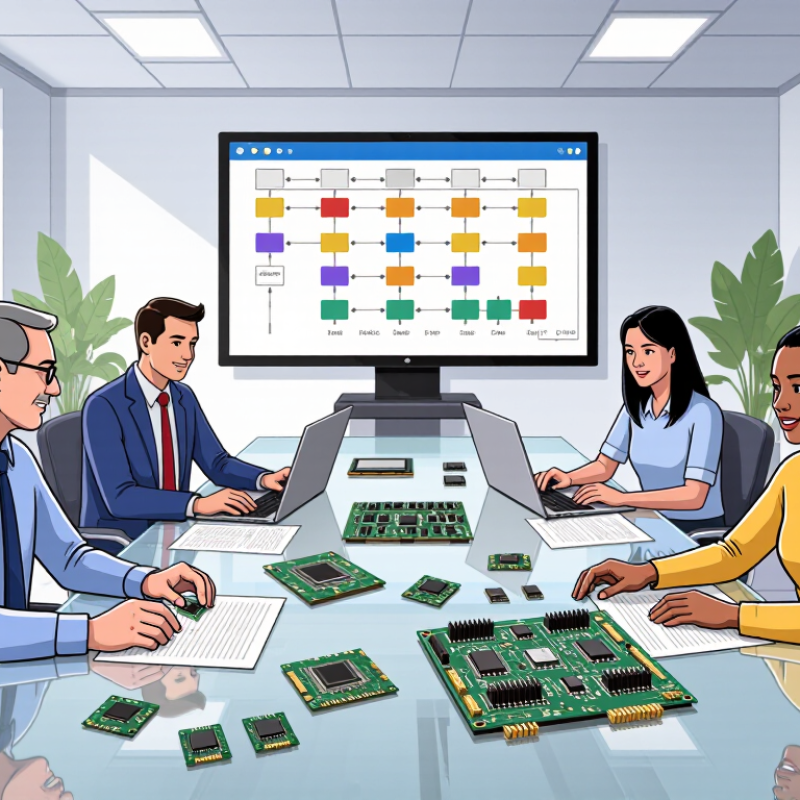
FPGA technology gives engineers programmable logic after a circuit board is produced. This flexibility supports rapid prototyping, industrial controls, imaging equipment, and communication systems. Unlike fixed-function chips, FPGAs can be reconfigured when system requirements change. That matters for global buyers managing different voltage standards, interfaces, and product versions.
An FPGA contains configurable logic blocks, routing resources, memory, and often high-speed transceivers. Engineers use hardware description languages to define how these resources operate. In a factory, one device may monitor motor vibration, process sensor inputs, and trigger safety responses within microseconds. Thermal behavior still requires careful testing. A design that works in a quiet laboratory may struggle inside a hot control cabinet.
Selecting a manufacturer involves more than comparing unit prices. Buyers should examine process consistency, long-term supply planning, development tools, technical documentation, and regional support. Lifecycle data is especially important for medical, transport, and energy equipment. A low-cost part can create expensive redesign work later. This is easy to underestimate. Engineers should also test real workloads, not only sample demonstrations, because timing margins and power use can change under pressure. Some projects need maximum logic density; others benefit more from embedded memory, secure configuration, or efficient power consumption. Supplier audits and traceable quality records add practical confidence, although they cannot remove every supply-chain risk.
Comparing FPGA chip manufacturers requires more than checking logic-cell counts. Global buyers should examine process technology, power efficiency, delivery stability, and engineering support. A 2024 MarketsandMarkets report estimates the FPGA market will grow from about USD 9 billion to more than USD 15 billion by 2029. That expansion increases supplier choices, but it also makes comparison less simple.
Start with technical fit. Review lookup-table density, memory blocks, high-speed transceivers, package options, and operating temperature. Power figures should come from measured workloads, not only marketing tables. Ask for thermal data from a real board. Small differences matter in edge systems. According to the Semiconductor Industry Association’s 2024 industry data, semiconductor demand remains closely tied to computing, automotive, and communications investment. These sectors often require long product lifecycles and strict quality controls.
Manufacturing resilience deserves equal attention. Compare wafer capacity, assembly locations, quality certifications, failure-rate reporting, and documented change-control procedures. The 2024 World Semiconductor Trade Statistics forecast continued global market growth, although regional demand remains uneven. That uncertainty makes transparent lead-time data valuable.
Request sample delivery records and second-source planning. Some evaluation boards perform perfectly in a laboratory, then expose timing or thermal issues in production. This is where buyer judgment matters. Reported market figures also differ by research firm, so forecasts should guide decisions, not replace technical validation.
Top FPGA Chip Manufacturers for Global Buyers
Leading FPGA manufacturers differ in more than logic capacity. Their strongest products balance processing density, power use, development tools, and long-term supply. High-end families often provide abundant logic cells, fast transceivers, and advanced memory interfaces. They suit telecommunications, industrial imaging, aerospace research, and data-center acceleration.
Mid-range devices can be more practical for control systems and embedded vision. They usually offer enough configurable logic, reliable clock resources, and lower board complexity. Smaller devices reduce power consumption and simplify thermal design. This matters when equipment runs inside a sealed enclosure. Tool quality also affects results. Clear timing reports, stable synthesis, and useful debugging features can save weeks of engineering work.
From a buyer’s perspective, product strength should be tested against the complete design, not a headline specification. Compare operating temperature, package availability, security functions, development costs, and documented lifecycle support. Ask for evaluation hardware before committing to volume production. A device may appear powerful, yet require difficult pin planning or expensive memory components. That weakness is easy to miss.
Independent distributors and technical forums can reveal practical supply patterns, but their information should be verified with official documentation. No shortlist is perfect. Engineers sometimes overvalue raw performance and underestimate tool learning time. A careful selection includes prototype testing, timing closure, thermal measurements, and a realistic second-source plan. Availability can change unexpectedly. Planning for that risk is part of professional FPGA procurement.
Regional supply often matters more than a manufacturer’s headline specifications. The WSTS Autumn 2024 Forecast valued global semiconductor sales at 588.4 billion US dollars in 2024. It also projected 11.2% growth for 2025. These figures show why allocation pressure can quickly affect FPGA availability. Buyers should compare regional inventories, quoted lead times, and shipment history. A nearby warehouse may reduce transport delays, but it does not guarantee stable supply.
Distribution quality deserves equal attention. Reliable channels should provide traceability, date-code visibility, and documented change notifications. The Semiconductor Industry Association reported that semiconductor supply chains span multiple regions and remain highly interdependent. This makes dual-region sourcing practical for critical designs. However, adding a second source can increase validation costs. That trade-off is easy to underestimate.
Technical support can determine whether a device succeeds in production. Ask whether local engineers can review pin planning, power sequencing, thermal limits, and tool migration. Request realistic sample quantities, not only optimistic promises. Support response times should be measured in hours or days. Not weeks. Buyers should also examine lifecycle policies and last-time-buy procedures. In my sourcing reviews, low prices sometimes hid weak documentation and uncertain replenishment. That lesson remains uncomfortable. Regional distribution, engineering access, and transparent communication should be scored together, rather than treated as separate purchasing details. (Sources: WSTS, Autumn 2024 Forecast; Semiconductor Industry Association, 2024 State of the Industry Report)
Selecting the right FPGA supplier starts with the application, not the product catalog. Global buyers should define logic capacity, memory needs, interface standards, power limits, and expected operating temperatures. A supplier that asks detailed questions usually understands engineering realities. That matters.
Request evaluation samples and technical documentation before placing a large order. Check timing reports, package drawings, thermal data, configuration methods, and supported development tools. Engineers should test the device with real workloads, not only demonstration designs. Measure startup time, power consumption, signal stability, and performance under heat.
Supply reliability also deserves close attention. Review production capacity, quality controls, traceability, warranty terms, and planned product availability. Ask how the supplier handles engineering changes, testing failures, and unexpected demand. Clear answers are valuable. Vague promises are not.
For international projects, confirm shipping arrangements, export requirements, regional support, and communication channels. A technically strong supplier can still create delays if documentation arrives late or support operates in another time zone. Written escalation procedures reduce confusion.
Price should be evaluated across the full lifecycle. Tool licenses, redesign work, testing equipment, inventory, and field support can change the real cost. I have seen low unit prices become expensive after integration problems appeared. No checklist is perfect. Recheck assumptions after prototype testing, because the first evaluation may expose weaknesses that specifications cannot show.

