


Top Commercial Kitchen Range Brands for Global Buyers
Choosing the right Commercial Kitchen Range is rarely about appearance alone. Global buyers must examine heat control, cooking capacity, safety systems, and long-term service support. A polished stainless-steel body may attract attention, but daily performance matters more. Burners should ignite consistently, ovens should hold stable temperatures, and controls should remain readable during busy service.
This guide explores leading commercial kitchen range brands for restaurants, hotels, catering companies, and institutional kitchens. It considers manufacturing reputation, product durability, energy efficiency, cleaning design, warranty coverage, and access to replacement parts. Local technicians matter. A reliable range becomes less useful when a simple valve requires weeks to replace. Buyers should also confirm electrical standards, gas compatibility, ventilation needs, and regional certification before ordering. Requirements differ between markets, even within the same region.
Real kitchens reveal the difference.
A range may perform well during a showroom demonstration but struggle under continuous lunch service. Uneven pans, crowded burners, and heavy doors expose weaknesses quickly. Some brands offer impressive specifications, yet their after-sales networks remain limited in smaller markets. That detail deserves more attention than glossy brochures usually receive. Pricing can also mislead; lower purchase costs may bring higher maintenance expenses later.
The brands discussed here are assessed through a practical, evidence-based lens. Product documentation, user feedback, service availability, and professional kitchen requirements all contribute to the evaluation. No manufacturer is perfect. Even respected brands may have model-specific limitations, installation concerns, or regional support gaps. Thoughtful buyers should compare current specifications and request local service confirmation before making a final decision.
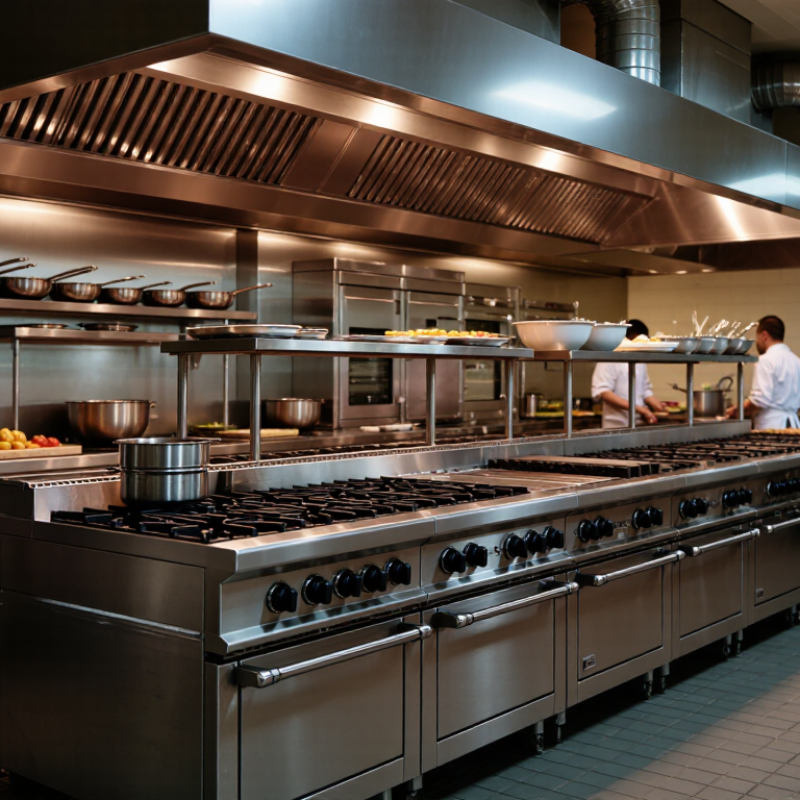
What Defines a Commercial Kitchen Range Brand
A commercial kitchen range brand is defined by more than stainless steel and heating power. It reflects how well the equipment supports real kitchen work. Buyers should examine burner response, oven recovery, control accuracy, and cleaning access. Small details matter. A removable grate can save minutes during a busy service. A sealed cooking surface may reduce spills beneath the burners.
Experience often reveals what product brochures overlook. Chefs notice whether knobs remain usable with wet hands. Technicians examine welds, hinges, insulation, and replacement access. These details influence downtime, safety, and long-term operating costs. A reliable brand provides clear specifications, practical installation guidance, and responsive technical support. It also explains limitations instead of promising perfect performance.
Trust develops through consistent evidence. Independent testing, documented quality procedures, and accessible service information strengthen a manufacturer’s authority. Regional support matters too, since voltage, gas conditions, ventilation rules, and spare-part availability vary across markets. Buyers should ask for maintenance schedules and realistic warranty terms. Some ranges look impressive but feel difficult to service. That deserves attention. Even experienced purchasers can focus too heavily on capacity and appearance. A better evaluation considers the full working environment, from the cook’s reach to the technician’s tools.
| Evaluation Dimension | Industry Data or Typical Benchmark | Why It Defines a Strong Commercial Kitchen Range Brand | What Global Buyers Should Verify |
|---|---|---|---|
| Product Configuration | Commercial ranges are commonly configured with open burners, hot tops, griddles, ovens, salamanders, or combinations of these modules. Typical widths include approximately 24, 36, 48, and 60 inches, depending on the equipment layout. | A broad configuration portfolio allows restaurants, hotels, institutions, and central kitchens to match cooking capacity with available floor space. | Confirm overall width, depth, height, burner layout, oven position, service clearances, and compatibility with the kitchen line drawings. |
| Heating Capacity | Commercial open burners are commonly specified by heat input in BTU/h or kW. Heavy-duty burners may reach approximately 30,000 to 手 50,000 BTU/h per burner, while actual ratings vary by model and fuel type. | Heating capacity affects cooking speed, recovery time, peak-hour throughput, and the type of cookware the range can support. | Review the manufacturer’s certified input rating, total connected load, minimum gas pressure, and whether the rating is based on natural gas or LPG. |
| Fuel and Energy Options | Commercial ranges may use natural gas, LPG, electricity, or induction technology. Gas appliances require correct pressure regulation and combustion ventilation; electric equipment requires suitable voltage, phase, and amperage. | Energy compatibility directly influences installation cost, operating cost, local compliance, and suitability for regions with limited gas infrastructure. | Check fuel conversion availability, factory-installed gas orifices, electrical frequency, voltage, phase, plug type, and local utility requirements. |
| Temperature Control | Commercial ovens commonly provide thermostatic control, with many models operating within an approximate range of 150°F to 550°F (65°C to 290°C). Exact ranges differ by oven type and application. | Stable and repeatable temperature control supports consistent results across baking, roasting, braising, and finishing operations. | Request temperature accuracy, recovery performance, control type, calibration procedure, and whether the oven is standard, convection, or specialized. |
| Construction Materials | Stainless steel is widely used for commercial range fronts, control panels, shelves, and exterior surfaces. Stainless steel grades and thicknesses vary by component and application. | Suitable materials improve corrosion resistance, cleanability, durability, and appearance under frequent cleaning and high-temperature use. | Confirm the stainless steel grade, component thickness, welded or fastened construction, surface finish, and resistance to cleaning chemicals. |
| Cleanability and Hygiene | Commercial designs commonly include removable burner components, sealed or recessed control areas, lift-off grates, removable drip trays, and rounded or accessible edges. | Easy cleaning helps reduce grease accumulation, cross-contamination risks, labor time, and premature equipment deterioration. | Inspect removable parts, grease-management features, access to internal areas, cleaning instructions, and compatibility with the site’s sanitation procedures. |
| Safety Engineering | Relevant safety features may include flame-failure protection, automatic ignition, high-limit protection, over-temperature protection, cool-touch controls, and anti-tip provisions where applicable. | Integrated safety systems reduce operational hazards and support compliance with local gas, electrical, fire, and workplace-safety requirements. | Obtain safety certificates, installation instructions, gas-train details, electrical diagrams, and documentation for the destination country. |
| Ventilation Requirements | Gas-fired and grease-producing cooking equipment generally requires a properly designed commercial exhaust system. Requirements depend on appliance duty, local code, hood design, and kitchen layout. | Correct ventilation controls heat, smoke, grease vapor, and combustion products while supporting safe and efficient operation. | Confirm the appliance duty classification, exhaust and make-up-air requirements, clearances, fire-suppression interface, and local authority approval process. |
| Compliance and Certification | Common references include NSF/ANSI 4 for commercial cooking equipment, UL 197 for electrically heated commercial cooking equipment, and EN 203-1 for commercial gas cooking appliances, depending on the destination market. | Recognized conformity documentation supports legal installation, inspection approval, insurance requirements, and buyer confidence. | Verify certificates, test reports, declaration of conformity, certification scope, model number, and whether the documents apply to the exact configuration being purchased. |
| Performance Consistency | Consistent burner output, even griddle heating, stable oven temperature, reliable ignition, and predictable recovery are key performance indicators. Performance should be assessed using documented test methods where available. | Repeatable performance protects menu quality and helps operators plan cooking times, staffing, and production capacity. | Request test data, commissioning procedures, sample operating results, and references from kitchens with similar menus and service volumes. |
| Serviceability | Service-friendly equipment typically provides accessible valves, igniters, thermostats, control components, and replaceable wear parts without requiring extensive disassembly. | Fast diagnosis and repair can reduce downtime, emergency service costs, and disruption during high-volume operations. | Review exploded parts diagrams, service manuals, fault-diagnosis procedures, spare-parts lists, and technician training availability. |
| Spare Parts Availability | Critical replacement items may include burner caps, grates, igniters, thermostats, valves, knobs, heating elements, door hinges, and seals. | A dependable parts supply is especially important for international buyers facing long shipping distances and different import procedures. | Confirm parts identification, stock locations, lead times, warranty coverage, minimum order quantities, and support for discontinued models. |
| Warranty and Lifecycle Support | Commercial equipment warranties commonly define separate coverage periods for the complete unit, heating components, labor, and replacement parts. Terms vary by supplier and market. | Clear warranty terms reduce financial risk and show whether the supplier is prepared to support equipment beyond the initial sale. | Check warranty duration, exclusions, labor coverage, freight responsibility, authorized service requirements, and the process for international claims. |
| Installation Documentation | Professional documentation should normally include dimensional drawings, utility requirements, installation instructions, user manuals, wiring diagrams, and maintenance schedules. | Accurate documentation reduces installation errors, inspection delays, commissioning problems, and unsafe field modifications. | Request documents in English and, where required, the local language. Confirm that drawings show connection points, clearances, weights, and ventilation data. |
| Global Market Adaptability | Export-ready equipment may support different gas families, electrical systems, languages, measurement units, plug standards, and documentation requirements. | Adaptability lowers the risk of incompatibility when equipment is shipped across regions with different technical and regulatory conditions. | Confirm destination-country approval, gas type, electrical frequency, metric or imperial labeling, packaging standards, and import documentation. |
| Total Cost of Ownership | Total cost includes purchase price, freight, duties, installation, ventilation, energy consumption, cleaning labor, planned maintenance, spare parts, and eventual replacement. | The lowest purchase price may not produce the lowest operating cost over the equipment’s service life. | Compare lifetime energy estimates, maintenance intervals, consumable parts, service costs, warranty conditions, and expected operating hours. |