What is Industrial Computing Products and Their Benefits?
Industrial computing products are transforming various sectors. According to a recent report by Grand View Research, the industrial computing market is expected to reach $130 billion by 2027, driven by automation needs and data management challenges. These products include ruggedized PCs, embedded systems, and Industrial Internet of Things (IIoT) devices. Their durability and efficiency are vital for harsh environments.
Adopting industrial computing products offers significant benefits. They enhance operational efficiency and reduce downtime. A survey by IDC indicates that companies utilizing these technologies have experienced up to a 30% increase in productivity. Real-time data analytics facilitates better decision-making, which is essential for competitiveness. Yet, the integration of new technologies can be daunting. Many companies struggle with legacy systems and skill gaps.
The path forward is not without obstacles. Organizations must evaluate their specific needs and market trends carefully. As they transition to advanced solutions, critical reflections on existing infrastructures are necessary. While the potential benefits are substantial, challenges remain in implementation and adaptation.
Definition of Industrial Computing Products
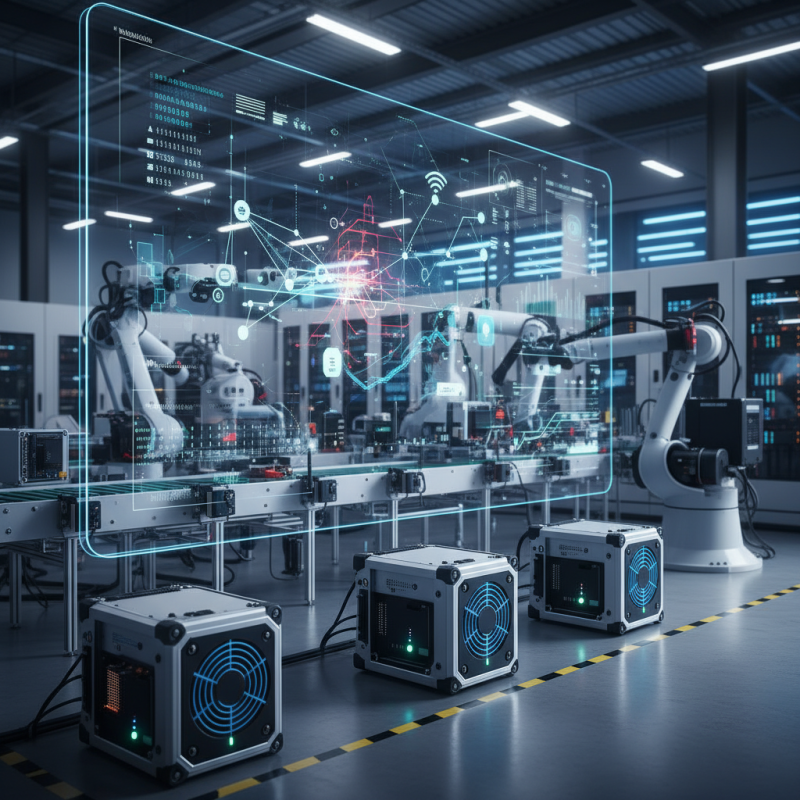
Industrial computing products refer to specialized computing systems designed for harsh industrial environments. These systems are built to withstand extreme temperatures, vibrations, and dust. They often incorporate features like fanless designs for enhanced reliability. According to a recent industry report, the global industrial computing market is projected to grow by over 8% annually, reaching nearly $90 billion by 2025.
These products play a critical role in manufacturing, automation, and energy management. They facilitate real-time data processing and analytics, enabling companies to respond swiftly to operational challenges. A study showed that companies leveraging industrial computers achieved a 20% increase in operational efficiency. However, integration issues can arise, especially in legacy systems, where compatibility remains a concern.
Additionally, industrial computing allows for remote monitoring and control. It enhances safety and reduces downtime. Nevertheless, companies often grapple with the challenge of cybersecurity. Protecting sensitive data in these systems remains an unresolved issue, reflecting a vulnerability that companies must address proactively. Overall, the benefits of industrial computing products are clear, but real-world implementation can be complex and requires continuous evaluation.
Key Features of Industrial Computing Products
Industrial computing products are vital in today's manufacturing and automation sectors. They offer ruggedized systems designed to perform in harsh environments. These products boast high levels of reliability, ensuring minimal downtime and increased operational efficiency.
Key features of industrial computing products include enhanced durability and connectivity. Many systems are built to withstand extreme temperatures and vibrations. Reports indicate that 70% of industrial operations prioritize durability in their hardware selections. This is critical as equipment failure can lead to significant financial losses. Additionally, most industrial computers come with multiple connectivity options, such as Ethernet and serial ports, accommodating various devices and networks smoothly.
Another essential feature is scalability. Industrial computing solutions can often be expanded to meet growing operational needs. A recent analysis revealed that 65% of manufacturers expect their production demands to increase in the next few years. However, adapting to new technologies can be challenging. Companies may hesitate to invest due to uncertainty about future requirements. This hesitation underscores the need for thoughtful evaluation of industrial computing investments.
What is Industrial Computing Products and Their Benefits? - Key Features of Industrial Computing Products
| Feature |
Description |
Benefits |
| Rugged Design |
Built to withstand harsh environments, including extreme temperatures, moisture, and vibration. |
Increased durability and reduced downtime in industrial settings. |
| Extended Temperature Range |
Operates effectively in temperatures from -40°C to +70°C. |
Ideal for outdoor and extreme industrial applications. |
| Longevity |
Components designed for long operational life, often exceeding 5 to 10 years. |
Lower total cost of ownership through decreased replacement frequency. |
| Flexible Connectivity |
Supports various communication protocols such as Ethernet, RS-232, and Modbus. |
Easier integration into diverse industrial systems. |
| Real-Time Processing |
Capable of processing data in real-time for immediate decision-making. |
Enhances productivity and operational efficiency. |
| Energy Efficiency |
Designed to consume less power while maintaining performance. |
Reduces operational costs and environmental impact. |
Benefits of Industrial Computing in Various Industries
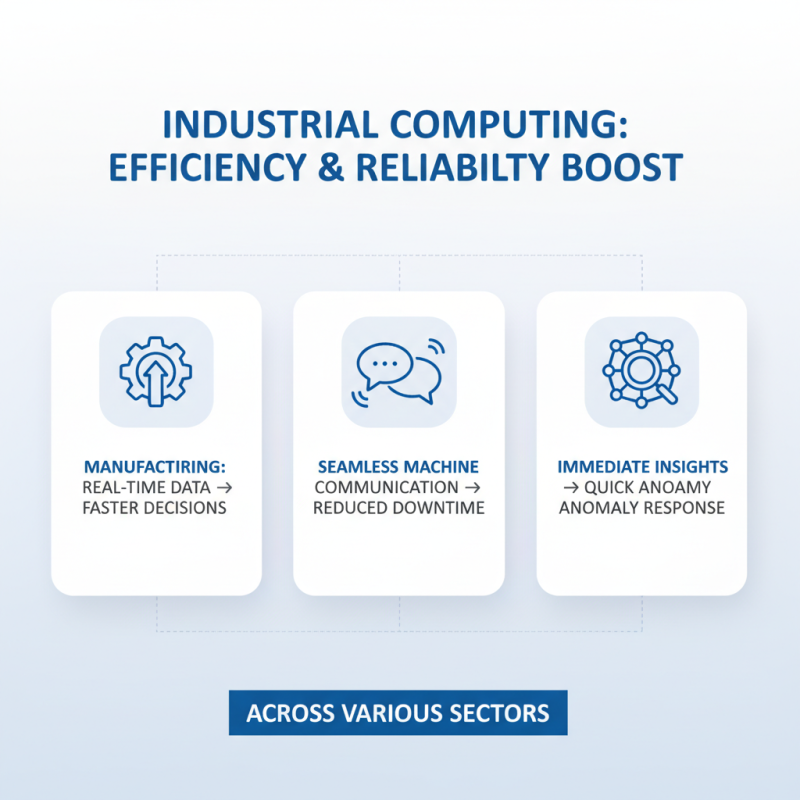
Industrial computing products significantly enhance efficiency and reliability across various sectors. In manufacturing, real-time data processing accelerates decision-making. Machines communicate seamlessly, reducing downtime. This immediate access to information allows for quicker responses to any anomalies.
In the oil and gas industry, industrial computers monitor equipment health continuously. They detect issues before they escalate, minimizing costly failures. Yet, implementing these systems can be daunting and requires proper training. Not all staff might adapt well to new technology, leading to gaps in operational knowledge.
Transportation also benefits from industrial computing. Fleet management systems utilize GPS and data analytics. They optimize routes, saving fuel and time. However, these systems can sometimes struggle with integrating data sources effectively. The challenge lies in ensuring all drivers are comfortable with the technology, as user resistance can hinder progress.
Comparative Analysis of Industrial vs. Commercial Computing Systems
When comparing industrial and commercial computing systems, several key differences emerge.
Industrial computing systems focus on durability and performance. They often operate in harsh environments, like factories or outdoor sites.
These systems are built to withstand extreme temperatures, dust, and moisture.
This ruggedness extends the lifespan of the devices, making them cost-effective over time.
In contrast, commercial computing systems prioritize versatility and user experience. They cater to a wide range of applications and are designed for office environments.
However, this flexibility can lead to vulnerabilities. For example, commercial systems may not endure intensive workloads or extreme conditions. While they may be easier to set up and use,
their performance under pressure can fall short.
Some industrial systems may require specialized training to operate efficiently. Users must adapt to unique interfaces and controls.
Sometimes, this complexity can hinder productivity. Commercial systems typically offer easier navigation but may lack the reliability needed in critical industrial applications.
Balancing user-friendliness with robust performance is an ongoing challenge in both domains.
Future Trends in Industrial Computing Technologies
The future of industrial computing technologies is rapidly evolving. According to a recent report by Gartner, the market is expected to reach $100 billion by 2025. This growth is driven by advancements in AI, edge computing, and IoT integration. Companies are increasingly adopting these technologies to enhance operational efficiency.
Edge computing plays a critical role. It allows data processing closer to the source, reducing latency. As a result, decision-making is faster. Industries are seeing a 30% improvement in response times. However, there are challenges. Many organizations struggle with integrating these new technologies into existing systems.
AI is another game-changer. It can analyze vast amounts of data quickly. This capability helps predict equipment failures and improve maintenance schedules. However, the complexity of AI models often requires specialized skills. There is a talent gap that needs addressing. Without the right skills, companies might face setbacks in reaping AI’s full benefits.
Benefits of Industrial Computing Products
This chart illustrates the various benefits of industrial computing products across different dimensions, highlighting their impact on efficiency, scalability, and cost savings.