


How to Find Reliable Goji Berry Powder Suppliers?
Finding a dependable Goji Berry Powder supplier requires more than comparing prices or attractive packaging. Product quality can vary with berry origin, harvesting conditions, drying methods, and storage humidity. A reliable supplier should explain each stage clearly, from farm selection to final shipment. Their answers should be specific, not vague marketing language.
Look for evidence that can be checked. Ask for recent certificates of analysis, including moisture, microbiological safety, heavy metals, pesticide residues, and active compounds when relevant. Independent laboratory testing adds credibility, especially when batch numbers match the delivered product. Traceability records should identify the growing region, processing date, and production lot. Practical details matter. A trustworthy supplier can discuss sealed bags, warehouse temperatures, sample policies, and expected shelf life without hesitation.
Do not rely on a polished website alone. It proves very little. I have found that supplier communication often reveals more than brochures do. Do representatives answer technical questions patiently? Can they provide consistent samples and explain differences between batches? No supplier is flawless, and natural ingredients may show slight variations in color, aroma, or solubility. That is acceptable when the variation is documented and controlled. Problems begin when records are missing or claims sound too perfect. This guide examines the signals that separate experienced Goji Berry Powder suppliers from unreliable sellers, helping buyers make decisions based on evidence, transparency, and long-term product consistency.
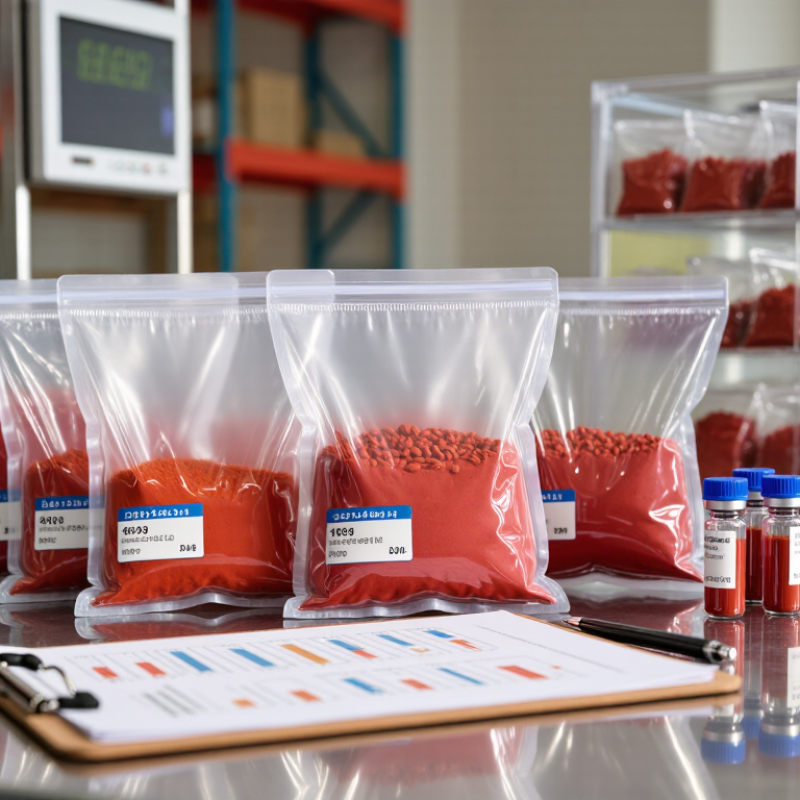
Define Your Goji Berry Powder Sourcing Requirements
Define Your Goji Berry Powder Sourcing Requirements
Before contacting suppliers, write a practical specification sheet. Identify the botanical species, growing region, harvest year, and intended use. Lycium barbarum and Lycium chinense may differ in flavor, color, and nutrient profiles. State whether you need food-grade, organic, or conventional material. Define powder fineness, moisture limits, color expectations, and acceptable flavor notes. A slightly tart aroma may be normal, but a burnt smell deserves investigation.
Ask for batch-specific certificates of analysis, not generic documents. Test results should cover microbiological safety, pesticide residues, heavy metals, moisture, and identity. If nutritional claims matter, request results for the relevant compounds from an accredited laboratory. Check traceability from farm or processor to final packaging. Packaging should protect the powder from light and moisture. Clarify minimum order quantities, lead times, storage conditions, and delivery terms.
My first sourcing specification was too broad. It created inconsistent samples and unnecessary price comparisons. A pilot order can reveal problems hidden in paperwork. Compare the powder’s color, aroma, solubility, particle size, and sediment after mixing. Keep sealed reference samples from each batch. Requirements may need revision after testing; that is normal. Do not accept impressive certificates without checking dates, test methods, and matching lot numbers. Ask direct questions when a result seems unusually perfect.
How to Find Reliable Goji Berry Powder Suppliers? - Define Your Goji Berry Powder Sourcing Requirements
Use the following sourcing specification as a practical comparison framework. Final limits should be confirmed according to the intended market, application, and applicable food regulations.
| Sourcing Dimension | Recommended Requirement | Practical Acceptance Benchmark | Documents or Verification Methods |
|---|---|---|---|
| Botanical Identity | Specify the botanical species as Lycium barbarum L. or another approved Lycium species, together with the plant part used. | The botanical name, common name, plant part, and country of origin should be consistent across the specification, label, certificate of analysis, and shipment documents. | Botanical identification statement, supplier specification, authenticated reference sample, and identity testing such as microscopy or DNA testing when required. |
| Country and Region of Origin | Define the permitted country, production region, and whether the berries are cultivated, organically cultivated, or collected from a controlled source. | The declared origin should be traceable to the farm, grower group, processing facility, or documented batch records. | Country-of-origin declaration, farm or grower records, lot traceability documents, and production or harvest records. |
| Raw Material Condition | State whether the powder is made from fresh berries or dried berries, and define requirements for foreign matter, insects, mold, and visible contamination. | Material should be clean, free from visible mold, abnormal odor, infestation, and unauthorized foreign matter. | Incoming-material inspection records, visual inspection, sieve or foreign-matter results, and batch photographs where appropriate. |
| Processing Method | Specify drying technology, milling conditions, carrier use, anti-caking agents, and whether the product is a pure powder or a standardized extract. | For a pure goji berry powder, no carrier, filler, colorant, or undeclared additive should be present. Processing parameters should be controlled and documented. | Process flow chart, ingredient statement, batch production record, allergen statement, and declaration of processing aids. |
| Moisture and Water Activity | Set a moisture limit suitable for powder stability and define a water-activity requirement where shelf-life risk is significant. | A commonly used commercial target is moisture at or below approximately 8%; the final limit should be validated for the selected packaging and shelf life. | Recent batch certificate of analysis, moisture test method, water-activity result when applicable, and stability data. |
| Particle Size and Appearance | Define mesh size or particle-size distribution, color range, odor, taste, and powder flow characteristics. | Powder should be uniform, free-flowing, and consistent in reddish-orange to red-brown color, with the characteristic aroma and taste of goji berries. | Approved reference sample, sieve analysis, sensory specification, color standard, and pre-shipment inspection. |
| Microbiological Safety | Include total aerobic count, yeast and mold, coliforms or Enterobacteriaceae, and pathogens relevant to the destination market. | Pathogens such as Salmonella and Escherichia coli should be absent according to the applicable test plan and regulatory limits. Other limits should be agreed before ordering. | Independent laboratory report, test method, sampling plan, batch number, and test date linked to the shipped lot. |
| Pesticide Residues | Require a multi-residue pesticide screen that covers the legal maximum-residue limits of the destination market. | Results should comply with the destination country's applicable maximum residue limits; “not detected” is meaningful only when the reporting limits are stated. | Multi-residue laboratory report, laboratory accreditation details, reporting limits, and lot-specific sample information. |
| Heavy Metals and Contaminants | Specify limits for lead, cadmium, arsenic, mercury, and any other contaminants required for the intended market or application. | All results should remain within the legal limits applicable to the product category, serving size, and destination market. | Lot-specific heavy-metal report, analytical method such as ICP-MS or ICP-OES, and compliance review against current regulations. |
| Authenticity and Adulteration Control | Require confirmation that the powder contains no undeclared sugars, starches, cheaper plant materials, synthetic colors, or unauthorized extracts. | Ingredient composition should match the label and agreed specification. A high-risk supply chain should receive enhanced authenticity testing. | Ingredient declaration, identity testing, chromatographic fingerprinting, microscopy, isotope or DNA testing when justified by risk assessment. |
| Certifications and Food-Safety System | Select certifications that match the intended market, such as organic, HACCP-based systems, or recognized food-safety certification. | Certificates should be current, issued for the actual manufacturing site, and within the certified scope covering goji berry powder. | Current certificates, certification scope, certificate number, expiry date, audit status, and verification through the issuing body's database where available. |
| Allergen and Regulatory Status | Request an allergen statement, GMO statement, irradiation statement, novel-food assessment where applicable, and destination-market compliance declaration. | Statements should be product-specific, signed or authorized by the manufacturer, and consistent with the actual process and ingredients. | Regulatory questionnaire, allergen-control procedure, GMO statement, irradiation declaration, and product compliance dossier. |
| Packaging and Shelf Life | Define food-contact packaging, moisture and oxygen protection, pack size, sealing method, storage conditions, and minimum remaining shelf life at shipment. | Packaging should be sealed, undamaged, suitably moisture resistant, and labeled with batch number, production date, expiry or best-before date, net weight, and storage conditions. | Packaging specification, food-contact declaration, label artwork, shelf-life or stability data, and packaging inspection record. |
| Traceability and Recall Capability | Require a documented one-step-back and one-step-forward traceability system covering raw materials, processing, packaging, and shipment. | The supplier should be able to identify affected lots and provide a documented withdrawal or recall procedure within an agreed response time. | Mock-recall record, batch coding system, traceability map, supplier approval procedure, and complaint-handling procedure. |
| Sample and Pre-Shipment Approval | Approve a representative sample and retain a sealed reference sample before placing a recurring order. | The commercial lot should match the approved sample in identity, color, aroma, particle size, packaging, and agreed analytical results. | Signed sample approval, retained reference sample, pre-shipment inspection report, and lot-specific certificate of analysis. |
| Commercial Terms | Define annual volume, minimum order quantity, target delivery schedule, Incoterms, payment terms, and acceptable lead time. | Commercial terms should be recorded in a written quotation or supply agreement and should not override food-safety or specification requirements. | Formal quotation, sales contract, purchase order, production capacity statement, and agreed delivery schedule. |
Note: Analytical limits, certification requirements, labeling rules, and contaminant thresholds vary by destination country and intended use. Confirm the current requirements with the relevant food authority or qualified regulatory professional before final approval.