2026 How to Choose the Right Industrial Panel for Your Needs?
In the rapidly evolving industrial landscape, selecting the right industrial panel is crucial. According to a recent report by MarketsandMarkets, the global industrial control systems market is projected to grow from $120 billion in 2022 to $153 billion by 2027. This growth highlights the increasing reliance on efficient industrial panels for automation and control.
Choosing an industrial panel involves considering factors like compatibility, durability, and functionality. A study by Grand View Research reveals that the demand for durable industrial panels has surged by 20% in recent years, driven by industries seeking reliability. It’s essential to assess your specific needs against the vast options available, as not all panels will serve your purpose effectively.
Moreover, the integration of the latest technologies can enhance performance but also complicate decision-making. Vendors frequently market their panels as the best, but what works for one operation might not suit another. Reflecting on your priorities and constraints can lead to better outcomes. Investing time in this selection process can prevent costly mistakes down the line, ultimately reflecting the importance of making informed choices in such a critical area.

Understanding the Basics of Industrial Panels and Their Functions
Industrial panels serve as the backbone of various systems. They house controls and components that ensure efficient operation. Understanding their basic functions is crucial for selecting the right one. Common types include control panels, operator interfaces, and power distribution panels. Each type has specific roles, so knowing your needs helps narrow your choices.
Control panels manage machinery and processes, ensuring safety and functionality. Operator interfaces provide a user-friendly way to interact with equipment. Power distribution panels manage electrical supply, preventing overloads. When choosing a panel, consider the environment and purpose. Harsh conditions may require panels with special enclosures.
Many overlook the importance of scalability. As operations grow, your panel should adapt accordingly. It's tempting to go for the cheapest option, but long-term reliability matters. Evaluating technical specifications is essential. Avoiding the right panel can lead to costly downtime or safety hazards. Exploring options and seeking expert advice can provide valuable insights.
2026 How to Choose the Right Industrial Panel for Your Needs?
| Panel Type |
Functionality |
Material |
Size (inches) |
Temperature Range (°C) |
Power Supply (V) |
| Touchscreen Panel |
User Interface Control |
Aluminum |
15 x 10 |
-10 to 60 |
24 |
| LED Display Panel |
Status Indication |
Plastic |
12 x 6 |
0 to 50 |
12 |
| Relay Control Panel |
Relay Management |
Steel |
18 x 12 |
-20 to 70 |
120 |
| Programmable Logic Controller (PLC) Panel |
Automated Control |
Aluminum |
24 x 18 |
-10 to 55 |
240 |
| Data Acquisition Panel |
Data Logging |
Plastic |
10 x 8 |
-5 to 45 |
24 |
Identifying Your Specific Needs for Industrial Panel Applications
When selecting an industrial panel, understanding your specific needs is crucial. Start by assessing the environment where the panel will be used. Consider factors like temperature, humidity, and potential exposure to dust or chemicals. These conditions can affect the panel's performance and longevity.
Tips: Ensure that the panel's rating aligns with your operational environment. Look for protective enclosures that offer durability against harsh conditions.
Next, think about the functionality required from the panel. Does it need touch capability? Should it support advanced graphics? Determine the level of interaction users will have with the panel. This will guide you in choosing the right technology, such as LCD or LED.
Tips: Evaluate the user interface design. An intuitive layout can significantly enhance user experience and efficiency.
Lastly, consider the budget without compromising quality. A lower price might seem tempting, but it can lead to increased maintenance costs. Striking the right balance is key.
Tips: Attempt to gather reviews or case studies from similar applications. First-hand experiences add valuable insights.
2026: How to Choose the Right Industrial Panel for Your Needs?
This chart represents the distribution of different types of industrial panels based on their applications. Understanding your specific needs can help you choose the right panel for your projects.
Evaluating Key Features and Specifications of Industrial Panels
When selecting the right industrial panel, several key features and specifications must be evaluated. One important aspect is display technology. Different applications may require different types of displays, such as LCD, LED, or OLED. For instance, recent market reports suggest that LCD technology accounts for approximately 60% of the industrial display market due to its cost-effectiveness and good visibility.
Resolution is another significant specification. A higher resolution enhances clarity, especially in complex industrial environments. Studies indicate that panels with a resolution of 1920x1080 pixels are increasingly preferred, as they provide better detail for critical applications. Additionally, brightness levels are crucial. An ideal panel should have at least 500 nits for outdoor settings.
Durability is also a vital consideration. Industrial panels often face harsh conditions. Reports indicate that panels with IP65 ratings or higher are necessary for protection against dust and water. Evaluating these features is crucial. However, organizations sometimes overlook the importance of environmental factors. For instance, temperature fluctuations can affect performance, and manufacturers might fail to disclose this. Understanding these variables is essential for making an informed decision.
Comparing Different Types of Industrial Panels Available in the Market
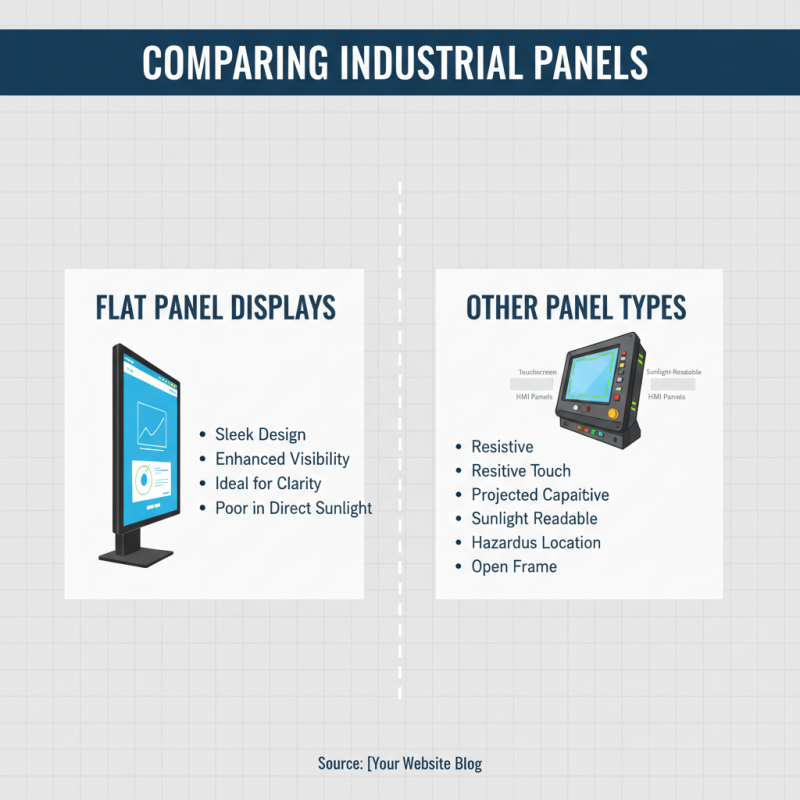
When selecting an industrial panel, you’ll find a variety of options. Each type serves unique purposes. Flat panel displays, for instance, offer sleek designs that enhance visibility. These are great for environments requiring clarity. However, they might not perform well in direct sunlight.
Another choice is touch screen panels. They are user-friendly and intuitive. Such panels enable quick interactions in fast-paced settings. Yet, they can be vulnerable to damage. The durability of a panel can dictate its lifespan. Make sure to evaluate materials used in their construction.
Lastly, consider rugged industrial panels. Designed for harsh environments, these panels withstand extreme temperatures and impacts. They cater to industries like manufacturing and logistics. On the downside, they may not offer the same visual quality as other types. Each panel type has strengths and weaknesses based on specific needs. Reflect on your operational requirements before making a decision.
Making the Final Decision: Cost, Warranty, and Support Considerations
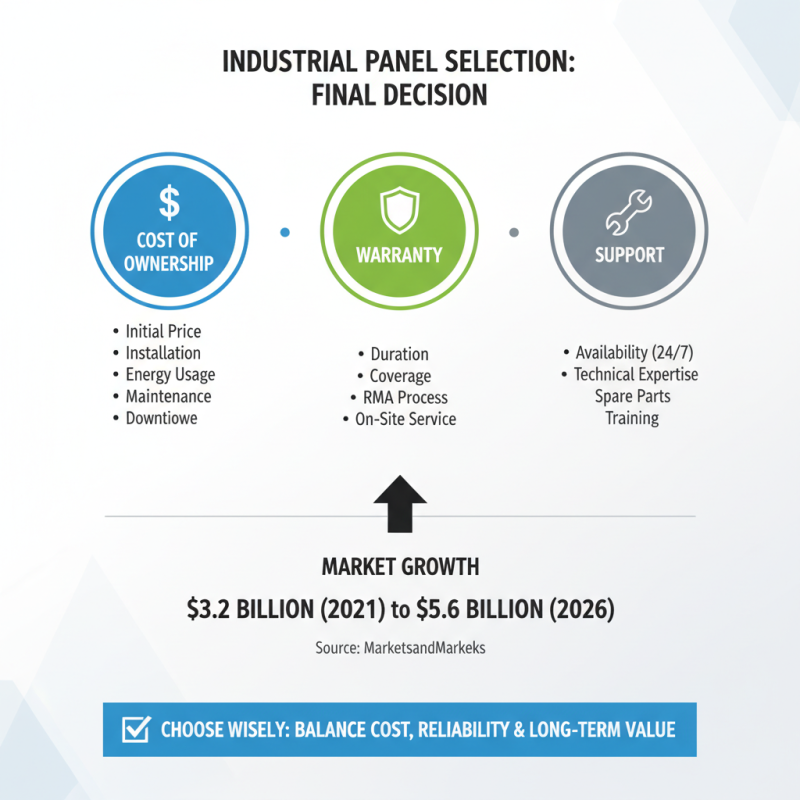
Choosing the right industrial panel involves multiple factors, especially cost, warranty, and support. Understanding the total cost of ownership is crucial. According to a report by MarketsandMarkets, the industrial panel market is expected to grow from $3.2 billion in 2021 to $5.6 billion by 2026. This underscores the increasing significance of cost-effective solutions in industrial settings.
Warranty options should not be overlooked. A robust warranty can provide peace of mind and protect your investment. The industry average warranty period for industrial panels is typically 12 to 24 months. However, some manufacturers offer longer warranties based on the panel's construction and application. Moreover, consider the support services available. A study from TechNavio revealed that 60% of companies prioritize post-purchase support when selecting an industrial panel.
While initial costs may be tempting, cheaper options can lead to higher maintenance costs. For example, low-quality panels might require replacement sooner than anticipated. Reflecting on long-term durability can help prevent unexpected expenses. Balancing cost with warranty and support needs careful thought. The right panel should not only meet immediate needs, but also support future requirements effectively.