

Choosing a Blood Component Separator is a clinical and operational decision, not simply a purchasing exercise. The right system must protect component quality from collection through storage. It should separate whole blood gently, consistently, and with minimal residual mixing. In a busy blood center, small differences matter. A cloudy plasma bag, uneven red-cell volume, or delayed platelet preparation can affect downstream testing and use.
Dr. James P. AuBuchon, a respected transfusion medicine specialist, offered a practical principle: “The safest blood is the blood you don’t use.” That reminder should guide equipment selection. Look beyond advertised throughput. Examine separation accuracy, closed-system compatibility, traceability, calibration, alarm functions, and cleaning requirements. Ask whether staff can operate the device confidently during a demanding shift. Ask how quickly service support responds when a pump stops at 2 a.m. These details are easy to overlook.
No separator is perfect. That matters.
A strong evaluation combines manufacturer data, independent validation, staff feedback, and real workflow observation. Test representative blood volumes, bag types, temperatures, and processing times. Review platelet yield, plasma clarity, red-cell recovery, and labeling accuracy. Cost also deserves a wider view. Consumables, training, maintenance, downtime, and waste may exceed the initial purchase price. Some facilities choose advanced automation too early. Others accept avoidable manual work to save money. Both decisions can fail when local needs are ignored. The best Blood Component Separator is the one that delivers reliable results, supports trained professionals, and fits the center’s actual workload.
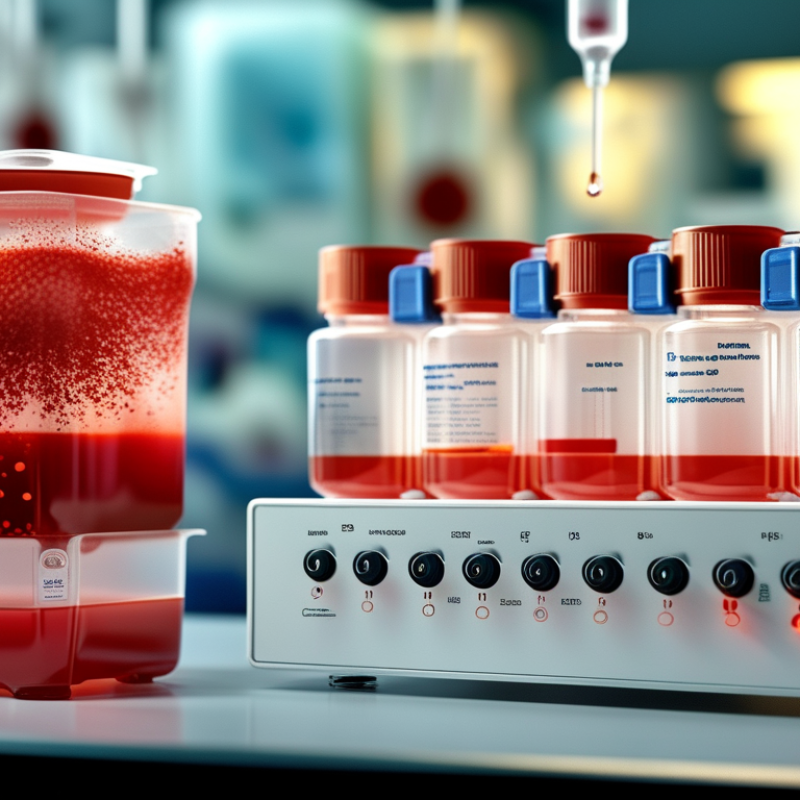
Choosing a blood component separator starts with a clear clinical or laboratory purpose. Decide whether the system will process whole blood, collect a specific component, or prepare samples for testing. The target may include red cells, plasma, platelets, or buffy coat. Each component has a different density and handling requirement. Throughput matters too. A small laboratory may value flexible batch sizes, while a processing center may require consistent high-volume operation.
Most separators use controlled centrifugation to divide blood by density. Red cells move outward first, while plasma remains closer to the center. Some systems use intermittent flow, and others use continuous flow with pumps and sensors. During apheresis, the device removes selected components and returns the remaining blood under controlled conditions. Sterile disposable tubing, pressure monitoring, and optical detection help reduce cross-contamination and collection errors. The operating principle should match the intended workflow, not merely the equipment catalogue.
A reliable evaluation should examine separation accuracy, temperature control, alarms, cleaning procedures, and data records. Ask how calibration is verified and how operators respond to an unexpected interface shift. Small differences in centrifugation speed can affect platelet recovery or plasma clarity. That detail is easy to overlook. I would also compare validation evidence, training requirements, and maintenance access. A more complex separator is not automatically better. Sometimes, simpler controls support safer and more repeatable work. Performance can vary with donor characteristics, input volume, and operator technique, so real-use testing deserves attention.
Choosing a blood component separator starts with the clinical need, not the equipment catalogue. Red cells require efficient plasma removal and gentle handling. Platelets need controlled separation to protect cell function. Plasma processing depends on rapid, consistent separation and strict temperature control. Cryoprecipitate requires additional processing steps and careful storage management.
The World Health Organization’s Global Status Report on Blood Safety and Availability 2021 recorded about 118.5 million blood donations worldwide in 2019. However, nearly 40% came from high-income countries, showing how uneven collection capacity remains. A separator should therefore match local donation volume, staffing, infrastructure, and component demand. A high-throughput system may be wasteful in a small hospital. A basic system may create delays in a regional blood center.
Review measurable requirements. Check processing capacity per hour, separation yield, balance tolerance, programmable speeds, temperature monitoring, and compatibility with validated blood bags. Ask how the system handles red cells, plasma, platelets, and cryoprecipitate. Confirm traceability, cleaning procedures, preventive maintenance, and operator training. These details affect patient safety more than impressive specifications.
AABB standards emphasize validated processes, equipment control, and documented competency. Those requirements should guide procurement discussions. I would not treat a published yield as universal evidence. Bag design, donor hematocrit, centrifugation settings, and staff technique can change the result. Real-world trials are essential. Small workflow problems become expensive when repeated every day.
Separator selection should begin with processing targets, not equipment appearance. Centrifugal systems remain widely used because they separate whole blood into red cells, plasma, and platelets through controlled density differences. Automated extractors can improve repeatability, while manual systems may suit smaller facilities with limited budgets. The choice becomes practical here. Ask how many donations require processing each shift, and whether one operator can manage the workflow safely.
Capacity must match real demand. The WHO Global Status Report on Blood Safety and Availability 2021 recorded about 118.5 million blood donations across 171 countries in 2018. It also reported that high-income countries collected 40% of donations, despite representing only 16% of the global population. These figures show why throughput requirements vary sharply between regions. A separator designed for occasional batches may struggle during seasonal collection peaks.
Processing performance needs measurable evidence. Compare component yield, red-cell recovery, plasma volume accuracy, platelet quality, residual leukocyte levels, and processing time. Check validation data under your own bag sizes and centrifuge programs. ISO 13485-based quality systems and documented maintenance records strengthen reliability. However, published performance can look better than daily practice. I would test loading errors, balancing time, alarm frequency, and cleaning effort before purchase. Small workflow problems become expensive quickly.
How to Choose a Blood Component Separator?
Evaluate Safety, Quality Control, and Regulatory Compliance
A blood component separator should protect both the product and the operator. Look for enclosed fluid paths, sterile connection options, and clear alarms. The device should limit contamination risks during collection and processing. Smooth tubing pathways can also reduce stress on cells. Small details matter. Temperature monitoring is essential when handling sensitive components. The interface should show pressure, flow, and cycle status without confusing symbols. Emergency stops must be easy to reach and test.
Quality control should be measurable, repeatable, and documented. Ask for validation data covering separation efficiency, component volume, and residual cell levels. Check how often sensors require calibration. Review maintenance records, software controls, and alarm verification procedures. A useful system creates electronic audit trails for every run. Operators should be able to trace batch identifiers, settings, and deviations. Independent laboratory testing can confirm the manufacturer’s performance claims. Do not accept polished demonstrations as complete evidence.
Regulatory compliance requires more than a certificate in a sales file. Confirm that the separator is authorized for its intended use in your jurisdiction. Review risk management records, clinical or performance evidence, and change-control procedures. Training materials should support consistent operation across shifts. Requirements vary by region. That matters. A practical review may still reveal weaknesses, such as unclear instructions or difficult cleaning steps. No separator is perfect, and selection teams should record these concerns rather than quietly overlook them. Ongoing monitoring, complaint handling, and periodic requalification help keep compliance active after installation.
Evaluate Safety, Quality Control, and Regulatory Compliance
Temperature-control capability is a critical selection criterion because separated components require different validated storage conditions. Red blood cells are generally stored at 1–6°C, platelets at 20–24°C with agitation, and frozen plasma at −18°C or colder. Confirm that the separator, monitoring system, validation records, maintenance program, and quality documentation meet applicable local regulations and blood-bank standards.
Reference basis: commonly used requirements in regulated blood establishments, including U.S. FDA blood-component regulations and AABB quality standards. Always verify the requirements applicable to your jurisdiction.
Choosing a Blood Component Separator
Choosing a blood component separator requires more than comparing purchase prices. In my experience, the lowest quotation can hide expensive consumables, calibration visits, and delayed repairs. Ask for a five-year cost estimate. Include installation, utilities, software updates, spare parts, validation, and disposal. Request every assumption in writing. Numbers can shift.
Maintenance planning should match your laboratory’s workload and staffing. Review preventive maintenance intervals, response times, remote diagnostics, and local technical coverage. A clear service agreement should define uptime targets, escalation routes, and loaner arrangements. Check whether replacement parts are routinely stocked. One missed shipment can interrupt a busy processing day. Keep records of alarms and repairs; they reveal recurring weaknesses better than sales presentations. I once underestimated training time, and the first weeks were slower than expected.
Training should cover operators, supervisors, biomedical engineers, and new hires. Look for hands-on sessions using realistic bags, tubing, labels, and failure scenarios. Competency checks matter. Short refresher training helps after software updates or staff turnover. Supplier support should include accessible documentation, qualified trainers, and assistance with installation qualification and performance verification. Ask for references from facilities with similar workloads. Speak with their users, not only their representatives. If support depends on one distant specialist, plan for delays. Actual maintenance costs rarely match the first spreadsheet.
| Assessment Dimension | Manual or Basic Component Extractor | Semi-Automated Component Separator | Automated Component Separator |
|---|---|---|---|
| Typical Application | Small blood banks, low-volume processing, backup operations, or facilities requiring flexible manual control. | Routine separation of red cells, plasma, and buffy-coat products with improved consistency and operator assistance. | Higher-volume processing, standardized production, electronic traceability, and integration with laboratory information systems. |
| Processing Capacity | Planning range: approximately 10–30 whole-blood units per hour, depending on operator skill and workflow. | Planning range: approximately 30–70 units per hour, depending on component configuration and loading time. | Planning range: approximately 60–120 units per hour when loading, labeling, and quality checks are well organized. |
| Capital Cost | Lowest initial investment. | Moderate investment for sensors, controlled pressing, weighing, sealing, and data functions. | Highest initial investment because of automation, software, sensors, barcode functions, and system integration. |
| Total Cost of Ownership | Lower equipment cost but higher labor dependence and greater variation between operators. | Often provides a balanced cost profile by reducing manual handling while avoiding the full cost of a highly automated line. | May reduce labor cost and processing variation, but software licenses, validated accessories, service contracts, and downtime risk must be included. |
| Consumables | Usually requires standard blood bags, tubing, labels, and manually applied seals or clamps. | May require compatible tubing sets, seals, sensors, or disposable accessories in addition to standard blood bags. | May require model-specific disposable sets, sterile connectors, barcode labels, and validated accessories. |
| Consumable Cost Control | Generally easier to source from multiple qualified suppliers. | Check whether accessories are interchangeable and whether alternative validated consumables are permitted. | Confirm annual disposable usage, minimum order quantities, expiry periods, and supply continuity before purchase. |
| Maintenance Frequency | Routine cleaning and inspection after use; mechanical checks should follow the manufacturer’s schedule. | Routine cleaning after use plus scheduled inspection of load cells, sensors, tubing paths, clamps, and moving parts. | Routine cleaning after use, preventive maintenance typically at least annually, and periodic calibration of weighing and sensing systems. |
| Calibration Requirements | Basic verification of scales, clamps, and extraction position is normally required. | Regular verification of weighing accuracy, pressure or position controls, alarms, and component volume settings. | Documented calibration of scales, sensors, barcode readers, alarms, software settings, and data interfaces is normally required. |
| Maintenance Budget | Lower service expenditure, but more in-house labor may be needed for routine checks. | Allow for preventive maintenance, calibration, replacement of wear parts, and occasional service visits. | For planning, many healthcare facilities model annual service at approximately 5–10% of equipment purchase value, then confirm the figure in the quotation. |
| Downtime Impact | Usually manageable if a second unit or manual backup process is available. | Moderate impact; identify critical spare parts and expected repair lead times. | Potentially significant impact on production if the system is unavailable; a documented contingency plan is essential. |
| Operator Training | Initial training commonly focuses on component identification, bag positioning, sealing, labeling, cleaning, and error prevention. | Operators require practical training on setup, sensor checks, alarm handling, component configuration, cleaning, and basic troubleshooting. | Training should cover operation, software workflows, barcode and traceability functions, alarm recovery, data integrity, cleaning, and escalation procedures. |
| Training Time | Typical planning allowance: 2–4 hours of theory and supervised practice, followed by competency assessment. | Typical planning allowance: 4–8 hours of theory and hands-on practice, followed by documented competency assessment. | Typical planning allowance: 1–2 days of application training, plus supervised operation until competency is demonstrated. |
| Quality and Consistency | Strongly dependent on operator technique, bag positioning, timing, and adherence to standard operating procedures. | Improves repeatability through controlled pressing, weighing, alarms, or guided workflows. | Offers the highest potential consistency when validated settings, consumables, and procedures are used correctly. |
| Traceability | Usually relies on manual records, labels, and separate documentation. | May support barcode scanning, electronic records, or connection to a laboratory information system. | Normally best suited for barcode-based identification, electronic records, audit trails, and system integration. |
| Supplier Support | Confirm availability of manuals, user training, spare parts, and telephone or email support. | Request installation, application training, preventive maintenance, calibration, and troubleshooting support. | Require documented response times, remote diagnostics, software support, cybersecurity updates, spare-parts availability, and on-site service capability. |
| Recommended Support Terms | Written warranty, operating manual, cleaning procedure, spare-parts list, and local technical contact. | Warranty coverage, commissioning report, training records, preventive-maintenance schedule, and defined repair turnaround time. | Service-level agreement with priority classification, maximum response time, software-update policy, backup procedures, and business-continuity support. |
| Validation and Compliance | Verify applicable medical-device, electrical-safety, calibration, blood-bank, and local regulatory requirements. | In addition to basic requirements, validate operating ranges, alarms, weighing accuracy, component yield, and cleaning procedures. | Perform documented installation qualification, operational qualification, performance qualification, software validation, and traceability checks where required. |
| Best Fit | Facilities prioritizing low capital cost, simple operation, and flexibility over labor efficiency. | Facilities seeking a practical balance between investment, throughput, operator support, and maintenance complexity. | Facilities with high volume, strict standardization requirements, sufficient technical support, and the budget for lifecycle costs. |

