How to Choose the Right Regulated Power Supply for Your Needs?
Choosing the right Regulated Power Supply (RPS) can be daunting. With various options available, understanding your specific needs is crucial. Expert John Smith, a veteran in the power supply industry, emphasizes, "Selecting the right power supply is essential for optimal device performance."
When evaluating a Regulated Power Supply, consider your voltage and current requirements. Not all RPS units are created equal. Some may provide more power than needed, leading to waste. Others might fall short, risking device failure. Knowing your specifications helps streamline the selection process and prevents costly mistakes.
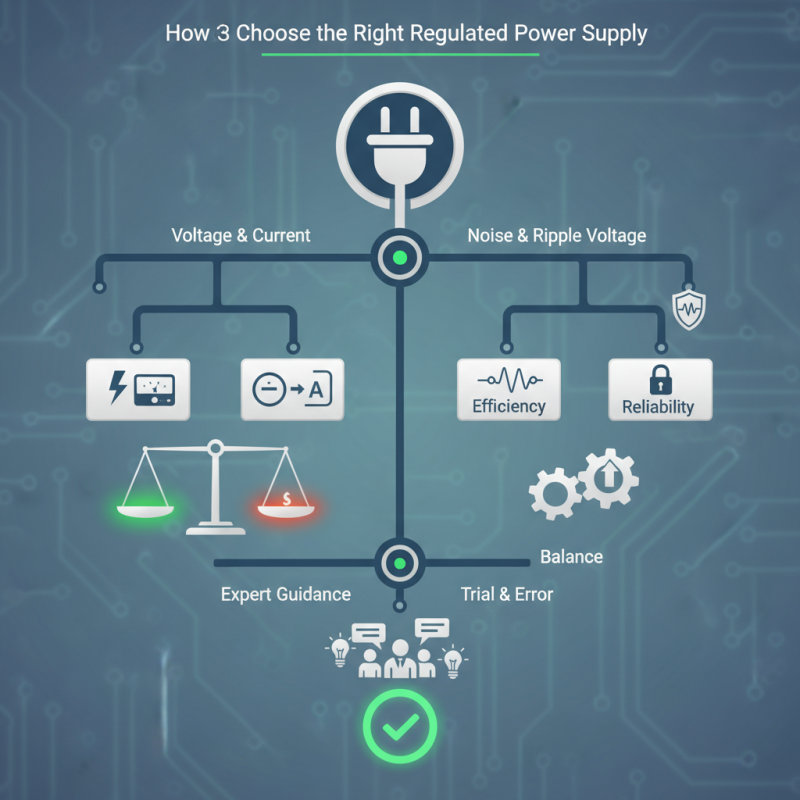
In the landscape of technology, flexibility is vital. Many users overlook how noise and ripple voltage can affect performance. Balancing efficiency with reliability is no easy task. It requires careful thought and sometimes, trial and error. Engaging with industry experts can shed light on critical aspects you might not have considered.
Understanding the Basics of Regulated Power Supplies
When selecting a regulated power supply, understanding its basics is essential. A regulated power supply delivers stable voltage and current to prevent fluctuations. This stability is crucial for sensitive electronic components. Variations in power can cause malfunctions or even damage.
There are two main types: linear and switch-mode. Linear supplies are simple and provide clean output. However, they can be bulky and inefficient. Switch-mode supplies are compact and energy-efficient but may introduce noise. It's essential to know the specifics of your application. Countless devices require varying levels of precision. Some might thrive on a linear supply, while others need the efficiency of a switch-mode.
Choosing the right supply also involves considering load requirements. Will your equipment be consistent? Or will it vary? Underestimating power needs could lead to failures. On the flip side, overestimating can waste resources. Always check specifications closely. Understanding these basics can lead to better choices.
How to Choose the Right Regulated Power Supply for Your Needs?
| Power Supply Type | Output Voltage | Output Current | Power Rating | Efficiency | Key Features |
| Linear Regulated | 1.5V - 30V | 1A - 5A | 30W - 150W | 70% - 90% | Low noise, simple design |
| Switching Regulated | 3.3V - 48V | 5A - 20A | 100W - 500W | 85% - 95% | Compact size, high efficiency |
| Programmable | 0V - 60V | 0.1A - 10A | 30W - 600W | 80% - 92% | Remote control, data logging |
| Battery Backup | 12V - 48V | 10A - 50A | 120W - 2400W | 75% - 85% | Continuous power, UPS capability |
Identifying Your Specific Power Requirements and Applications
Choosing the right regulated power supply is crucial for your specific needs. Start by identifying your power requirements. Determine the voltage and current needed for your devices. Consider how many devices you will connect. A mismatch can lead to poor performance or damage.
Pay attention to the output voltage stability. Unstable voltage can disrupt sensitive electronics. Check for features like overvoltage protection. This can help prevent accidents and extend the life of your devices.
Tips:
- Always calculate your total power consumption.
- Keep an eye on efficiency ratings.
- Don’t overlook the ambient temperature in your workspace.
Consider your application too. Different devices have varying needs. For testing equipment, precision is key. For general use, flexibility might matter more. Reflect on any future expansions. Will you add more devices? Plan ahead to avoid issues later.
Power Supply Types and Their Common Applications
Evaluating Key Specifications: Voltage, Current, and Efficiency
When selecting a regulated power supply, three key specifications should guide your decision: voltage, current, and efficiency. Voltage is critical. It determines the output that devices receive. For instance, a mismatch in voltage can lead to potential equipment damage. Research indicates that 20% of device failures stem from voltage irregularities. Always ensure compatibility with your devices.
Current is another essential factor. Understanding the maximum current your applications require can prevent overheating and failure. Many suppliers recommend calculating the peak and average current demands of your devices. For high-demand applications, a power supply should deliver 15-20% more current than needed. This overhead keeps your system stable and operational.
Efficiency matters too. It relates to how much input energy gets converted to output energy. A report from the International Energy Agency states that power supplies can operate with efficiencies as low as 70%. This inefficiency can lead to excessive heat production. Consequently, an inefficient power supply could significantly increase operating costs. Selecting a unit with an efficiency rating above 85% is advisable for long-term savings.
Comparing Different Types of Regulated Power Supplies
When comparing different types of regulated power supplies, it’s important to consider specific needs. Linear power supplies are known for their simplicity and low noise. They work well for sensitive electronics. However, they can be bulky and less efficient, especially for high power. This might lead to overheating in certain situations, requiring careful placement and cooling.
Switching power supplies are another option. They are more compact and efficient. This makes them ideal for modern applications. However, they can introduce electrical noise. This might be problematic for precision equipment. Users should consider how much noise their devices can handle.
Lastly, programmable power supplies offer more flexibility. They can adapt to different voltage and current needs. This can be useful in laboratory settings. Still, they may be more complex to operate. A user must be comfortable with the interface. Overall, understanding these differences is crucial for making an informed choice.
Considering Safety, Reliability, and Warranty Factors
When selecting a regulated power supply, safety is paramount. A report from the International Electrotechnical Commission indicates that over 30% of electrical failures in industrial settings stem from inadequate power supplies. Implementing high-quality components can mitigate these risks. Look for features such as short-circuit protection and thermal shutdown. These can prevent hazardous situations and provide peace of mind.
Reliability is another critical factor. The longevity of a power supply can impact overall system performance. A study by the Power Sources Manufacturers Association suggests that devices with longer warranty periods often have a failure rate 15% lower than those with shorter ones. Not all manufacturers provide the same guarantees. Verify what types of failures are covered. Sometimes, what seems reliable might not withstand rigorous use.
Warranties reflect a manufacturer's confidence in their products. While a standard warranty is typically one year, some offer extended options. However, be cautious. An extended warranty might not always mean better reliability. It could potentially indicate that the device has a history of issues. Choosing wisely requires careful consideration and due diligence. Reflecting on these factors is essential for making an informed decision.


