

Choosing an L-Carnitine Powder supplier in 2026 requires more than comparing price lists. Market forecasts from Grand View Research and Fortune Business Insights indicate continued growth in demand for sports nutrition, functional foods, and pharmaceutical ingredients. However, their market estimates differ because they use different product definitions and regional assumptions. That difference matters. Buyers should question impressive figures before building a sourcing strategy.
A dependable supplier should provide batch-specific Certificates of Analysis, identity testing, assay results, microbiological limits, and heavy-metal data. Look for transparent manufacturing sites, documented Good Manufacturing Practice systems, and traceable raw-material records. ISO 22000 or FSSC 22000 certification can strengthen food-safety controls, but certification alone does not prove product quality. Request recent audit summaries and verify the issuing organization. USP quality standards and relevant pharmacopoeial references may also help assess identity and purity, especially for regulated applications.
Small details reveal operational maturity. Ask whether the supplier controls moisture during packing, uses sealed inner liners, and records storage temperature. A clean powder should arrive with consistent color, particle behavior, and labeling. Not every low-cost offer is risky. Not every premium offer is reliable. This is where many sourcing teams make mistakes. They trust polished brochures too quickly. Supplier evaluation should also examine lead times, recall procedures, change-control notices, and business continuity plans. The best choice balances verified quality, regulatory readiness, technical support, and realistic delivery performance. Even this approach has limits; independent laboratory confirmation remains valuable before a long-term contract.
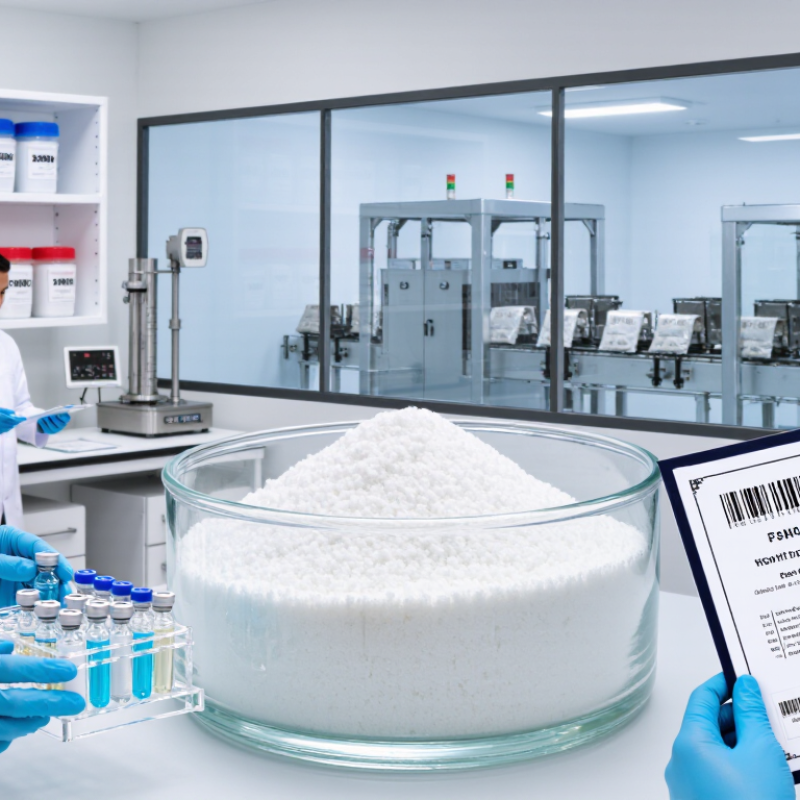
How to Choose L-Carnitine Powder Suppliers in 2026?
L-carnitine powder supports fatty-acid transport into mitochondria, where energy production occurs. It appears in sports nutrition, clinical nutrition, and fortified foods. However, results vary by dose, diet, training status, and individual metabolism. The NIH Office of Dietary Supplements reports that supplemental carnitine may cause gastrointestinal discomfort at higher intakes. Long-term benefits also remain uncertain. That uncertainty matters.
Common forms include L-carnitine base, L-carnitine tartrate, and acetyl-L-carnitine. Tartrate is often selected for sports formulations because it dissolves reasonably well. Acetyl-L-carnitine is more associated with neurological research. Suppliers should provide identity testing, assay results, moisture data, and contaminant screening. Ask for batch-specific certificates, not generic files. A clear specification should match recognized pharmacopeial principles, including USP identity and purity expectations where applicable. Small details matter, such as powder color, odor, particle size, and clumping after storage.
The 2023 ISSN position stand describes mixed evidence for performance outcomes, despite widespread use. This is easy to overlook. A supplier’s impressive brochure cannot replace independent laboratory testing. Check heavy metals, residual solvents, microbial limits, and stability under heat and humidity. Review the audit trail, production location, and change-control process. Some suppliers disclose less than expected. That deserves a pause. I would also request a retained sample and compare it with the approved specification before making a large purchase.
L-Carnitine Powder: Uses, Forms, and Quality Basics
Choosing L-Carnitine powder suppliers in 2026 requires more than comparing prices. Key standards include identity, purity, traceability, and production consistency. Request a recent certificate of analysis for each batch. Check assay results, moisture levels, microbial limits, and heavy metal testing. The testing laboratory should be identifiable and independent when possible.
Ask how the supplier manages raw materials, storage, packaging, and batch records. A reliable supplier can explain temperature controls and provide clear lot numbers. Review certifications, audit reports, and technical specifications carefully. These documents should match the actual product, not a generic template. I would also request a small sample before placing a large order. Powder appearance can be useful, but it never proves purity alone.
Tips: Verify one batch yourself. Ask difficult questions. Check response speed and accuracy. Compare documents line by line. A low price may hide weak controls, delayed testing, or unstable supply. That risk is easy to underestimate. Also, do not judge quality from polished emails or attractive packaging. Discuss production capacity, lead times, and complaint handling in writing. A supplier that admits limitations may be more dependable than one promising everything. My evaluation would remain cautious after approval, because quality can drift when demand suddenly rises.
When choosing an L-carnitine powder supplier, verify each batch, not just the sales brochure. A reliable supplier should provide a dated certificate of analysis for the exact lot. The document should show identity, assay, moisture, impurities, and microbiological limits. Check whether the testing laboratory is qualified and whether the methods are clearly described. Do not accept vague claims.
Testing should extend beyond assay. Request identity confirmation, heavy metal results, residual solvent data, and microbial testing. HPLC or another validated method can support purity claims. For higher confidence, use an independent laboratory accredited to ISO/IEC 17025. Compare its result with the supplier’s certificate. A polished certificate can still hide weak controls. That possibility deserves attention.
Product safety also depends on manufacturing discipline. Review current GMP documentation, batch traceability, allergen controls, and storage conditions. Inspect packaging details, including tamper protection, lot numbers, and manufacturing dates. Ask how deviations, complaints, and recalls are recorded. A sealed bag is not proof of safe handling. I would also request a small sample before placing a large order. Testing one sample may miss a problem. Still, it reveals whether the supplier welcomes scrutiny and responds with complete records. No supplier is perfect. Transparent evidence matters more than confident promises.
Choosing an L-carnitine powder supplier in 2026 requires more than a low quotation. Start with manufacturing capacity. Ask for monthly output, available blending capacity, and recent batch records. A supplier may claim high capacity, yet your order could wait behind larger contracts. Request evidence, not polished promises. Review facility controls, testing instruments, and staff experience with powder handling. I prefer suppliers that explain capacity limits clearly. That honesty matters.
Pricing should be compared on an equivalent basis. Check assay, moisture limits, particle size, packaging, testing, and delivery terms. A cheaper kilogram can become expensive after extra analysis or repacking. Ask for price breaks at your expected annual volume, not only one large purchase. Confirm whether the quotation includes samples, documentation, and export preparation. Costs can shift. Also examine payment terms and currency exposure. Small savings may disappear through rushed freight and storage fees.
Tips: Request a pilot batch before signing a full contract. Compare at least three written quotations. Ask for a production schedule covering raw-material allocation, testing time, and dispatch dates. For routine orders, a realistic lead time may matter more than a record-low price. Verify promised dates against past delivery data. Build a buffer for holidays and failed tests. My own mistake was trusting an “available” status without confirming the lot’s release date. That detail changed the delivery plan.
How to Choose L-Carnitine Powder Suppliers in 2026?
Selecting a Reliable L-Carnitine Supplier for 2026 Needs
A reliable supplier should provide more than a competitive quotation. I look for batch-specific COAs, traceable raw materials, and recent third-party test results. Each COA should confirm assay, moisture, heavy metals, microbiological limits, and identity. The Grand View Research market analysis estimates the global L-carnitine market at roughly USD 200 million in 2023, with mid-single-digit growth expected through 2030. Growing demand makes supplier screening more important, not less.
Manufacturing controls matter. Ask whether the facility follows GMP principles, ISO 9001 procedures, and documented change control. Verify production capacity before signing a long-term agreement. A small sample may pass testing, while later batches vary. That possibility deserves attention. I have sometimes focused too heavily on price, which can hide costs from retesting, delays, or rejected material. Request stability data, packaging specifications, and storage conditions. Hygroscopic powder needs practical protection, especially during humid transport.
Tips: Compare at least three suppliers using the same checklist. Review audit records, not only certificates. Confirm the testing laboratory’s accreditation and method suitability. Check whether the supplier can support your required particle size and delivery schedule. The 2024 Dietary Supplements market research from industry analysts also highlights stronger demand for documented quality and transparent sourcing. Still, reports show market direction, not individual supplier performance. Your own audit remains essential.
| Evaluation Dimension | Objective Reference or Target | Evidence to Request | Suggested Weight | 2026 Selection Guidance |
|---|---|---|---|---|
| Product identity | For L-carnitine base: CAS 541-15-1; molecular formula C7H15NO3; relative molecular mass approximately 161.20 g/mol. | Product specification, certificate of analysis, manufacturing-process description, and identity-test method. | 10% | Reject quotations that do not clearly distinguish L-carnitine base from L-carnitine L-tartrate or acetyl-L-carnitine forms. |
| Assay and purity | Use a contract-specific assay limit, commonly expressed as a minimum percentage on a defined basis. The analytical method and calculation basis must be stated. | Lot-specific COA, validated or qualified HPLC/other suitable method, test date, specification limits, and analyst approval. | 15% | Compare the same basis across suppliers; do not compare “purity” percentages without checking moisture, salt form, and calculation method. |
| Contaminant control | Heavy metals, residual solvents, pesticides, and other contaminants should meet the applicable destination-market and product-category requirements. | Recent third-party test reports, risk assessment, raw-material controls, and documented limits for each relevant contaminant. | 15% | Require testing that reflects the intended market; a generic “passes heavy metals” statement is insufficient without numerical results. |
| Microbiological quality | Acceptance criteria should cover total aerobic microbial count, total yeast and mold count, and specified objectionable organisms as appropriate for the finished use. | Lot-specific microbiology report, test methods, sampling plan, and limits aligned with the buyer’s finished-product requirements. | 10% | Confirm that results are reported as numerical values or valid detection limits rather than only “conforms.” |
| Food-safety and GMP system | A documented food-safety system such as HACCP-based controls, ISO 22000, FSSC 22000, or an applicable GMP program. | Current certificates, scope statements, certification-body details, audit status, CAPA records, and site-audit availability. | 15% | Verify that the certificate covers the actual production site and the relevant product category, not only an unrelated warehouse or office. |
| Traceability and recall readiness | Every shipment should be traceable to a defined production lot, raw-material records, processing records, packaging records, and release decision. | Sample traceability exercise, lot-number format, recall procedure, retention-sample policy, and complaint-handling procedure. | 8% | Prefer suppliers that can provide a documented mock-recall result and respond quickly to technical questions. |
| Moisture and packaging protection | L-carnitine products may be moisture-sensitive or hygroscopic depending on form and formulation; packaging must protect against humidity and contamination. | Moisture specification, water-activity data when relevant, packaging specification, seal integrity controls, and storage instructions. | 8% | Assess caking risk, liner material, desiccant use where appropriate, container closure, and warehouse humidity controls. |
| Stability and shelf life | Shelf life must be supported by stability data under defined storage conditions, with a clear retest or expiry date policy. | Real-time or accelerated stability summary, storage conditions, packaging configuration, retained-sample results, and expiry-date rationale. | 7% | Do not accept a long shelf life without data showing how assay, appearance, moisture, and microbiological quality are maintained. |
| Supply continuity | Evaluate production capacity, lead time, minimum order quantity, safety stock, alternate-site risk, and business-continuity planning. | Capacity statement, historical lead-time range, forecast process, continuity plan, change-notification policy, and shipment performance data. | 7% | Use at least two qualified sources for critical applications when feasible, and define an advance-notice period for material changes. |
| Commercial transparency | Compare total landed cost rather than quoted price alone, including testing, packaging, freight, duties, payment terms, and rejected-lot handling. | Formal quotation, Incoterms, payment terms, packaging size, freight assumptions, sample policy, and quality-agreement draft. | 5% | Select the lowest-risk compliant option, not automatically the lowest unit price. |
| Total Suggested Evaluation Weight | 100% | Use the weights as a screening framework and adjust them to the destination market and intended application. | ||

