How to Choose the Best Industrial Rugged PC for Your Needs?
Choosing the right industrial rugged PC can be a daunting task. Experts emphasize the importance of understanding your specific needs. According to Dr. Emily Carter, an expert in industrial computing, “Selecting an appropriate rugged PC can significantly impact operational efficiency.” Her words highlight the necessity of careful consideration in this domain.
When exploring the market, one must consider many factors. Look for the hardware specifications that support your applications. It's not just about durability; performance matters too. Many rugged PCs may claim to be resilient, but they must also deliver reliable performance under pressure.
Unearthing the perfect match isn't always easy. Sometimes, the best options might seem beyond reach. You may find affordable models lacking essential features. Take a step back and reflect on what truly fits your requirements. Don't rush the decision; the right industrial rugged PC could define the success of your projects.

Understanding the Definition and Features of Industrial Rugged PCs
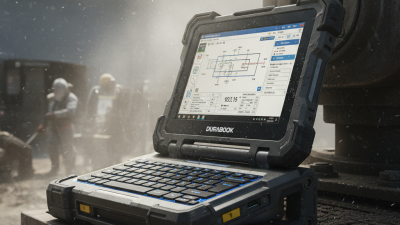
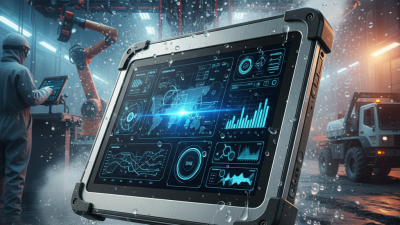
Industrial rugged PCs are designed for extreme environments. They are built to withstand dust, moisture, and shock. These features make them ideal for industries such as manufacturing, logistics, and construction. The global market for rugged computing is expected to grow significantly. A report suggests a CAGR of 8.5% from 2021 to 2028.
When choosing an industrial rugged PC, consider the operating temperature range. Many models operate effectively in temperatures from -20°C to 60°C. Also, durability ratings like IP65 or MIL-STD-810G indicate resistance to water and shock. Tips: Check these ratings. They can save costs on repairs.
Choose a device with the right CPU and RAM for your tasks. Some users may overlook processing power, thinking it's interchangeable. However, inadequate specifications lead to slow performance. Regular updates of software are also crucial to maintain efficiency. Remember, the initial cost may not be the only factor. Long-term durability can reduce replacement frequency, offering better ROI over time.
Identifying Your Specific Requirements for an Industrial PC
When selecting an industrial rugged PC, understanding your specific needs is crucial. Consider the environment in which the PC will operate. Will it face extreme temperatures? Dust and moisture exposure? Knowing these factors guides you toward a suitable model.
Next, evaluate the performance requirements. Do you need high processing power for complex tasks, or will basic functions suffice? Think about the software applications you will run. It's important to match the hardware specifications with these applications.
Connectivity options are vital as well. How will the PC communicate with other devices? Ensure it has ports for USB, Ethernet, and any other connections you might need. Lastly, consider the durability aspect. An industrial PC should survive drops and vibrations. Reflect on your priorities: performance, durability, or price.
Comparing Key Specifications: Processor, RAM, and Storage Options
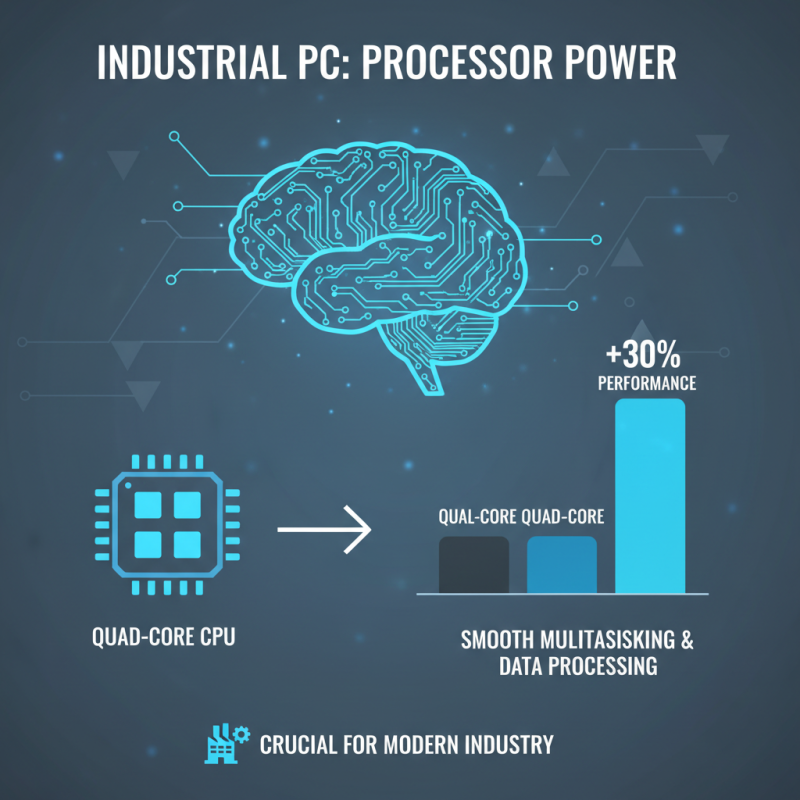
When selecting an industrial rugged PC, processor choice is crucial. A powerful processor ensures smooth multitasking. For instance, a quad-core CPU can handle complex applications efficiently, with benchmarks showing up to 30% better performance compared to dual-core options. With industries pushing for higher data processing, this is a significant factor to consider.
RAM is another critical specification. The minimum recommended RAM for rugged PCs is typically 8GB. However, many professionals advise opting for 16GB or more. Reports indicate that systems with higher RAM can increase data handling capacity significantly. However, it's essential to match the RAM with your workload. Too little may slow down operations, while excessive amounts could be wasted resources.
Storage also plays a vital role. Solid-state drives (SSDs) are more reliable and faster than traditional hard drives. Many rugged devices now offer at least 256GB SSDs, but decision-makers should assess their storage needs carefully. A report indicated that data loss from insufficient storage can be as high as 15% in critical environments. Thus, understanding specific application requirements is essential for making informed choices.
Evaluating Environmental Resistance Ratings and Certifications
When choosing an industrial rugged PC, evaluating environmental resistance ratings is crucial. These ratings indicate how well a device can withstand harsh conditions. Look for IP (Ingress Protection) ratings. IP ratings consist of two digits. The first digit shows protection against solid objects. The second digit reveals resistance to liquids. An IP67 rating means complete dust protection and immersion in water. This level of protection is vital for outdoor or harsh environments.
Another key aspect is the MIL-STD-810 certification. This military standard tests equipment against shock, vibration, and extreme temperatures. Devices with this certification often withstand the rigors of industrial settings. However, not all tasks require military-grade durability. Sometimes, a lower certification suffices. It’s essential to balance your needs with the device's capabilities.
Yet, with all the ratings, it can be easy to overlook practical experience. Reading user reviews or case studies may reveal real-world performance. For instance, some rugged PCs may excel in dust protection but fail in moisture resistance. It’s critical to reflect on your specific needs before finalizing a choice. Don’t rush the decision. Consider if additional features are genuinely necessary for your environment.
Environmental Resistance Ratings of Rugged PCs
Assessing Manufacturer Support and Warranty Considerations
When selecting an industrial rugged PC, understanding manufacturer support and warranty considerations is essential. A report from IDC emphasizes that 70% of businesses value post-purchase support. This support can significantly impact operational efficiency. Choosing a PC with solid manufacturer backing can save time and money during breakdowns.
Warranties also play a crucial role in decision-making. Many manufacturers offer different warranty lengths, often from one to five years. However, a warranty is only as good as the service behind it. Some reports indicate that up to 30% of users report dissatisfaction with manufacturer response times. An extended warranty may sound beneficial, but it can come with hidden costs.
Investing in a rugged PC often leads to a significant initial outlay. Some users have found that reduced downtime justifies the cost over time. Yet, if the after-sales support isn’t dependable, this investment can turn into a burden. It's crucial to thoroughly assess the manufacturer's reputation. Do some companies consistently fall short on support? Checking peer reviews can help identify potential issues.