

Choosing reliable Spare Tire suppliers in China requires more than comparing catalog prices. Global buyers must examine product consistency, testing records, export experience, and after-sales support. A tire may look suitable online, yet its load index, speed rating, or rim compatibility may fail a real application.
This guide introduces ten China-based Spare Tire suppliers for international purchasing teams. It considers manufacturing capability, private-label services, certifications, quality controls, and delivery performance. Where available, buyers should request sample tires, factory audit evidence, batch inspection reports, and clear warranty terms. Check the details carefully.
Practical evaluation matters. Inspect the sidewall markings, tread condition, valve area, packaging, and production date. Confirm whether the supplier can support temporary spares, full-size replacements, run-flat designs, or commercial vehicle applications. Requirements differ across passenger cars, SUVs, trailers, and light trucks. Local vehicle regulations also matter, so imported products should be reviewed by qualified compliance professionals.
No supplier is perfect. A polished website does not prove stable production. A low quotation may exclude testing, tooling, inland transport, or proper packaging. Some suppliers communicate well before payment but respond slowly after shipment. That risk deserves attention. By comparing technical documents, factory evidence, sample quality, and buyer feedback, companies can build a more dependable sourcing decision. The final ranking should remain a starting point, not a substitute for independent verification.
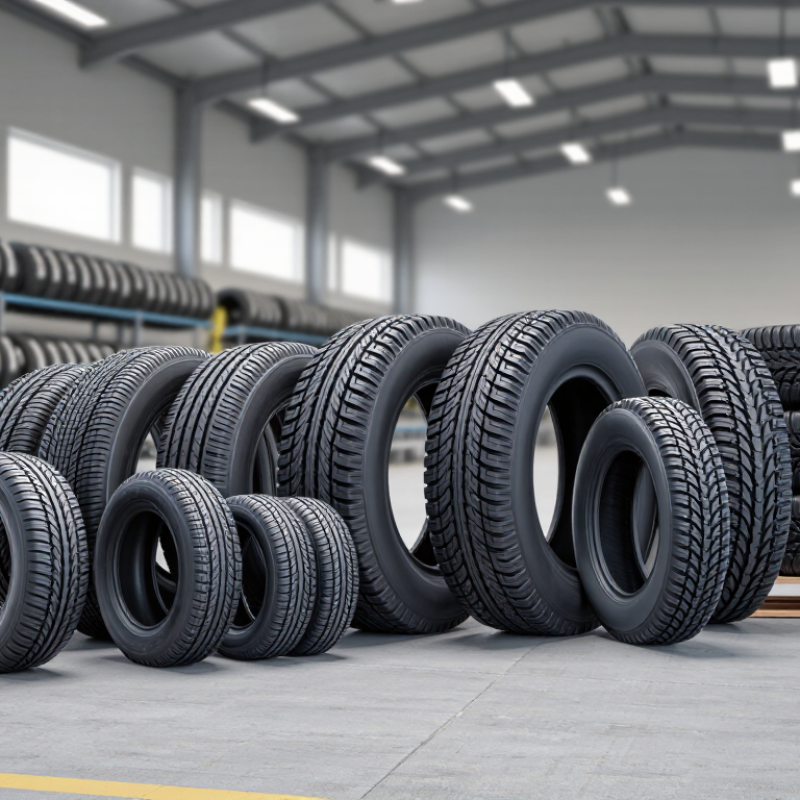
A spare tire is not one-size-fits-all. Full-size spares offer familiar handling, but add weight and take up cargo space. Temporary compact spares are lighter and smaller; they are intended for limited, cautious use, not everyday driving. Run-flat tires can travel briefly after pressure loss, but only when the vehicle and tire are designed for them. Check the vehicle manual for speed and distance limits. Small details matter: a spare with the wrong bolt pattern or load rating may be useless at the roadside.
Buyer requirements should start with fitment, not price. Confirm tire size, wheel dimensions, bolt pattern, load index, and compatibility with the vehicle’s braking and monitoring systems. NHTSA advises drivers to follow the vehicle placard and owner’s manual for correct tire specifications and inflation. AAA reported in its 2017 research that nearly one-third of new vehicles sold that year came without a spare tire. That figure is dated, but it shows why buyers should verify included equipment rather than assume.
China’s spare tire industry is supported by a large and export-oriented rubber manufacturing base. China Rubber Industry Association data indicates that domestic tire output exceeded one billion units in 2023. This scale supports steady production of full-size, temporary, commercial, and agricultural spare tires.
Export strength remains significant. China Customs data, summarized through UN Comtrade, shows that China exported roughly US$20 billion of new pneumatic rubber tires in 2023. However, public trade statistics rarely separate spare tires from replacement tires. This limitation matters. Buyers should not treat total tire exports as direct evidence of spare tire capacity.
Supplier evaluation needs more than catalog photos. A reliable factory should provide tread patterns, load ratings, speed ratings, curing records, and batch traceability. Ask for production samples with clear sidewall markings. Check test reports against the target market’s requirements, including ECE, DOT, CCC, or other applicable standards.
China’s export landscape also benefits from established container ports and experienced freight networks. Yet shipping costs, tariff changes, and regional certification rules can alter the final price quickly. The World Bank’s logistics indicators show that delivery performance depends heavily on customs efficiency and inland transport, not factory distance alone.
Some supplier websites overstate annual capacity. That is a practical warning. Independent audits, recent inspection records, and shipment references remain more useful than impressive numbers. A careful buyer should compare defect rates, warranty handling, and replacement lead times before selecting a top-ten supplier.
Scope: This table compares ten common supplier segments and sourcing profiles, not named companies or a verified ranking. “Spare tire” is generally a product application rather than a separate tire category; product classification depends on the tire type and applicable customs rules.
| Supplier Segment | Typical Spare-Tire Products | Common Buyer Requirements | Export and Sourcing Considerations |
|---|---|---|---|
| Passenger-car tire manufacturers | Full-size replacement spares and compact temporary-use tires | Passenger-car sizes, load and speed ratings, tread design, and compatibility with the vehicle’s wheel and storage space | Request technical specifications and confirm the target-market requirements for tire markings, testing, and documentation. |
| Temporary spare tire specialists | Space-saver and T-type temporary-use tires | Compact dimensions, specified inflation pressure, permitted speed, and clearly stated temporary-use instructions | Check that the tire’s size and operating limitations match the vehicle-maker’s requirements; temporary spares are not interchangeable with full-size tires by default. |
| SUV and 4×4 tire manufacturers | Full-size spare tires for SUVs, crossovers, and off-road vehicles | Higher load capacity where required, suitable construction, and matching size or approved alternative specifications | Confirm fitment, wheel compatibility, and whether the intended use is primarily road, mixed-terrain, or off-road. |
| Light-truck tire manufacturers | Spare tires for pickups, vans, and light commercial vehicles | Correct load index, tire construction, dimensions, and service description for the vehicle | Buyers should verify vehicle-specific fitment and applicable commercial-vehicle requirements rather than relying on size alone. |
| Truck and bus tire manufacturers | Heavy-duty replacement spares for commercial vehicles | Load and speed ratings, casing construction, intended axle position, and operating conditions | Check the destination market’s relevant standards and ensure the tire specification suits the vehicle and axle application. |
| Radial tire producers | Radial spare tires for passenger, SUV, and commercial applications | Radial construction, correct dimensions, load rating, and product documentation | Radial construction is common across modern vehicle tires; confirm the required construction and specification for each vehicle application. |
| Bias-ply tire producers | Bias-ply spares for selected utility, trailer, agricultural, and specialty applications | Application-specific dimensions, load capacity, and compatibility with the vehicle or equipment | Confirm that bias-ply construction is approved for the intended application and is compatible with the other tires in service. |
| Run-flat tire suppliers | Run-flat replacement tires used in vehicle systems designed for run-flat operation | Approved size and specification, compatible vehicle equipment, and correct installation procedures | Run-flat tires require vehicle-system compatibility; buyers should confirm fitment and operating guidance with the vehicle or tire specification. |
| Private-label and contract manufacturers | Buyer-specified spare tires produced under a private label or contract arrangement | Agreed product specification, quality-control plan, packaging, traceability, and inspection terms | Assess production controls, sample consistency, factory documentation, and written responsibility for compliance and labeling. |
| Tire exporters and sourcing distributors | Mixed spare-tire assortments sourced from multiple manufacturers | Consolidated sizes, minimum order quantities, shipment planning, and document coordination | Verify the actual manufacturer, product origin, specifications, and shipping documents for each item in a mixed consignment. |
China’s spare tire supply base spans passenger cars, SUVs, light trucks, and commercial fleets. The China Association of Automobile Manufacturers reported 30.16 million vehicles produced in 2023. That volume supports deep manufacturing capacity and varied export experience.
Among ten leading Chinese suppliers, profiles differ sharply. One focuses on full-size radial tires, while another specializes in compact temporary spares. Several suppliers offer all-season patterns, reinforced sidewalls, or commercial-vehicle tires. Their strengths often include flexible mold development, private-label production, and mixed-container loading.
A few maintain testing laboratories for endurance, balance, bead seating, and high-temperature performance. Important details remain practical: tread depth, valve quality, carton protection, and barcode accuracy. Small errors matter.
Market reports from Fortune Business Insights and Grand View Research forecast continued global tire-market growth, supported by vehicle ownership and replacement demand. However, supplier claims need independent checking. Buyers should request ISO 9001 records, test reports, production samples, and recent shipment references.
Factory audits can reveal curing-press age, warehouse humidity, and actual inspection routines. Some suppliers quote attractive prices but provide limited technical support. Others communicate well yet lack stable capacity during peak seasons. That is easy to miss.
Product fit must also match rim diameter, load index, speed rating, and regional climate. The top ten should therefore be compared by verified performance, delivery consistency, customization depth, and after-sales responsiveness, not catalog size alone.
Supplier rankings can change quickly. Recheck them before signing.
China Top 10 Spare Tire Suppliers for Global Buyers?
Comparing ten spare tire suppliers demands more than a low quotation. Quality should begin with documented rubber compounds, load testing, and batch traceability. UNECE R30 covers passenger-car tires, while R54 applies to commercial vehicles. Temporary-use tires may require additional compliance under UNECE R64. ISO Survey 2022 recorded over 1.26 million ISO 9001 certificates worldwide, yet certification alone does not prove tire performance. Audit the factory, not only the certificate.
Price and lead time often expose the real differences. Recent sourcing benchmarks place temporary spare tires near 35–90 US dollars each, excluding freight and tooling. Full-size units often range from 45–120 dollars. These are indicative figures, not fixed market prices. Standard orders commonly need 30–45 days after approval. Custom tread patterns or private molds can extend production beyond 60 days. One overlooked issue is aging inventory. Ask for production dates, warehouse conditions, and retest procedures. A cheaper tire may become expensive after port delays or inconsistent sizing.
Tips: Request three sample batches, not one. Compare rolling resistance, sidewall markings, and measured weight. Require an inspection report before shipment. Check IATF 16949 processes where automotive supply is involved. Do not accept vague claims such as “OEM quality.” I have seen impressive documents fail to explain curing temperatures or defect limits. That gap deserves a second review.
A top-ten list of Chinese spare tire suppliers is only a starting point. The real work begins with matching each supplier to your vehicle needs, market standards, and purchasing volume. Prepare a clear specification sheet with tire size, load rating, speed rating, rim details, valve type, packaging, and target quantity. Ask for factory registration details, production photos, quality procedures, and recent test reports. Do not rely on catalog images alone.
Request samples from two or three shortlisted suppliers. Check tread appearance, sidewall markings, rim welding, inflation performance, and packaging strength. Confirm whether the sample matches mass production. A video call can reveal storage conditions, inspection tools, and worker procedures. You should also verify applicable safety requirements in your destination market. Written terms should cover tolerances, inspection timing, payment stages, delivery terms, and remedies for defects. A polished quotation can still hide weak quality control.
Tips: Compare evidence, not promises. Use an independent inspection before shipment when the order is significant. Check communication speed and technical answers, not only price. Keep every specification in writing. No checklist is perfect. A missed detail, such as a different rim offset, may create expensive delays. Recheck the final sample against your vehicle before approving production.

