China Top CCS2 Charging Station Suppliers for Global Buyers
China is a major sourcing destination for EV charging equipment, but choosing a supplier takes more than comparing prices. Global buyers need to assess product design, manufacturing consistency, technical support, and delivery expectations. A CCS2 charging station may look ready for installation in a product photo, yet real performance depends on details such as connector durability, cable handling, enclosure quality, and clear operating instructions. Small details matter.
This guide introduces Chinese suppliers serving international buyers and explains what to check before requesting a quote. Buyers can compare charging power, communication options, customization capabilities, warranty terms, and available test documentation. Ask how the supplier verifies units before shipment, and request evidence relevant to the exact model under consideration. A polished brochure is not enough. Product specifications and sample agreements should match.
Supplier claims can vary, and published information may not answer every practical question. Confirm lead times, spare-parts availability, service arrangements, and compatibility with your intended site and vehicles. Independent testing or a sample-unit evaluation may reveal issues that sales materials do not show. No supplier is perfect. That is worth remembering. The aim is not to find the biggest promise, but a manufacturer whose capabilities, records, and communication can be checked. With careful comparison, buyers can build a shortlist based on evidence rather than appearance alone.
CCS2 Basics: IEC 62196-3 Defines the DC Charging Connector Standard
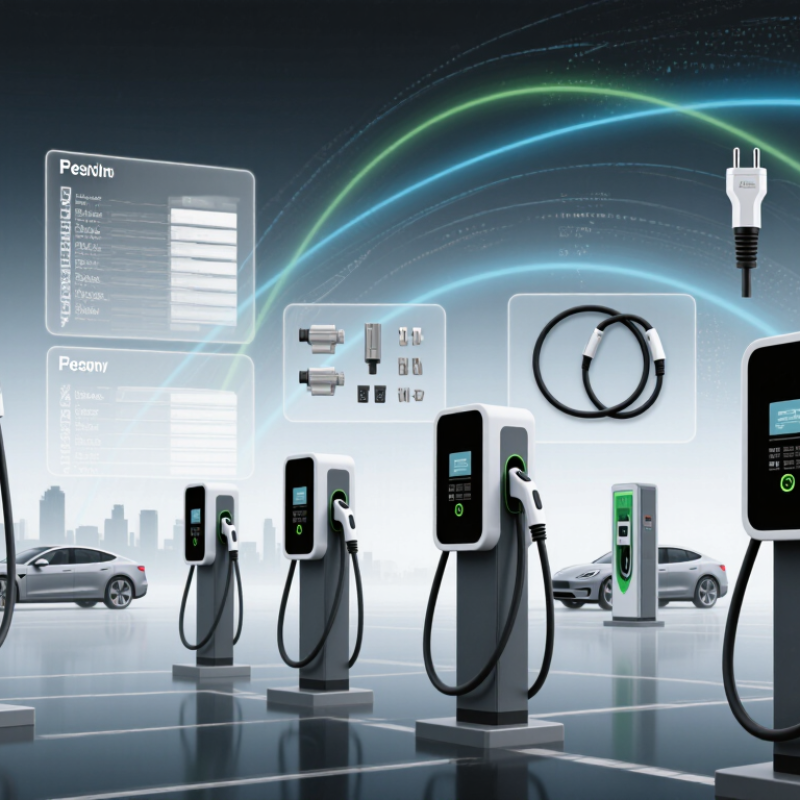
For global buyers comparing CCS2 charging equipment, the connector is more than a cable-end shape. IEC 62196-3 specifies requirements and configurations for DC charging connectors and vehicle inlets. CCS2 uses a Type 2 interface for AC charging, with two larger contacts added for DC power. The design is recognizable on a charger: a rounded upper section and two substantial lower pins.
Fit matters. The standard helps ensure that compatible plugs and inlets align safely, but it does not guarantee every charger will work with every vehicle. Communication protocols, rated voltage and current, cooling design, and software also affect operation. Buyers should check these details alongside the connector specification, especially when equipment will serve different vehicle models.
Small details count. A well-made connector should seat firmly, resist repeated handling, and keep its contacts protected from dust and moisture. Ask suppliers for test reports, rated operating conditions, and clear documentation for the exact product configuration. IEC 62196-3 is a useful technical reference, not a shortcut around product verification. Even careful checks can miss something; real-world cable reach and connector weight deserve attention too.
Global Market Context: IEA Counted Over 4 Million Public Chargers in 2023
The IEA’s Global EV Outlook 2024 reports that public charging points exceeded 4 million worldwide in 2023. Around 1.3 million were added that year, a 40% rise from 2022. China held roughly 70% of the global public network. These figures show how quickly charging access is expanding, but they do not measure uptime, queue length, or power delivery at busy sites. The gap matters.
For global buyers comparing China-based CCS2 suppliers, growth creates opportunity and a practical question: can equipment perform reliably outside the factory? Check connector temperature limits, rated output, protection ratings, communication compatibility, and spare-part availability. Ask for independent test records and field data from climates similar to the installation site. A unit rated for high power may deliver less when several vehicles share a cabinet. The numbers can look excellent on paper. Real sites are less tidy.
Tips: Request a sample test report, confirm the plug-and-cable configuration, and compare warranty response times. Treat charger counts as context, not proof of quality.
China’s Supplier Landscape: Compare Charger Manufacturers, Integrators, and Exporters
China’s CCS2 supplier landscape includes charger manufacturers, project integrators, and export-focused suppliers. Manufacturers control power modules, cabinet design, cooling, and factory testing. Integrators add site planning, software, commissioning, and maintenance coordination. Exporters can simplify purchasing, but buyers should confirm who handles engineering changes and warranty claims. That detail matters when equipment must suit local vehicles and grid conditions.
The IEA’s Global EV Outlook 2024 reports more than four million public charging points worldwide in 2023. Fast chargers grew about 55%, passing 500,000 units, while China held roughly 70% of the global public charging stock. Scale is useful, but it does not prove export readiness. Request CCS2 compatibility records, power curves, cable-temperature data, and references from similar climates. A factory audit alone is not enough.
Tips: Compare suppliers against one specification sheet. Check certification documents, spare-part lead times, firmware support, and warranty ownership. Ask whether technicians can diagnose a failed contactor remotely. One detail may remain unclear: published peak power does not always show sustained output in hot weather.
EU Buyer Benchmarks: AFIR Requires 400 kW Charging Pools on Core TEN-T Routes
EU buyers comparing CCS2 charging station suppliers should use AFIR’s TEN-T targets as a practical benchmark. By 31 December 2025, publicly accessible charging pools for light-duty vehicles must provide at least 400 kW of combined output along the TEN-T core network, with gaps no greater than 60 km in each direction. Each pool must include at least one charging point capable of delivering 150 kW or more. Details matter. The requirement concerns the pool’s usable capacity, not simply the sum printed across equipment labels.
For procurement, check how a supplier supports simultaneous charging, power sharing, and site-level monitoring. A pool may meet its headline rating while delivering less power when several vehicles arrive together. Ask for load-management diagrams, test records, and clear explanations of output under shared operation. Also verify connector configuration, grid connection assumptions, and maintenance arrangements. A neat specification sheet is useful, but it cannot replace a site-specific review.
Tips: Map proposed sites against TEN-T coverage and the 60 km spacing rule. Confirm that at least one point in each qualifying pool can sustain 150 kW. Request commissioning evidence under realistic multi-vehicle conditions. Small gaps in the plan can become expensive later. AFIR milestones also change over time, so check current EU guidance before finalizing a purchase.
Supplier Due Diligence: Check IEC 61851, OCPP, and ISO 15118 Compatibility
Choosing a CCS2 charging station supplier in China takes more than comparing rated power and price. Request test reports that identify the IEC 61851 parts and charging configurations covered. Check that the documents match the exact model, cable rating, and installation options you plan to order. A certificate for a related product may not cover your unit. Paperwork is not enough.
For OCPP, ask which version the station supports and whether it has been tested with your intended charging management system. Request evidence of key functions, such as remote start, meter readings, fault alerts, and firmware updates. A successful connection at the factory is useful, but it does not prove stable operation across networks or backend platforms. Test the full chain before shipment, if possible.
ISO 15118 compatibility needs equally careful checking. Confirm which functions are implemented, and whether plug-and-charge depends on specific vehicle, backend, or certificate arrangements. Ask for a live demonstration with a compatible test vehicle or simulator, then record the results. We have seen specifications use “ready” loosely; that wording can hide unfinished integration. A supplier’s clear answers matter, but independent test evidence and a defined acceptance plan offer stronger protection for global buyers.
CCS2 Supplier Due Diligence: Standards and Protocol Milestones
Compare publication or release years for key editions to help verify which standards and protocol versions a supplier supports.
Milestone dates are not supplier performance ratings. During due diligence, confirm the exact edition supported and request relevant conformity, interoperability, and implementation evidence.


