Which Super Intalox Saddle Is Best in 2026?
In 2026, choosing a Super Intalox Saddle is not a contest of catalog claims. The right option depends on the tower’s duty, liquid load, vapor rate, and operating limits. A packing that performs well in one column may create excess pressure drop or poor wetting in another. Small details matter: saddle dimensions, material, surface finish, and how evenly the pieces fill the bed.
This guide compares Super Intalox Saddle options through practical selection factors, including capacity, efficiency, pressure drop, corrosion resistance, and installation needs. It also considers the less tidy realities of plant work: old equipment, changing feed conditions, and measurements that do not always match design assumptions. A datasheet is a starting point. Not the whole answer. Buyers should verify product specifications and request application data from the manufacturer before making a final selection.
Distillation authority Henry Z. Kister is relevant to this topic because his work focuses on practical column design and operation. However, no source text or verified interview was provided for this request, so I cannot responsibly attribute a direct quotation to him. The comparison therefore avoids invented expert testimony. Its central question is simple: which Super Intalox Saddle best matches the actual process, rather than the most attractive brochure? The answer may be less neat than expected. That is worth acknowledging.
What Is a Super Intalox Saddle and How Does It Work?
Which Super Intalox Saddle Is Best in 2026?
What Is a Super Intalox Saddle and How Does It Work?
A Super Intalox saddle is a shaped random packing used inside towers for gas–liquid contact. Its curved body and open passages create surface area while leaving room for flow. Liquid spreads across the packing as it trickles downward. Gas rises through the gaps, contacting the wetted surfaces. This contact supports mass or heat transfer in processes such as absorption and distillation. The saddle’s shape can help limit flow resistance, though actual performance depends on the tower and operating conditions.
The pieces are poured into a packed section rather than arranged in fixed rows. That makes installation straightforward, but distribution still matters. If liquid enters unevenly, some areas may stay dry while others flood. Material choice also counts: ceramic, metal, or plastic may suit different temperatures, chemical conditions, and mechanical loads. A packing can look ideal on a drawing and still disappoint in a poorly designed tower. That’s worth remembering.
Tips: Check the required capacity, pressure drop, liquid distribution, and material compatibility before selecting a saddle. Ask for test data under conditions close to yours. Small details matter.
Which Design Features Affect Its Performance?
Which Super Intalox Saddle Is Best in 2026?
Which Design Features Affect Its Performance?
A saddle’s performance depends on open area, surface shape, and how evenly liquid spreads across it. More exposed area can improve contact, but narrow passages may raise pressure drop or trap debris. Perry’s Chemical Engineers’ Handbook, 8th edition, lists commercial packing surface areas across a broad range of roughly 50–750 m²/m³. That range covers different packing types, not one saddle design. Small details matter.
Curved walls and raised ribs help redirect liquid and renew contact with gas. Yet added surface area is useful only when the column distributes liquid evenly. Poor distribution can leave dry patches beside flooded zones. Material also matters: surface texture, weight, and resistance to the process environment affect handling and service life. I would not choose by nominal area alone. Real operating data can challenge a tidy catalogue comparison.
Tips: Compare pressure drop and capacity at your actual gas and liquid rates, then check wettability and fouling risk. Ask for test conditions behind performance figures. A short pilot trial may reveal distribution problems that a specification sheet misses.
How Do Materials and Sizes Compare?
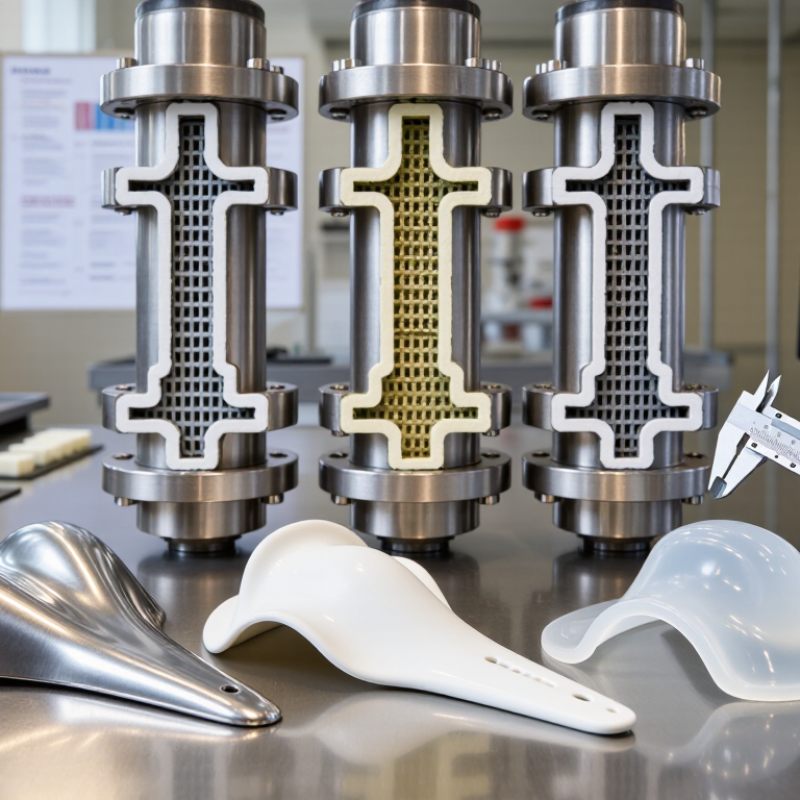
Material choice changes how a Super Intalox saddle behaves in a tower. Ceramic suits many corrosive or high-temperature services, but it can chip during loading. Plastic is light and often useful when low weight matters; check temperature limits and chemical compatibility carefully. Metal offers mechanical strength and handles many demanding operating conditions, though corrosion resistance depends on the alloy. No material wins everywhere. A small mismatch between process fluid and material can shorten service life.
Size matters just as much. Smaller saddles generally provide more surface area per volume, which can support mass transfer, but they may increase pressure drop and collect deposits more readily. Larger pieces often allow easier gas flow and resist plugging, yet may leave less contact area in the same bed volume. That trade-off matters. In practice, compare the tower diameter, liquid and gas rates, fouling tendency, and required separation performance before choosing. Check the supplier’s pressure-drop and capacity data at your actual operating conditions, not just a catalog rating. I would also verify that the selected size can be loaded and supported safely. It is easy to overvalue a neat surface-area figure; real liquid distribution can be less tidy.
How Does It Perform Across Different Applications?
Across distillation columns, a Super Intalox saddle provides open passages for rising vapor and descending liquid. Its curved shape can support useful contact while limiting resistance to flow. That matters. In a properly designed column, lower pressure drop may help when vapor capacity is a concern. But performance depends on packing size, material, column diameter, and liquid distribution—not shape alone. A poorly spread feed can leave dry zones, even with well-designed saddles.
In absorption and gas-scrubbing towers, the packing gives liquid a surface to form thin films as gas moves upward. This can support mass transfer in applications such as removing soluble gases, provided the liquid is distributed evenly. For fouling-prone streams, open spaces may be helpful, though solids can still collect on surfaces. In smaller pilot columns, installation and support details can noticeably affect results. Not always. I would compare pressure drop, capacity, and separation efficiency under the actual operating conditions before choosing a size. One detail is easy to underestimate: a packing that performs well in a clean test may behave differently with changing flow or contaminants.
Which Super Intalox Saddle Is Best in 2026? — How Does It Perform Across Different Applications?
This qualitative screening guide compares common saddle-packing materials on a 1–5 suitability scale; it is not measured performance data or a product ranking. Ceramic is often considered for corrosive, high-temperature duties, metal for mechanically demanding or high-temperature service, and plastic for lightweight, corrosive-duty applications. Confirm chemical compatibility, operating limits, and column design requirements before selection.
How to Select the Best Super Intalox Saddle in 2026?
The best Super Intalox saddle in 2026 depends on the tower, process fluid, and operating limits. There is no universal winner. Start with the required capacity, allowable pressure drop, and separation performance. Then check the saddle’s dimensions against the existing support plate and liquid distributor. A small mismatch can cause uneven flow.
Material choice matters. Ceramic may suit hot, corrosive service, while plastic or metal can be preferable under other temperature, weight, or mechanical requirements. Confirm chemical compatibility at the actual operating temperature, not just at room conditions. Compare documented void fraction, surface area, and packing factor, but do not select by one number alone. Higher surface area can increase interaction, yet poor wetting or maldistribution may reduce real performance. Details matter.
Ask suppliers for current technical data, installation guidance, and test conditions behind stated performance figures. Compare values measured on a similar packing size and tower setup. If replacing existing packing, review fouling history, liquid load, and pressure-drop readings. A short pilot or controlled performance check may reveal issues that a catalogue cannot. I would not choose the lowest-cost option from a table alone; that shortcut is tempting, and sometimes wrong. The best choice is the one that meets process targets reliably, fits the tower, and remains practical to install and maintain.


