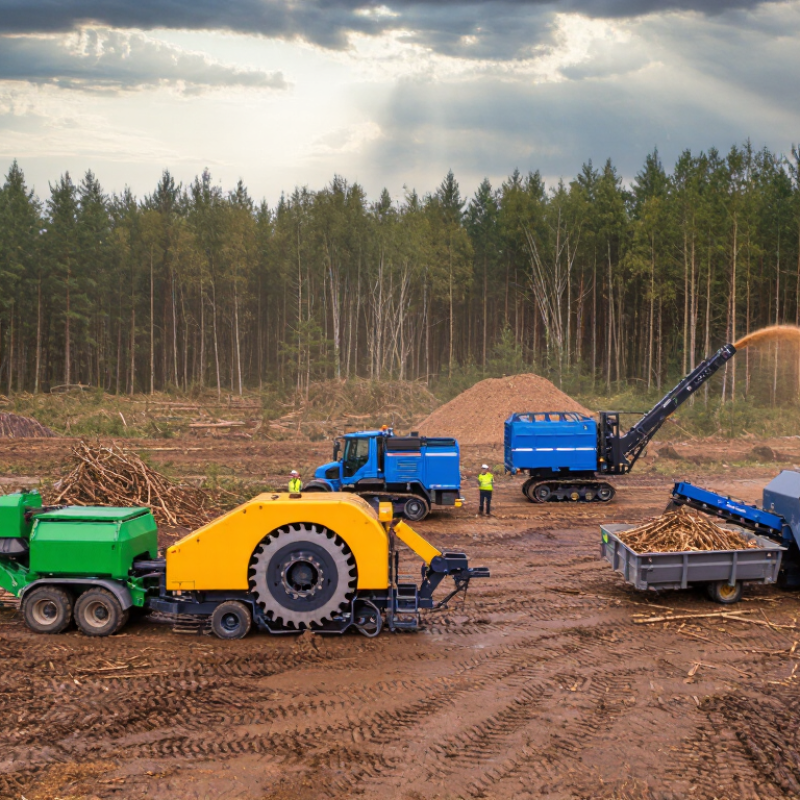
| Tow-Behind Drum Chipper Shredder | Branches and woody material up to approximately 150–300 mm in diameter, depending on rotor design and feed system. | Approximately 25–75 hp diesel or petrol engine. | About 1–5 tonnes per hour, depending on material moisture, feed size, operator loading, and screen configuration. | - Road-towable when equipped with compliant axle, brakes, lighting, coupling, and safety chains.
- Suitable for municipal parks, roadside work, landscaping, and distributed job sites.
- Requires firm ground and adequate turning space.
| - Emergency-stop controls accessible from the feed position.
- Feed-table guarding and a compliant operator exclusion zone.
- Interlocked access doors and protected belts, shafts, and rotating parts.
- Hearing, eye, hand, foot, and high-visibility protection for operators.
| - Inspect knives, counter-knives, anvil clearances, belts, bearings, and fasteners daily.
- Sharpen or replace cutting tools when production quality and fuel consumption deteriorate.
- Grease bearings according to the service manual and check trailer tires and brakes.
| - Use an engine emissions configuration accepted in the destination market.
- Control dust and debris with suitable discharge direction, covers, or misting where permitted.
- Manage noise near residences and comply with local transport and exhaust rules.
|
| PTO Tractor-Mounted Chipper Shredder | Approximately 200–450 mm for common heavy-duty configurations; actual capacity depends on tractor power and rotor size. | Approximately 50–150 PTO hp. | About 3–15 tonnes per hour under suitable feeding conditions. | - Uses an existing agricultural tractor and is suitable for farms, forestry operations, and large estates.
- High mobility across unpaved terrain, but total combination weight must remain within tractor and road limits.
- Requires a compatible three-point hitch, PTO speed, hydraulic system, and ballast arrangement.
| - Fully guarded PTO shaft with correctly fitted restraining chains.
- Shielding around the flywheel, belts, hydraulic components, and feed rollers.
- Lockout and isolation before clearing jams or servicing the machine.
- Operator training for tractor stability, reversing, slope operation, and material handling.
| - Check PTO shaft alignment, guards, universal joints, hydraulic hoses, knives, and anvil daily.
- Inspect hitch pins and attachment points for wear and cracking.
- Maintain the tractor separately, including PTO clutch, cooling system, filters, and brakes.
| - Lower local emissions may be possible when powered by an existing compliant tractor, but total fuel use still depends on tractor load.
- Use low-leak hydraulic connections and collect oils and filters for approved disposal.
- Limit operation near sensitive receptors during high-noise periods.
|
| Tracked Self-Propelled Chipper Shredder | Approximately 200–500 mm, with larger forestry configurations available. | Approximately 75–275 hp diesel engine. | About 4–20 tonnes per hour, depending on feed opening, wood density, and material preparation. | - Low-ground-pressure tracks improve access on slopes, soft ground, and forestry sites.
- Can be repositioned without a separate towing vehicle at the work site.
- Road transport usually requires a trailer or other approved transport arrangement.
| - Remote or clearly accessible emergency stops around the machine.
- Audible and visual warnings for track movement, reversing, and discharge hazards.
- Guarding and interlocks for feed rollers, rotor housing, conveyors, and access panels.
- Stability assessment before operation on slopes, banks, or uneven ground.
| - Inspect track tension, rollers, sprockets, undercarriage, hydraulic lines, and cooling screens.
- Remove accumulated chips from hot surfaces and engine compartments.
- Check knives, counter-knives, feed rollers, conveyor belts, and automatic lubrication systems.
| - Specify an engine certification suitable for the country of use and applicable off-road regulations.
- Use dust suppression or controlled discharge where dry feedstock creates airborne particles.
- Plan refueling and spill response to protect soil and surface water.
|
| Electric Stationary Chipper Shredder | Approximately 100–300 mm for heavy-duty fixed-site systems. | Approximately 30–150 kW electric motor input, subject to rotor design and feed rate. | About 0.5–8 tonnes per hour. | - Designed for recycling yards, biomass preparation, sawmills, and fixed green-waste facilities.
- Requires a level foundation, appropriate electrical service, and controlled material-flow layout.
- Not normally intended for public-road or remote-site operation without auxiliary equipment.
| - Electrical isolation, lockout/tagout, and verified absence of voltage before service.
- Overload protection, motor protection, emergency stops, and guarded transmission components.
- Dust and fire-risk assessment where dry chips or fine organic particles accumulate.
- Safe access platforms, handrails, and maintenance clearance around the machine.
| - Inspect knives, rotor balance, bearings, screens, belts, and electrical connections.
- Keep air inlets, control cabinets, and cooling systems free of dust and chips.
- Monitor motor current and vibration to identify blockages, imbalance, or bearing wear.
| - Produces no direct exhaust emissions at the point of use.
- Overall carbon impact depends on the electricity source and operating efficiency.
- Use dust extraction, enclosure, or suitable filtration where fine particles are generated.
- Manage noise, electrical waste, lubricants, and end-of-life cutting components responsibly.
|
| Industrial Horizontal Chipper Shredder | Approximately 300–750 mm or more, depending on the feed table, rotor, and material-handling system. | Approximately 150–600 hp or equivalent electric drive. | About 10–60 tonnes per hour for prepared wood waste and similar feedstock. | - Best suited to fixed recycling plants, transfer stations, biomass yards, and large processing lines.
- Usually integrated with conveyors, magnets, screens, loaders, and dust-control equipment.
- Requires engineered foundations, traffic separation, and planned maintenance access.
| - Comprehensive guarding, perimeter fencing, interlocked access doors, and emergency-stop circuits.
- Isolation procedures for electrical, hydraulic, pneumatic, stored mechanical, and thermal energy.
- Magnetic or manual removal of metal contamination before it reaches the cutting chamber.
- Fire detection, suppression, and housekeeping controls for large chip and dust inventories.
| - Use condition monitoring for bearings, rotor vibration, gearbox temperature, and motor load.
- Schedule inspection of knives, anvils, screens, conveyors, magnets, and hydraulic systems.
- Maintain documented preventive-maintenance intervals and critical spare parts inventory.
| - Use enclosed transfer points, dust extraction, water mist, or other approved controls as required.
- Assess noise at the site boundary and install acoustic barriers when necessary.
- Control stormwater runoff, contaminated drainage, fuel storage, and lubricant handling.
- Screen output to meet the intended biomass, composting, or recycling specification.
|
| Self-Loading Forestry Chipper with Crane | Approximately 250–600 mm, depending on feed rollers, rotor design, and crane-assisted loading arrangement. | Approximately 100–350 hp diesel engine. | About 5–30 tonnes per hour, depending on log length, branch structure, operator skill, and site layout. | - Combines material handling and chipping for roadside clearing and forestry work.
- Reduces manual lifting but requires a stable operating platform and adequate crane working radius.
- May require a dedicated transport trailer or road permit for relocation.
| - Crane load charts, rated-capacity indicators, and a clearly marked exclusion zone.
- Protection from falling branches, suspended loads, ejected material, and overhead power lines.
- Emergency stops and guarded feed mechanisms accessible from normal operating positions.
- Seat-belt use, rollover protection where applicable, and trained crane operation.
| - Inspect crane pins, bushings, hoses, outriggers, slew components, knives, and feed rollers.
- Check hydraulic oil, filters, leaks, structural welds, and load-bearing attachments.
- Maintain accurate inspection records for lifting equipment and safety devices.
| - Use destination-market-compliant engine emissions equipment and maintain it correctly.
- Prevent hydraulic-fluid and diesel spills during forestry and roadside operations.
- Use discharge and work-zone controls to limit chips, dust, and noise near public areas.
|