2026 Top Aerosol Can Parts Cone And Dome Suppliers?
The 2026 aerosol packaging market will reward suppliers that combine precision, material efficiency, and dependable technical support. This guide examines leading Aerosol Can Parts Cone And Dome suppliers through a practical manufacturing lens.
Grand View Research estimates that the global aerosol cans market was worth approximately USD 11.7 billion in 2023. Its report also projects steady growth through 2030, supported by personal care, household, pharmaceutical, and industrial applications. Smithers’ The Future of Aerosols to 2028 identifies sustainability, lightweighting, and improved dispensing performance as major industry pressures. These trends directly affect cone and dome design.
Small details matter.
A cone must maintain accurate geometry around the valve opening. A dome must support pressure resistance, sealing quality, and consistent forming. Suppliers should therefore provide measurable tolerances, material certificates, coating information, and batch traceability. Buyers should also review tooling capability, production capacity, leak-testing procedures, and compatibility with steel or aluminum bodies.
The strongest suppliers are not always the largest. Some regional manufacturers offer faster tooling changes and closer engineering support. Larger producers may provide stronger quality systems and broader export experience. Both claims require verification.
Report figures can vary because researchers define aerosol cans, regions, and end-use sectors differently. That limitation deserves attention. A supplier comparison should not rely on market size alone. Factory audits, sample testing, ISO documentation, and customer references provide more practical evidence.
This article will help purchasing teams compare 2026 suppliers with greater confidence. It focuses on dimensional consistency, corrosion protection, pressure performance, sustainability, logistics, and total cost. Reliable parts protect both product quality and brand reputation. That remains the real measure.
Cone and Dome Fundamentals: ISO 90-2 Dimensions and 3-Piece Can Functions
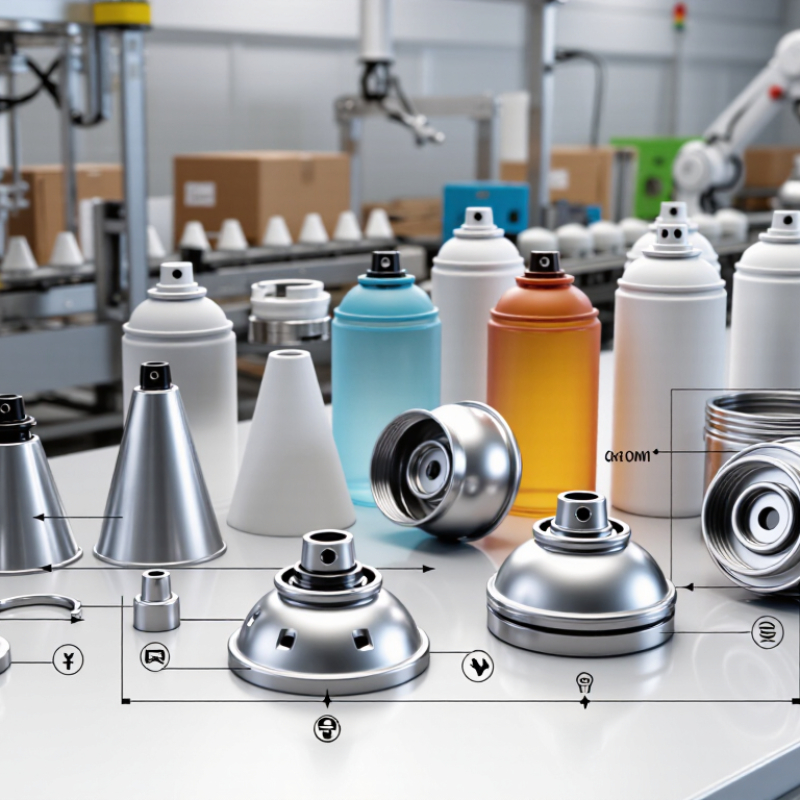
For 2026 aerosol can sourcing, understanding cone and dome geometry is more useful than comparing catalogs alone. The cone forms the shoulder above the cylindrical body. The dome or top closure supports the valve area and helps distribute internal pressure. These parts must match the can diameter, neck finish, valve cup, and filling process.
ISO 90-2 dimensions provide a technical reference for aerosol can construction and terminology. However, the standard should not replace a current production drawing. Confirm outside diameter, neck diameter, shoulder height, dome profile, wall thickness, and dimensional tolerances. Small deviations matter. A cone that sits too low may interfere with the valve actuator. An uneven dome can affect crimping and sealing. Experienced buyers should request sectioned samples, gauge reports, and material certificates before approving parts.
A three-piece can normally combines a welded body with separate top and bottom ends. The body provides the main volume. The bottom supports stacking and pressure stability. The top assembly connects the shoulder, valve opening, and closure area. Cone and dome suppliers should control forming depth, roundness, flange quality, and surface cleanliness. Inspection should include repeated measurements, not one attractive sample. Real production changes with tooling wear, coil thickness, and forming speed. This is where specifications can become imperfect. Rechecking fit during pilot runs remains essential. Supplier reliability comes from documented controls, responsive corrections, and evidence from actual production—not confident promises.
Safety Benchmarks: 50°C Testing, UN 1950, and Directive 75/324/EEC
For cone and dome suppliers, safety begins with evidence, not attractive samples. Each part should match the can body, valve system, and filling process. Dimensions, steel grade, coating, and forming tolerances need documented control. Small edge defects can become leakage points after pressure rises.
Testing at 50°C exposes weaknesses that normal room-temperature checks may miss. Pressure changes. A qualified laboratory should assess deformation, leakage, crimp integrity, and burst performance under defined conditions. Results must identify the sample lot, test method, and equipment used. UN 1950 classification also requires careful transport documentation for aerosol dispensers. The classification itself does not replace product testing or packaging controls.
For European supply, Directive 75/324/EEC remains a key reference for aerosol dispensers, alongside applicable amendments and national implementation requirements. Suppliers should support technical files, traceability records, material declarations, and conformity evidence. Experience shows that a cone can pass inspection while its coating fails after filling, storage, or transport. That gap matters. A perfect checklist is not enough. Teams should review real production samples, not only laboratory coupons. They should also question unclear pressure limits and missing temperature details. Reliable suppliers explain these limitations openly, even when the answers slow purchasing decisions.
Supplier Metrics: ISO 9001, MOQ, Lead Time, Capacity, and Defect ppm
2026 Top Aerosol Can Parts Cone And Dome Suppliers?
Choosing cone and dome suppliers requires more than comparing unit prices. ISO 9001 shows that a quality system exists, but it does not guarantee flawless parts. Request the current certificate, audit scope, corrective-action records, and batch traceability. Experienced buyers should also inspect forming lines, tooling maintenance, and dimensional checks.
MOQ can change the real purchasing cost. A low MOQ may suit product trials, while larger orders usually support better pricing and stable production. Confirm whether the quoted MOQ applies per size, finish, or shipment. Lead time should include tooling, sample approval, production, inspection, and transport. Ask for a written schedule. Delays often begin before production.
Capacity figures need evidence. Compare monthly output with current utilization, spare press capacity, material availability, and backup equipment. Defect ppm is useful only when its calculation is clear. Ask whether it covers cosmetic defects, dimensional failures, leakage risks, or customer returns. Review twelve months of data when possible. A supplier reporting 50 ppm may be reliable, or merely selective. That deserves scrutiny. Sample inspections and an independent pre-shipment check can reveal gaps. I would also test a pilot batch before committing to annual volumes. Suppliers sometimes promise short lead times too confidently. A practical contract should define acceptable defect limits, response times, replacement duties, and change-control procedures.
2026 Top Aerosol Can Parts Cone And Dome Suppliers? - Supplier Metrics: ISO 9001, MOQ, Lead Time, Capacity, and Defect ppm
Anonymized supplier comparison for aerosol can cone and dome components
| Rank | Supplier Code | ISO 9001 | MOQ
(pieces) | Typical Lead Time
(calendar days) | Annual Capacity
(million pieces) | Defect Rate
(ppm) | Tooling Support |
| 1 | Supplier A | Certified | 100,000 | 25–35 | 180 | 180 | In-house |
| 2 | Supplier B | Certified | 150,000 | 28–38 | 150 | 220 | In-house and outsourced |
| 3 | Supplier C | Certified | 200,000 | 30–42 | 125 | 260 | In-house |
| 4 | Supplier D | Certified | 250,000 | 35–45 | 110 | 310 | Customer-supplied tooling |
| 5 | Supplier E | Certified | 100,000 | 32–45 | 95 | 360 | In-house |
| 6 | Supplier F | Certified | 300,000 | 38–50 | 85 | 420 | Outsourced |
| 7 | Supplier G | Certified | 150,000 | 40–52 | 75 | 480 | In-house |
| 8 | Supplier H | Certified | 250,000 | 42–55 | 65 | 550 | Customer-supplied tooling |
2026 Supplier Shortlist: Regional Output, Coatings, Tooling, and Compliance
The 2026 shortlist for aerosol can cone and dome suppliers should begin with regional output, not catalogue size. Local production can reduce transit damage, shorten sampling cycles, and support faster engineering changes. Ask for monthly capacity, press availability, and backup tooling plans. A supplier may quote impressive volume, yet struggle during seasonal demand. That gap deserves attention.
Coatings need equal scrutiny. Request adhesion data, corrosion testing, curing temperatures, and documented batch controls. Confirm that internal and external coatings match the intended formulation and filling process. Tooling quality also matters. Check die wear records, dimensional inspection methods, spare-part access, and trial-run reports. Small profile changes can affect sealing, stacking, and valve fit. Samples are useful, but one sample is not proof.
Tips: Compare suppliers within each production region. Audit coating records on site when possible. Ask for compliance declarations, material traceability, worker-safety procedures, and waste-control documentation. Verify testing against the destination market’s current packaging rules. A certificate without a clear scope may create false confidence. Keep questions specific.
Reliable suppliers explain limitations openly. That is a good sign. They should identify lead times, minimum order quantities, and tooling ownership in writing. Some evaluations remain imperfect because production data changes quickly. Recheck capacity before issuing a purchase order. A low unit price may hide delayed tooling, extra inspection, or higher freight costs. Practical judgment still matters.
Buying Decision: Cost per Part, Recyclability, Carbon Data, and QA Records
Choosing cone and dome suppliers in 2026 requires more than comparing quoted prices. Cost per part should include tooling, setup waste, inspection labor, packaging, and freight. A supplier offering a lower unit price may create higher costs through dents, dimensional variation, or delayed batches. Ask for a cost model based on your actual order volume. Request sample invoices, not only estimates.
Recyclability deserves practical attention. Confirm the alloy grade, coating type, and whether mixed materials complicate recovery. Ask how scrap is separated at the production site. Carbon data should include system boundaries, energy sources, transport assumptions, and reporting dates. One carbon figure is not enough. We once found a supplier’s data excluded inbound material transport, which changed the comparison considerably. That was easy to miss.
QA records reveal operating discipline. Review batch inspection reports, dimensional results, material certificates, coating checks, and corrective-action history. Confirm traceability from coil or sheet to finished component. A strong supplier should explain sampling plans and retain records for an agreed period. Visit the facility if volumes justify it. Watch how operators handle parts near the packing line. Small scratches often appear there, not during forming. Some records may look complete but lack trend analysis. That weakness deserves a direct question, especially when specifications are tight. Supplier claims should be tested against recent production evidence.


